
What is the S355MC plate zero cut price export to Iran
Detailed analysis of S355MC high-strength steel plate properties, mechanical performance, and export pricing factors for the Iranian market, including zero-cut customization services.
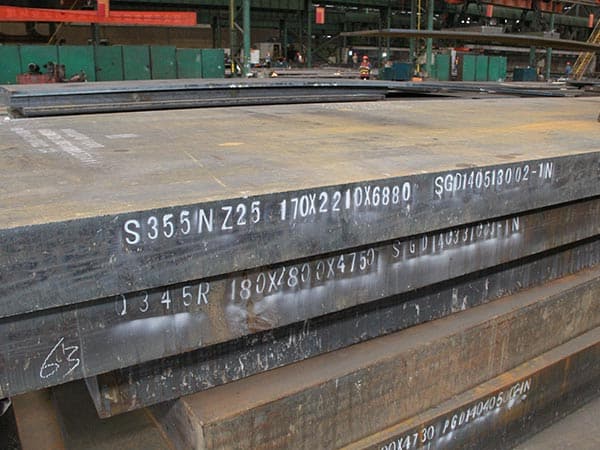
The Technical Essence of S355MC High-Strength Steel
S355MC is a high-yield strength steel grade compliant with the EN 10149-2 standard, specifically engineered for cold forming applications. The "MC" designation signifies that the material has undergone thermomechanical rolling, a process that creates a fine-grained microstructure by controlling the deformation and cooling rates during production. This metallurgical precision allows the steel to maintain high strength while offering exceptional ductility, making it a preferred choice for Iranian manufacturers who require robust materials for truck chassis, crane booms, and complex structural components. The demand for S355MC in the Iranian market is driven by the need for weight reduction without compromising structural safety, particularly in the automotive and heavy transport sectors.
Chemical Composition and Metallurgical Stability
The performance of S355MC is rooted in its low carbon content and strategic micro-alloying. Unlike traditional carbon steels, S355MC utilizes elements like Niobium (Nb), Vanadium (V), and Titanium (Ti) to achieve its strength. These elements form carbides and nitrides that pin grain boundaries during the rolling process, preventing grain growth and ensuring a uniform, tough structure. The low carbon equivalent (CEV) is particularly beneficial for welding, as it minimizes the risk of cold cracking in the heat-affected zone (HAZ). For Iranian importers, verifying the chemical mill test certificate (MTC) is crucial to ensure the material meets the strict requirements for sulfur and phosphorus, which are kept at very low levels to improve internal cleanliness and lamellar tearing resistance.
| Element | C (max) | Mn (max) | Si (max) | P (max) | S (max) | Al (min) |
|---|---|---|---|---|---|---|
| Percentage (%) | 0.12 | 1.50 | 0.50 | 0.025 | 0.015 | 0.015 |
Mechanical Performance and Structural Reliability
The defining characteristic of S355MC is its minimum yield strength of 355 MPa. This allows engineers to design thinner sections that can carry the same loads as thicker, heavier S235 or S275 grades. In the context of the Iranian construction and machinery industries, this translates to significant cost savings in terms of raw material volume and transportation energy. The tensile strength ranges between 430 and 550 MPa, providing a safe margin for structural integrity under dynamic loading. Furthermore, the elongation properties ensure that the material can undergo significant deformation before failure, which is a critical safety feature in seismic-prone regions or high-impact environments.
| Property | Yield Strength (MPa) | Tensile Strength (MPa) | Elongation (%) | Bending Radius (180°) |
|---|---|---|---|---|
| Value | ≥ 355 | 430 - 550 | ≥ 19 - 23 | 0.5t to 1.5t |
Advanced Processing: Cold Forming and Welding
One of the primary reasons S355MC is exported to Iran for specialized fabrication is its superior cold forming capability. The material can be bent to tight radii without cracking, provided the bending axis is perpendicular to the rolling direction. This makes it ideal for producing complex profiles and pressed parts. When it comes to welding, S355MC is highly versatile. It can be joined using standard methods such as MIG/MAG, TIG, and submerged arc welding. Because of its low alloy content, preheating is generally not required for standard thicknesses, which accelerates production timelines in Iranian workshops. However, using low-hydrogen consumables is recommended to maintain the integrity of the high-strength joints.
- Cold Bending: Excellent performance in press brakes for chassis rails.
- Laser Cutting: The fine-grained structure allows for clean, precise edges with minimal dross.
- Welding: High compatibility with automated welding systems due to consistent chemical properties.
- Surface Finish: Typically supplied in a pickled and oiled condition to prevent oxidation during sea transit.
Environmental Adaptability in the Middle Eastern Climate
Iran's diverse climate, ranging from the humid coastal areas of the Persian Gulf to the arid central plateaus, requires materials with reliable environmental resistance. S355MC, while not a weathering steel like Corten, offers better atmospheric corrosion resistance than standard mild steels due to its refined grain structure and low impurity levels. When combined with modern coating technologies such as galvanizing or high-performance epoxy painting, S355MC components can achieve a long service life in harsh environments. For low-temperature applications in northern Iran, the impact toughness of S355MC (often tested at -20°C or -40°C upon request) ensures that the steel remains ductile and avoids brittle fracture in winter conditions.
The Economics of Zero-Cut Export Pricing to Iran
The term "zero-cut price" refers to a customized pricing model where the buyer pays only for the specific dimensions they need, rather than purchasing full-sized mill plates (typically 2000mm x 6000mm). This service is increasingly popular for Iranian SMEs who may not have high-capacity cutting equipment or wish to minimize scrap waste. The price for zero-cut S355MC exported to Iran is influenced by several factors: the current LME steel billet prices, the complexity of the cutting pattern (laser, plasma, or waterjet), and the logistical costs associated with shipping to ports like Bandar Abbas. While the per-kilogram price for zero-cut plates is higher than bulk plates, the total project cost is often lower due to zero scrap loss and reduced labor at the destination.
Logistics and Compliance for the Iranian Market
Exporting steel to Iran involves navigating specific trade regulations and logistical hurdles. Documentation is paramount; a comprehensive set of documents including the Bill of Lading, Commercial Invoice, Packing List, and most importantly, the Original Mill Test Certificate (EN 10204 3.1), must be provided. Packaging for sea freight requires heavy-duty waterproofing and secure bundling to prevent shifting during transit. Many Iranian buyers prefer shipping via containers to ensure the precision-cut edges of the S355MC plates are protected from physical damage. Furthermore, the pricing must account for insurance and potential transshipment costs, as direct shipping routes can vary based on international maritime conditions.
Why S355MC is the Future of Iranian Infrastructure
As Iran continues to modernize its transport infrastructure and industrial base, the shift toward high-strength low-alloy (HSLA) steels like S355MC is inevitable. The ability to build lighter trailers means higher payloads and lower fuel consumption, which is a significant economic driver. The zero-cut service further democratizes access to these high-performance materials, allowing smaller engineering firms in Tehran, Isfahan, and Tabriz to compete with larger entities by reducing their overhead and material waste. By understanding the mechanical nuances and processing advantages of S355MC, Iranian importers can make informed decisions that enhance the quality and longevity of their domestic manufacturing output.
Leave a message