
What is the S315MC large excavator steel continuous casting
Discover the technical specifications of S315MC steel for large excavators. This guide covers its continuous casting process, chemical composition, mechanical properties, and industrial applications in heavy machinery manufacturing.
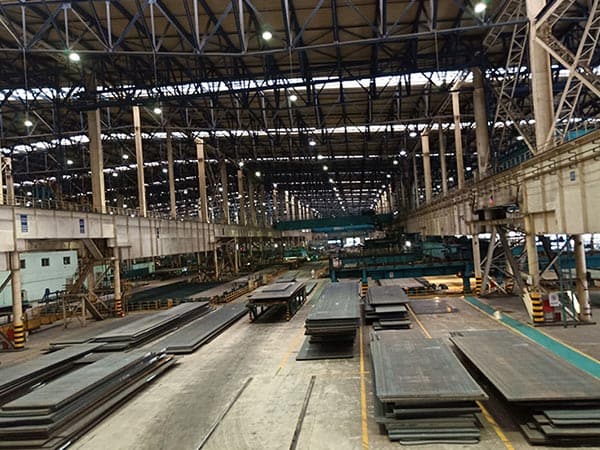
Technical Profile of S315MC High-Strength Steel
S315MC is a high-yield-strength, hot-rolled steel specifically designed for cold forming, governed by the European standard EN 10149-2. The 'S' denotes structural steel, '315' indicates a minimum yield strength of 315 MPa, and 'MC' signifies that the material is thermomechanically rolled. For large excavator manufacturers, this grade represents a critical balance between weight reduction and structural integrity. Unlike traditional carbon steels, S315MC utilizes micro-alloying elements to achieve its properties without the need for heavy alloying, which enhances its weldability and processing efficiency.
Large excavators operate under extreme cyclic loads and harsh environmental conditions. The steel used in their chassis, booms, and frames must possess not only high static strength but also exceptional fatigue resistance and low-temperature toughness. S315MC provides these attributes through a fine-grained microstructure achieved during the thermomechanical rolling process, which starts with high-quality slabs produced via continuous casting.
The Continuous Casting Process for S315MC
Continuous casting (CC) is the metallurgical bridge between steelmaking and rolling. For S315MC, the continuous casting process is highly specialized to ensure the uniform distribution of micro-alloying elements like Niobium (Nb), Titanium (Ti), and Vanadium (V). The goal is to produce a slab with minimal internal defects, such as macro-segregation and non-metallic inclusions, which could lead to failure during the high-stress operation of an excavator.
- Secondary Refining and Degassing: Before casting, the molten steel undergoes vacuum degassing (RH or VD) to reduce oxygen, hydrogen, and nitrogen levels. This is crucial for S315MC to prevent hydrogen-induced cracking and ensure the cleanliness of the steel matrix.
- Tundish Temperature Control: Maintaining a stable and precise superheat in the tundish is vital. For S315MC, the temperature is tightly controlled to promote an equiaxed grain zone in the slab center, reducing central segregation.
- Electromagnetic Stirring (EMS): The use of mold and strand EMS helps in refining the solidification structure. By stirring the liquid core, manufacturers can achieve a more uniform distribution of alloying elements, which is essential for the consistent mechanical properties required in large-scale excavator components.
- Soft Reduction Technology: To further eliminate central porosity and segregation, heavy-duty continuous casters employ mechanical soft reduction near the end of the solidification track. This ensures the S315MC slab has a dense, high-quality core.
Chemical Composition and Metallurgical Design
The performance of S315MC is rooted in its low carbon content and strategic micro-alloying. The low carbon equivalent (Ceq) is the primary reason for its excellent weldability, a non-negotiable requirement for the complex welded structures of large excavators.
| Element | Maximum Percentage (%) | Role in S315MC |
|---|---|---|
| Carbon (C) | 0.12 | Ensures weldability and ductility. |
| Manganese (Mn) | 1.30 | Increases strength and improves hardenability. |
| Silicon (Si) | 0.50 | Acts as a deoxidizer and provides solid solution strengthening. |
| Phosphorus (P) | 0.025 | Kept low to prevent cold shortness. |
| Sulfur (S) | 0.020 | Kept low to improve toughness and prevent lamellar tearing. |
| Aluminium (Al) | 0.015 (min) | Grain refinement and deoxidation. |
| Nb + Ti + V | 0.22 (max total) | Micro-alloying for grain refinement and precipitation hardening. |
Mechanical Properties and Performance Metrics
S315MC is engineered to provide a high strength-to-weight ratio. For large excavators, this means reducing the dead weight of the boom and arm, allowing for larger bucket capacities and improved fuel efficiency without sacrificing safety.
- Yield Strength: Minimum 315 MPa. This ensures the structural components can withstand high hydraulic forces without permanent deformation.
- Tensile Strength: 390 to 510 MPa. This range provides a safe buffer for peak loads during heavy excavation or rock breaking.
- Elongation: Typically 20-24% (depending on thickness). High ductility is essential for the cold forming of curved chassis parts and for absorbing energy during impact.
- Bending Properties: S315MC is designed for tight bending radii. This allows engineers to design complex, streamlined shapes that distribute stress more effectively than sharp-angled joints.
Advanced Processing: Welding and Forming
In the production of large excavators, the ability to process steel efficiently is as important as the steel's raw strength. S315MC excels in both manual and robotic welding environments. Due to its low carbon content, it does not typically require preheating for standard thicknesses, which significantly reduces manufacturing cycle times.
Welding Compatibility: S315MC can be welded using all standard methods, including MAG (Metal Active Gas), SAW (Submerged Arc Welding), and laser welding. The Heat Affected Zone (HAZ) maintains high toughness, preventing the brittle fractures that can occur in lower-quality steels under the vibration of a working excavator.
Cold Forming: The 'MC' designation ensures that the steel can be cold-formed into U-beams, C-channels, and other structural profiles. This is particularly useful for the main longitudinal beams of an excavator's undercarriage, where high precision and strength are required simultaneously.
Environmental Adaptability and Fatigue Life
Large excavators are often deployed in extreme environments, from the sub-zero temperatures of arctic mines to the humid heat of tropical construction sites. S315MC's fine-grained structure, a result of the controlled continuous casting and thermomechanical rolling, provides excellent low-temperature impact energy absorption. This prevents 'brittle fracture'—a catastrophic failure mode where steel snaps like glass under stress in cold weather.
Furthermore, the fatigue life of S315MC is superior to standard structural steels. The consistent internal quality derived from the continuous casting process means there are fewer 'stress raisers' (like internal voids or large inclusions) that could initiate fatigue cracks over thousands of hours of operation. This reliability is why S315MC is a staple in the heavy machinery industry.
Applications in the Excavator Industry
The versatility of S315MC makes it suitable for various components within a large excavator's assembly. Its primary use cases include:
- Lower Chassis Frames: The foundation of the excavator requires high yield strength to support the weight of the upper structure and the stresses of movement across uneven terrain.
- Boom and Arm Reinforcements: While higher grades like S700MC are often used for the main plates of the boom, S315MC is frequently used for internal stiffeners and secondary structural elements where a balance of strength and weldability is paramount.
- Cabin Structures: Providing a ROPS (Roll-Over Protective Structure) compliant cabin requires steel that can absorb energy through deformation without snapping, making S315MC an ideal candidate.
- Attachment Brackets: The mounting points for buckets, rippers, and shears benefit from the material's toughness and resistance to vibration-induced wear.
Future Trends in Excavator Steel Technology
As the demand for 'greener' construction equipment grows, the industry is moving toward even higher strength steels to further reduce machine weight and carbon footprints. However, S315MC remains a benchmark grade due to its cost-effectiveness and proven track record. Innovations in continuous casting, such as thin-slab casting and improved cooling control, continue to enhance the consistency of S315MC, ensuring it meets the evolving needs of global heavy equipment manufacturers. The integration of digital twin technology in the casting process allows for real-time monitoring of slab quality, ensuring that every ton of S315MC delivered to an excavator factory meets the highest standards of structural integrity.
Leave a message