
What factors influence the development of S500MC price
A detailed expert analysis of the factors driving S500MC steel prices, including raw material costs, thermomechanical processing, global demand in heavy industry, and technical specifications.
The Fundamental Role of Chemical Composition and Raw Materials
The pricing of S500MC, a high-yield-strength steel for cold forming, is deeply rooted in its chemical blueprint. Unlike standard mild steels, S500MC is a micro-alloyed steel. The addition of elements such as Niobium (Nb), Vanadium (V), and Titanium (Ti) is essential to achieve its specified minimum yield strength of 500 MPa. These micro-alloying elements are traded on global markets and their price volatility directly impacts the final cost of the steel. For instance, Niobium is a critical component for grain refinement; when its supply from major producers like Brazil fluctuates, the production cost of S500MC reacts immediately.
Beyond micro-alloys, the base cost of iron ore and coking coal remains the primary driver. As S500MC is typically produced via the basic oxygen furnace (BOF) or electric arc furnace (EAF) route, the global indices for high-grade iron ore and scrap metal are the baseline for any price negotiation. Energy costs also play a disproportionate role. The production of high-strength low-alloy (HSLA) steels requires precise temperature control during the melting and refining stages to ensure the removal of impurities like sulfur and phosphorus, which must be kept to extremely low levels (typically S ≤ 0.015% and P ≤ 0.025%) to maintain ductility.
| Element | Maximum Content (%) | Impact on Price |
|---|---|---|
| Carbon (C) | 0.12 | Lowers weldability if too high; requires careful processing. |
| Manganese (Mn) | 1.60 | Essential for strength; price follows global Mn ore trends. |
| Silicon (Si) | 0.50 | Influences deoxidation and price based on ferro-silicon costs. |
| Nb + V + Ti | 0.22 | High-cost micro-alloys; primary differentiator for S500MC. |
Thermomechanical Rolling (TMCP) and Manufacturing Complexity
The "MC" in S500MC stands for thermomechanically rolled (M) and suitable for cold forming (C). This manufacturing process is significantly more complex than standard hot rolling. Thermomechanical Control Process (TMCP) involves strict control of the rolling temperature and the cooling rate. This process allows the steel to achieve high strength and excellent toughness without the need for high carbon content or expensive heat treatments like quenching and tempering.
The requirement for specialized rolling mills capable of applying high rolling pressures at specific temperature windows limits the number of manufacturers who can produce high-quality S500MC. This restricted supply base can lead to price premiums, especially when demand peaks. Furthermore, the yield rate of TMCP steel is often lower than that of commercial grades due to the stringent requirements for mechanical property uniformity across the entire coil or plate. Any deviation in the cooling curve can result in material that fails to meet the 500 MPa yield threshold, leading to scrap or downgrading, which adds to the overall production cost structure.
Market Demand from Heavy Industry and Logistics
The demand for S500MC is heavily concentrated in sectors that prioritize weight reduction without compromising structural integrity. The automotive industry, particularly the manufacturing of truck chassis, trailers, and specialized transport equipment, is a major consumer. When the logistics and transport sector experiences growth, the demand for S500MC surges, driving prices upward. The ability of S500MC to allow for thinner wall thicknesses while maintaining load-bearing capacity is its primary value proposition.
In the construction machinery sector, S500MC is used for crane booms, excavator components, and agricultural equipment. These industries are cyclical and sensitive to global infrastructure spending. A surge in mining activity or large-scale civil engineering projects increases the consumption of high-strength steels. Because S500MC offers a specific balance of 500 MPa yield strength and a minimum elongation of 12-14% (depending on thickness), it is often the "sweet spot" for engineers, making it a highly sought-after grade that commands a stable demand-driven price floor.
Mechanical Properties and Performance Value
The price of S500MC is also a reflection of the performance it provides to the end-user. By using S500MC instead of a standard S355 grade, manufacturers can reduce the weight of a component by up to 25-30%. This "lightweighting" leads to fuel savings and increased payload capacity for the end-user. Consequently, the pricing is often viewed through the lens of "value-in-use." If the price of S500MC rises too high relative to S355, engineers may revert to heavier designs; however, the current trend toward carbon reduction and efficiency keeps S500MC in high demand.
Mechanical properties such as the ratio of yield strength to tensile strength and the impact toughness at low temperatures (often tested at -20°C or -40°C for specific sub-grades) are critical. Steel that guarantees impact energy absorption in cold environments is priced higher due to the additional testing and stricter metallurgical control required. Buyers must distinguish between standard S500MC and those with guaranteed low-temperature toughness, as the latter involves higher production risks and costs.
Geopolitical Factors and Trade Regulations
Global trade dynamics are a significant factor in the development of S500MC prices. Import duties, anti-dumping measures, and regional trade agreements can create price disparities between markets. For instance, European prices for S500MC may differ significantly from Asian prices due to local energy costs and carbon taxes like the Carbon Border Adjustment Mechanism (CBAM). As governments push for greener steel production, the cost of carbon credits is becoming a permanent fixture in the price breakdown of S500MC.
Logistics costs, including ocean freight and inland trucking, also play a role, especially for a material that is often shipped in large, heavy coils. Fluctuations in fuel prices and container availability can add a significant margin to the delivered price of the steel. Furthermore, currency exchange rates, particularly the USD/EUR or USD/CNY pairs, influence the competitiveness of different mills in the global market, often leading to rapid price adjustments in import-heavy regions.
Dimensional Specifications and Order Volume
The physical dimensions of the S500MC order—thickness, width, and length—greatly influence the per-ton price. Producing very thin (e.g., 2.0mm) or very thick (e.g., 15mm) S500MC requires different rolling mill setups and can result in slower production speeds. Extreme widths also command a premium because only a few wide-strip mills can maintain the necessary flatness and gauge tolerances across the entire width of a high-strength coil.
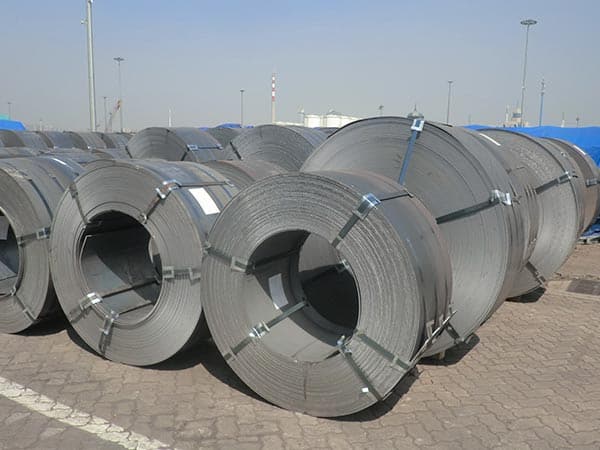
Order volume and lead times are equally critical. Large-scale automotive contracts often secure lower prices through long-term agreements, whereas small-to-medium enterprises buying from stockholders will pay a premium for immediate availability. The cost of holding inventory for S500MC is higher than for standard grades due to its higher capital value and the need for controlled storage conditions to prevent surface oxidation, which can interfere with subsequent welding or painting processes.
Environmental Adaptability and Sustainability
Modern engineering requires materials that can withstand diverse environmental conditions. S500MC's fine-grained microstructure provides better resistance to fatigue and stress corrosion cracking compared to traditional hot-rolled steels. This durability extends the lifecycle of the final product, providing long-term economic benefits that justify its initial price. As the industry moves toward a circular economy, the recyclability of HSLA steels like S500MC without losing their properties is an increasingly important factor for high-end manufacturers.
The shift toward "Green Steel"—produced using hydrogen or renewable energy—is the next frontier for S500MC pricing. Mills that invest in low-carbon technology are beginning to apply a "green surcharge." While this increases the nominal price, it allows manufacturers to meet strict environmental targets, creating a new market segment where the price is influenced by the carbon footprint of the steel as much as its mechanical properties.
Leave a message