
What is S700MC hot rolled plate used for?
Explore the extensive uses and technical properties of S700MC hot rolled plate. Learn why this high-strength low-alloy steel is essential for automotive chassis, heavy machinery, and structural weight reduction.
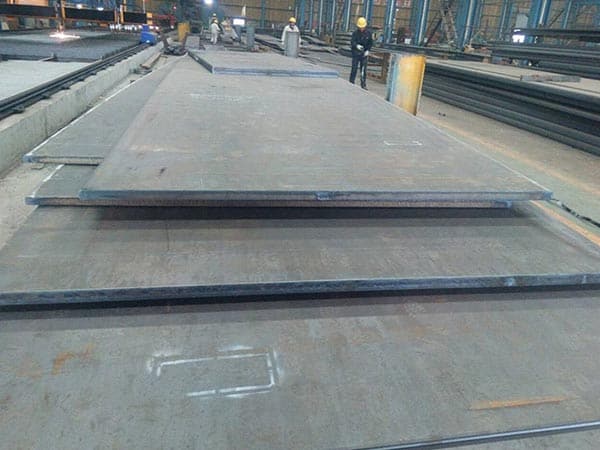
The Metallurgical Excellence of S700MC Hot Rolled Plate
S700MC is a high-strength, thermomechanically rolled steel specifically engineered for cold forming. Governed by the European standard EN 10149-2, this grade represents a significant leap in material science, offering a minimum yield strength of 700 MPa. The 'MC' suffix denotes its thermomechanical processing (TMCP) and its suitability for cold forming. Unlike traditional structural steels that rely on heavy alloying or quench-and-temper cycles, S700MC achieves its remarkable properties through a precisely controlled rolling process at specific temperature ranges, followed by accelerated cooling. This results in an ultra-fine grain structure, which is the primary driver behind its superior strength-to-weight ratio and exceptional toughness.
Mechanical Properties and Material Consistency
The core value of S700MC lies in its mechanical performance. With a yield strength nearly double that of conventional S355 steel, it allows engineers to reduce plate thickness without compromising structural integrity. This section details the typical mechanical characteristics that make S700MC a preferred choice for high-stress environments.
| Property | Value (Minimum/Range) |
|---|---|
| Yield Strength (ReH) | 700 MPa (min) |
| Tensile Strength (Rm) | 750 - 950 MPa |
| Elongation (A80mm) | 10% - 12% (depending on thickness) |
| Impact Energy (KV at -20°C) | 40 J (Typical) |
The chemical composition of S700MC is strictly limited to ensure excellent weldability and formability. By keeping carbon levels low (typically below 0.12%) and utilizing micro-alloying elements like Niobium (Nb), Vanadium (V), and Titanium (Ti), the steel maintains a fine ferritic-pearlitic grain structure. This micro-alloying strategy prevents grain growth during the heat-affected zone (HAZ) phase of welding, ensuring the joints remain as strong as the base metal.
Fabrication and Processing Capabilities
One of the primary reasons S700MC is used extensively is its ease of fabrication. Despite its high strength, it behaves remarkably well under standard workshop conditions. Cold Forming is a standout feature; S700MC can be bent to tight radii, provided the correct tools and parameters are used. For plates with a thickness (t) less than 3mm, an internal bending radius of 1.0t is achievable, which is nearly impossible with standard high-strength grades.
Welding Performance: S700MC is compatible with all conventional welding methods, including MAG (Metal Active Gas), submerged arc welding, and laser beam welding. Because of its low carbon equivalent (CEV), the risk of cold cracking is significantly minimized. However, it is crucial to manage heat input. Excessive heat can lead to softening in the HAZ, so manufacturers often recommend keeping the cooling time (t8/5) within a specific range to preserve the fine grain structure.
Cutting and Machining: Whether using laser, plasma, or waterjet cutting, S700MC provides clean edges with minimal thermal distortion. Its uniform hardness across the plate surface ensures predictable tool wear during drilling or milling operations, making it highly cost-effective for mass production environments.
Heavy Transport and Automotive Applications
The most prominent use for S700MC is within the heavy transport sector. The global push for lightweighting—reducing vehicle weight to increase payload and fuel efficiency—has made S700MC an indispensable material. Long members for truck chassis, cross-members, and suspension components are frequently manufactured from S700MC. By replacing S355 with S700MC, manufacturers can often reduce the weight of a chassis by up to 30%, which directly translates to lower carbon emissions and higher transport profitability.
- Truck Frames: S700MC provides the high fatigue resistance necessary to withstand dynamic loads during long-haul transport.
- Trailers and Tankers: Reducing the tare weight of tankers allows for a higher volume of liquid transport without exceeding road weight limits.
- Bus Structures: The high energy absorption capacity of S700MC improves safety during collisions while keeping the vehicle light for better maneuverability.
Lifting and Material Handling Equipment
In the world of mobile cranes, telehandlers, and aerial work platforms, strength is non-negotiable, but weight is a critical constraint. S700MC is used to construct telescoping booms and outriggers. The higher yield strength allows for longer reach and higher lifting capacities without increasing the overall footprint of the machine. The excellent low-temperature toughness of S700MC also ensures that these machines can operate safely in arctic environments where standard steels might become brittle and fail.
Agricultural and Earthmoving Machinery
Modern agriculture requires equipment that is both massive and efficient. S700MC is found in the frames of large seeders, plows, and harvesters. These machines face extreme abrasive forces and high mechanical stress. The high tensile strength of S700MC ensures that the equipment does not deform under the pressure of hard soil or heavy loads. Similarly, in the mining and earthmoving sector, S700MC is used for the structural parts of dump trucks and loaders, where it provides a balance between impact resistance and structural rigidity.
Environmental Adaptability and Sustainability
The use of S700MC contributes significantly to environmental sustainability. Beyond the fuel savings associated with lightweight vehicles, the production of S700MC via the TMCP process is more energy-efficient than the traditional quench-and-temper methods. Furthermore, the longevity of structures built with S700MC reduces the frequency of replacement, leading to a lower lifecycle carbon footprint. Its resistance to atmospheric corrosion, while not as high as specialized weathering steels, is superior to basic carbon steels due to the dense grain structure and specific micro-alloying elements.
Strategic Advantages in Structural Engineering
Beyond mobile applications, S700MC is increasingly utilized in fixed structures where high load-bearing capacity is required in a compact space. This includes high-bay racking systems, offshore structures (non-primary members), and specialized architectural components. The ability to use thinner sections means less welding volume, fewer consumables, and faster assembly times, providing a clear economic advantage to construction firms and fabricators.
By choosing S700MC, engineers are not just selecting a material; they are opting for a high-performance solution that balances strength, ductility, and processability. As industries continue to evolve toward higher efficiency and lower environmental impact, S700MC hot rolled plate stands as a cornerstone of modern industrial design.
Leave a message