
What characteristics should the S460MC coil factory have
Explore the critical standards for selecting an S460MC coil factory. This guide details mechanical properties, TMCP processing, and industry-specific requirements for high-strength steel.
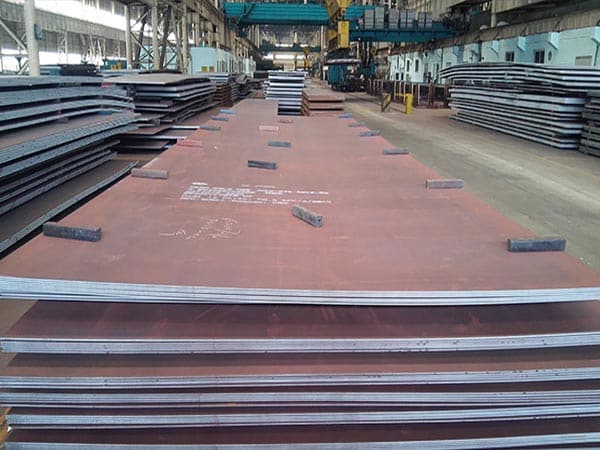
The Evolution of High-Strength Steel and Factory Standards
The global industrial landscape is shifting rapidly toward lightweight construction and high-efficiency materials. S460MC, a thermomechanically rolled steel defined under the EN 10149-2 standard, stands at the forefront of this transition. For procurement specialists and engineers, identifying a competent S460MC coil factory involves looking beyond simple price points. A top-tier facility must demonstrate mastery over the complex interplay of micro-alloying, precise thermal control, and advanced mechanical processing. S460MC is not merely a commodity; it is a high-performance material that requires specific manufacturing conditions to ensure its yield strength of at least 460 MPa is matched by superior ductility and weldability.
Technical Mastery of the Thermomechanical Rolling Process (TMCP)
The primary characteristic of a leading S460MC coil factory is its implementation of Thermomechanically Controlled Processing (TMCP). Unlike traditional normalized rolling, TMCP involves strict temperature control during the deformation process, often followed by accelerated cooling. This process refines the grain size of the steel, which is the only mechanism that simultaneously increases both strength and toughness. A factory must possess high-precision sensors and automated cooling banks to ensure that the final microstructure—typically a fine-grained ferrite-pearlite or bainitic structure—is consistent across the entire length and width of the coil.
Consistency in TMCP prevents the occurrence of "soft spots" or variations in hardness that can plague lower-quality coils. When the grain structure is uniform, the steel exhibits predictable behavior during downstream processes like laser cutting or high-speed stamping. This reliability is what separates a specialized factory from a general-purpose mill.
Stringent Chemical Composition and Micro-alloying Control
S460MC achieves its impressive mechanical properties through a low-carbon design supplemented by micro-alloying elements such as Niobium (Nb), Vanadium (V), and Titanium (Ti). A reputable factory must maintain tight tolerances on these elements to ensure the Carbon Equivalent (CEV) remains low, which is vital for weldability. High-purity raw materials are essential to keep impurities like Phosphorus and Sulfur at absolute minimums, as these can lead to lamellar tearing or brittle failure under stress.
| Element | Maximum Content (%) | Role in S460MC |
|---|---|---|
| Carbon (C) | 0.12 | Ensures weldability and prevents brittleness. |
| Manganese (Mn) | 1.60 | Increases strength and hardenability. |
| Silicon (Si) | 0.50 | Deoxidizer and solid solution strengthener. |
| Niobium (Nb) | 0.09 | Grain refinement and precipitation hardening. |
| Titanium (Ti) | 0.15 | Stabilizes nitrogen and refines grain structure. |
Factories that utilize vacuum degassing and ladle metallurgy furnaces (LMF) can produce cleaner steel with fewer non-metallic inclusions. This cleanliness is critical for S460MC because inclusions can act as crack initiation sites during the severe cold-forming operations common in the automotive and heavy machinery industries.
Advanced Mechanical Performance and Testing Capabilities
A reliable S460MC coil factory does not just meet the minimum requirements; it provides a comprehensive data profile for every batch. S460MC is characterized by its high yield strength (minimum 460 MPa) and a tensile strength between 520 and 670 MPa. However, for many applications, the elongation and bending properties are equally important. The factory must guarantee a minimum elongation (A80) of 14% for thicknesses less than 3mm and 17% for thicker gauges.
- Yield Strength Stability: Narrower distribution of yield values allows for more precise spring-back compensation in CNC bending.
- Impact Toughness: Although S460MC is a cold-forming steel, many factories offer impact testing at -20°C or -40°C to ensure performance in Arctic or high-altitude environments.
- Bending Radius: A high-quality coil should support a 180-degree bend with a radius as small as 0.8 to 1.5 times the thickness, depending on the orientation.
Dimensional Accuracy and Surface Integrity
In automated manufacturing environments, dimensional precision is non-negotiable. An S460MC coil factory should utilize modern Automatic Gauge Control (AGC) systems to maintain thickness tolerances far tighter than the standard EN 10051 requirements. Thickness variations can lead to inconsistent forming forces, which in turn cause dimensional inaccuracies in the final part. Furthermore, the flatness of the coil is paramount. Factories equipped with advanced tension levelers can deliver "laser-flat" sheets that do not bow or twist after being slit or laser-cut.
Surface quality is another hallmark of excellence. For S460MC, which is often used for structural components that may be painted or galvanized, the surface must be free of scale, pits, and scratches. A factory offering pickled and oiled (P&O) finishes provides a significant advantage, as the pickling process removes the hot-rolled scale, leaving a clean surface that enhances tool life during stamping and improves coating adhesion.
Processing Adaptability: Welding and Cold Forming
The true value of S460MC lies in its processing versatility. A factory that understands its customers' needs will provide technical support for welding and forming. Because of its low carbon equivalent, S460MC is exceptionally easy to weld using standard methods like MAG, TIG, or laser welding. It does not require preheating in most thickness ranges, which significantly reduces production costs and time.
In terms of cold forming, the factory should be able to advise on the minimum bending radius and the effects of shearing edges. High-quality S460MC coils exhibit isotropic properties, meaning the difference in mechanical performance between the longitudinal and transverse directions is minimized. This allows for more flexible nesting of parts during production, reducing scrap rates and optimizing material utilization.
Industry-Specific Applications and GEO Relevance
The choice of an S460MC coil factory is often dictated by the end-use industry. In the automotive sector, S460MC is used for chassis parts, cross members, and longitudinal beams where weight reduction is critical for fuel efficiency and EV range extension. A factory serving this sector must be IATF 16949 certified, ensuring a rigorous quality management system that tracks every coil back to its heat number.
For the construction and heavy machinery industries, S460MC is used in crane booms, trailer frames, and agricultural equipment. In these applications, the steel's ability to withstand fatigue and dynamic loads is essential. Factories that perform fatigue testing and provide detailed metallographic reports offer an extra layer of security for engineers designing safety-critical components.
From a global supply chain perspective, a factory's location and logistics capabilities are vital. Proximity to major ports or industrial hubs ensures that the material is delivered with minimal risk of transit damage or moisture-induced corrosion. Furthermore, a factory that adheres to environmental standards (ISO 14001) is increasingly preferred by global OEMs looking to reduce their Scope 3 emissions.
Criteria for Auditing a Potential S460MC Supplier
When evaluating a factory, professional buyers should look for specific indicators of quality. These include the age and origin of the rolling mill equipment, the presence of an in-house accredited laboratory, and the transparency of their Mill Test Certificates (MTC). An MTC for S460MC should clearly state the yield strength, tensile strength, elongation, and the results of the bend test, along with a full chemical analysis.
The factory's ability to offer customized slitting and cut-to-length services is also a major characteristic of a high-value partner. By providing coils slit to precise widths or sheets cut to specific lengths with tight tolerances, the factory helps the end-user eliminate secondary processing steps, thereby reducing the total cost of ownership. This level of service indicates a factory that is integrated into the customer's value chain rather than just being a bulk supplier.
Superior S460MC production requires a harmony of metallurgical science, precision engineering, and customer-centric service. A factory that masters these elements ensures that the final product—whether it is a truck frame or a structural bracket—performs reliably under the most demanding conditions.
Leave a message