
S700MC cold rolled coil with low and intermediate tensile strength
Explore the comprehensive technical properties of S700MC cold rolled coils, including chemical composition, mechanical performance, welding characteristics, and industrial applications.
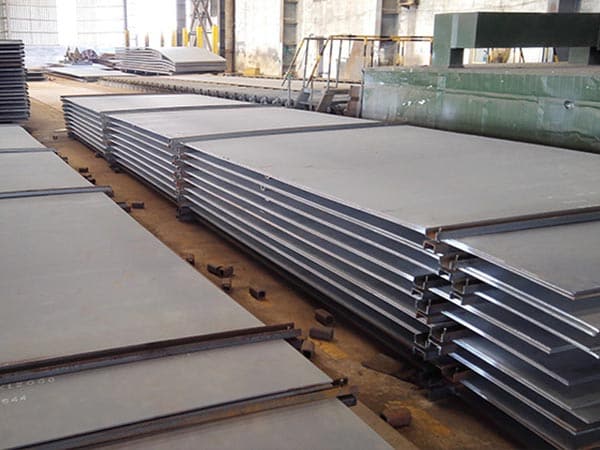
The Technical Evolution of S700MC Cold Rolled Steel
S700MC represents the pinnacle of High Strength Low Alloy (HSLA) steels, specifically engineered for cold forming processes. Governed by the EN 10149-2 standard, this material is produced through thermomechanical rolling, a process that meticulously controls the temperature and deformation during rolling to refine the grain structure. While the industry often categorizes steel by tensile strength, S700MC occupies a unique position where it offers high yield strength (minimum 700 MPa) while maintaining the ductility typically found in intermediate strength grades. This balance is critical for manufacturers looking to reduce vehicle or structural weight without sacrificing safety or ease of fabrication.
The 'M' in S700MC signifies its thermomechanically rolled condition, while the 'C' denotes its suitability for cold forming. Unlike traditional carbon steels, S700MC achieves its properties through a sophisticated micro-alloying strategy rather than high carbon content. This makes the material exceptionally responsive to modern manufacturing techniques, including laser cutting and automated robotic welding, which are standard in high-volume production environments.
Chemical Composition and Micro-Alloying Precision
The performance of S700MC is rooted in its chemical blueprint. By keeping the carbon content extremely low (typically below 0.12%), the steel maintains excellent weldability and toughness. The strength is derived from the addition of micro-alloying elements such as Niobium (Nb), Titanium (Ti), and Vanadium (V). These elements form fine precipitates that pin grain boundaries during the cooling process, preventing grain growth and resulting in a fine-grained ferritic-pearlitic or bainitic microstructure.
| Element | Maximum Content (%) |
|---|---|
| Carbon (C) | 0.12 |
| Manganese (Mn) | 2.10 |
| Silicon (Si) | 0.60 |
| Phosphorus (P) | 0.025 |
| Sulfur (S) | 0.015 |
| Aluminium (Al) | 0.015 |
| Nb + Ti + V | 0.22 |
This precise chemical control ensures that the steel does not suffer from the brittleness often associated with high-strength materials. The low sulfur content is particularly important for improving the steel's cleanliness and its resistance to lamellar tearing during welding, as well as enhancing its performance in cold bending operations.
Mechanical Properties and Structural Integrity
The primary advantage of S700MC is its high yield-to-tensile ratio. With a minimum yield strength of 700 MPa, it allows engineers to design thinner sections that can carry the same loads as thicker, lower-grade steels. This 'lightweighting' capability is the driving force behind its adoption in the transport and lifting industries. Tensile strength typically ranges between 750 and 950 MPa, providing a robust safety margin for structural components.
- Yield Strength (ReH): Min 700 MPa
- Tensile Strength (Rm): 750 - 950 MPa
- Elongation (A80mm): Min 10-12% (depending on thickness)
- Bending Radius: Excellent capability, typically 1.0t to 1.5t for 90-degree bends
The elongation properties of S700MC are remarkable for a steel of this strength level. It retains enough plasticity to undergo complex forming operations without cracking, which is a common failure mode in traditional high-carbon steels. This ductility is a result of the fine grain structure achieved through the thermomechanical rolling process mentioned earlier.
Advanced Processing: Bending and Welding
Fabricating with S700MC requires an understanding of its unique physical characteristics. Due to its high yield strength, the material exhibits significant springback after bending. Fabricators must account for this by over-bending the material or using CNC-controlled press brakes with real-time angle measurement. Despite this, the tight bending radii achievable with S700MC allow for compact designs in chassis and frame components.
Welding S700MC is highly efficient because of its low carbon equivalent (CEV). It can be welded using all standard methods, including MAG (Metal Active Gas), MIG, and laser welding. However, it is vital to control the heat input. Excessive heat can lead to grain coarsening in the Heat Affected Zone (HAZ), which may locally reduce the strength and toughness. Generally, preheating is not required for S700MC, which simplifies the production workflow and reduces energy costs.
When selecting filler metals, it is recommended to use consumables that match the strength of the base metal, although in some non-critical joints, 'under-matching' filler metals can be used to improve the ductility of the weld seam. The clean chemistry of S700MC ensures that the risk of cold cracking is minimal, even in constrained joints.
Environmental Adaptability and Fatigue Resistance
S700MC is often utilized in outdoor environments where it is subjected to cyclic loading and varying temperatures. Its fine-grained structure provides excellent low-temperature toughness, often meeting impact energy requirements at -20°C or even -40°C. This makes it suitable for heavy machinery operating in arctic or high-altitude conditions.
Fatigue resistance is another critical attribute. Because S700MC components are often thinner than their mild steel counterparts, they are more susceptible to vibration and cyclic stress. However, the high yield strength and homogeneous microstructure of S700MC provide superior resistance to fatigue crack initiation. In the automotive industry, this translates to longer service lives for truck frames and crane booms that undergo thousands of loading cycles.
Diversified Industrial Applications
The demand for S700MC cold rolled coils is driven by industries that prioritize weight reduction and structural efficiency. In the commercial vehicle sector, it is used for longitudinal beams, cross members, and chassis components. By switching from S355 to S700MC, manufacturers can often reduce the weight of a chassis by up to 30%, directly increasing the payload capacity and fuel efficiency of the vehicle.
In the lifting and mobile crane industry, S700MC is the material of choice for telescopic booms and outriggers. The high strength-to-weight ratio allows for longer reach and higher lifting capacities without increasing the overall weight of the crane unit. Similarly, in the agricultural sector, it is used for the frames of large trailers and soil cultivation equipment, where durability and weight are competing requirements.
Other applications include:
- Cold-pressed parts: Brackets and supports for industrial machinery.
- Safety components: Side impact beams and bumper reinforcements in passenger cars.
- Storage systems: High-load racking and shelving where space optimization is key.
- Renewable energy: Structural supports for solar tracking systems.
Surface Quality and Coating Compatibility
Cold rolled S700MC offers a superior surface finish compared to hot rolled versions. The smooth, clean surface is ideal for subsequent coating processes such as hot-dip galvanizing, powder coating, or E-coating. The low silicon content can be specifically requested to ensure a controlled zinc layer growth during galvanizing, preventing the formation of brittle Sandelin-effect coatings.
For high-end aesthetic applications or parts requiring precise tolerances, the cold rolling process ensures tight thickness control and excellent flatness. This consistency is vital for automated assembly lines where variations in material thickness can lead to production delays or tool wear. The absence of scale on the cold-rolled surface also extends the life of stamping dies and cutting tools, providing a secondary cost benefit to the manufacturer.
Optimizing Material Selection
Choosing S700MC is not just about strength; it is about total cost of ownership. While the price per ton may be higher than commodity grades, the reduction in material volume, lower welding costs (due to thinner sections), and improved end-product performance usually result in significant overall savings. Designers should work closely with material experts to ensure that the geometry of the part takes full advantage of the steel's high yield strength while respecting its bending limits.
As global regulations continue to push for lower carbon emissions and higher efficiency, S700MC stands as a critical material in the transition toward sustainable engineering. Its ability to deliver extreme performance under demanding conditions while remaining highly processable makes it an indispensable tool for the modern engineer.
Leave a message