
Why is ZQS700L automotive steel sheet so popular
Discover why ZQS700L automotive steel is the top choice for modern vehicle manufacturing. This guide explores its mechanical properties, weldability, and role in lightweighting.
The Rise of ZQS700L in the Modern Automotive Landscape
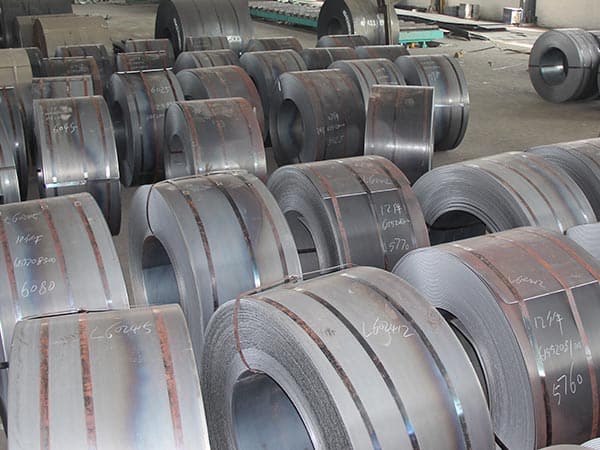
In the pursuit of fuel efficiency and enhanced safety, the automotive industry has shifted its focus toward materials that offer a high strength-to-weight ratio. ZQS700L, a high-strength low-alloy (HSLA) steel, has emerged as a cornerstone in this transformation. Its popularity stems from a unique balance of ultra-high yield strength and exceptional cold-forming capabilities, making it indispensable for structural components that must withstand extreme stress while remaining lightweight.
Unlike traditional carbon steels, ZQS700L is engineered to meet the rigorous demands of heavy-duty vehicles, trailers, and passenger car frames. The "700" in its designation signifies a minimum yield strength of 700 MPa, a benchmark that allows engineers to reduce material thickness without compromising the structural integrity of the vehicle. This capability is central to the global push for "green" transportation and reduced carbon footprints.
Mechanical Performance: Beyond the 700MPa Threshold
The core appeal of ZQS700L lies in its mechanical profile. It provides a robust defense against deformation, which is critical for the safety cage of a vehicle and the load-bearing beams of a trailer. By utilizing micro-alloying techniques, manufacturers achieve a fine-grained microstructure that enhances both toughness and strength.
| Property | Typical Values (ZQS700L) | Significance in Automotive Design |
|---|---|---|
| Yield Strength (ReH) | ≥ 700 MPa | Prevents permanent deformation under heavy loads. |
| Tensile Strength (Rm) | 750 - 950 MPa | Ensures the material does not fracture easily. |
| Elongation (A50mm) | ≥ 12% | Allows for complex shaping during the stamping process. |
| Impact Energy (-20°C) | ≥ 27 J | Maintains structural safety in cold climates. |
These metrics demonstrate that ZQS700L is not just about raw power; it is about resilience. The high elongation percentage is particularly noteworthy for a 700MPa grade steel, as it allows for the creation of complex geometries that would typically cause cracking in lower-quality high-strength steels.
Chemical Composition and Micro-alloying Excellence
The popularity of ZQS700L is also rooted in its sophisticated chemical metallurgy. To achieve such high strength without making the steel brittle, a precise combination of Niobium (Nb), Vanadium (V), and Titanium (Ti) is added. These elements facilitate grain refinement and precipitation hardening during the rolling process.
- Carbon Control: Low carbon content (usually ≤ 0.12%) ensures excellent weldability and prevents the formation of hard, brittle phases in the heat-affected zone.
- Manganese Addition: Enhances hardenability and solid solution strengthening.
- Sulfur and Phosphorus Limitation: Extremely low levels of S and P are maintained to improve the steel's purity and resistance to lamellar tearing.
This chemical synergy ensures that ZQS700L remains ductile enough for cold bending while maintaining the hardness required for wear resistance in harsh environments.
Superior Process Performance: Bending and Welding
For manufacturers, the ease of processing is a decisive factor. ZQS700L is favored because it minimizes production bottlenecks. Its cold-forming performance is exceptional; it can be bent to tight radii without surface cracking, which is essential for manufacturing U-beams, cross-members, and chassis rails.
Welding is another area where ZQS700L excels. Due to its low carbon equivalent (Ceq), it can be welded using standard methods such as MAG (Metal Active Gas) or laser welding without the need for extensive pre-heating. This reduces energy consumption in the factory and speeds up the assembly line. The integrity of the weld joint remains high, ensuring that the entire structure behaves uniformly under stress.
Lightweighting: The Economic and Environmental Driver
The automotive industry is under constant pressure to reduce vehicle weight to meet stringent emission standards. ZQS700L allows for a "thin-wall" design philosophy. By replacing a 10mm thick standard Q345B steel plate with a 6mm or 7mm ZQS700L plate, manufacturers can achieve a weight reduction of 30% to 40% for specific components.
This weight reduction translates directly into higher payload capacities for commercial trucks and lower fuel consumption for passenger vehicles. For logistics companies, this means more goods transported per trip, directly impacting the bottom line. The environmental benefit is equally significant, as lighter vehicles emit less CO2 throughout their operational lifespan.
Extending Beyond the Automotive Industry
While designed for vehicles, the attributes of ZQS700L have made it popular in several adjacent sectors. Its high strength and reliability are sought after in environments where weight and durability are at odds.
- Construction Machinery: Used in crane booms and telescopic arms where high lifting capacity must be paired with low self-weight.
- Logistics Equipment: Essential for the manufacturing of lightweight containers and high-end racking systems.
- Renewable Energy: Applied in the structural supports of solar tracking systems that require wind resistance and material efficiency.
- Agricultural Equipment: Used for large-scale harvesters and plows that need to withstand soil abrasion and structural fatigue.
Environmental Adaptability and Fatigue Resistance
ZQS700L is engineered to perform in diverse climates. Whether in the scorching heat of a desert or the sub-zero temperatures of arctic regions, the material maintains its mechanical properties. Its high fatigue strength is a critical factor for the automotive industry, where components are subjected to millions of vibration cycles over their lifetime. ZQS700L resists the initiation and propagation of fatigue cracks, significantly extending the service life of the vehicle chassis.
Furthermore, when combined with modern coating technologies like galvanization or specialized primers, ZQS700L exhibits excellent corrosion resistance. This ensures that the structural integrity is not compromised by rust, even when exposed to road salts and humid environments.
Market Competitiveness and Future Outlook
The popularity of ZQS700L is also driven by its cost-effectiveness. While the per-ton price of ZQS700L may be higher than mild steel, the total cost of the finished product is often lower. This is because less material is required to achieve the same strength, leading to savings in raw material volume, transportation costs, and even welding consumables.
As autonomous and electric vehicles (EVs) become more prevalent, the demand for ZQS700L is expected to grow. EVs require even more aggressive weight-saving measures to offset the weight of heavy battery packs. ZQS700L provides the perfect solution for battery enclosures and reinforced frames, ensuring that the next generation of vehicles is both safe and efficient.
The combination of high yield strength, excellent weldability, and superior formability makes ZQS700L a versatile tool for modern engineers. It bridges the gap between traditional heavy steel and expensive exotic alloys, providing a pragmatic, high-performance solution for the challenges of 21st-century manufacturing.
Leave a message