
What is the manufacturing method of S700MC sheet for auto frame
Discover the advanced manufacturing methods of S700MC steel, focusing on thermomechanical rolling, micro-alloying, and its critical role in automotive frame lightweighting and safety.
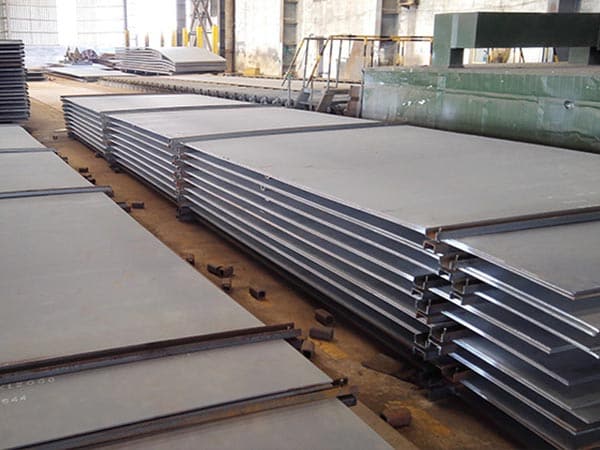
The Metallurgical Foundation of S700MC High-Strength Steel
The automotive industry is undergoing a paradigm shift towards lightweighting without compromising structural integrity. S700MC, a high-strength low-alloy (HSLA) steel governed by the EN 10149-2 standard, stands at the forefront of this evolution. Its manufacturing method is not merely a sequence of heating and rolling but a sophisticated orchestration of thermomechanical control processes (TMCP) and precise micro-alloying. Unlike traditional high-strength steels that rely on heavy alloying or quenching and tempering, S700MC achieves its 700 MPa minimum yield strength through grain refinement and precipitation hardening, making it an ideal candidate for heavy-duty truck frames, chassis components, and structural cross-members.
Chemical Composition: The Micro-Alloying Blueprint
The manufacturing journey begins in the basic oxygen furnace (BOF) or electric arc furnace (EAF), where the chemical composition is strictly regulated. The goal is to maintain a low carbon equivalent to ensure exceptional weldability while introducing specific micro-alloying elements. Carbon is typically kept below 0.12% to prevent the formation of brittle martensite during welding. Manganese (up to 2.10%) is added for solid solution strengthening and to improve hardenability. However, the true secret to S700MC lies in the synergistic effect of Niobium (Nb), Vanadium (V), and Titanium (Ti).
- Niobium: Acts as a powerful grain refiner by raising the recrystallization stop temperature, allowing for effective rolling in the non-recrystallization zone.
- Titanium: Forms stable nitrides at high temperatures, preventing grain growth during the reheating of slabs.
- Vanadium: Contributes to strength through the precipitation of fine carbonitrides during the cooling phase.
Sulfur and phosphorus levels are kept extremely low through advanced secondary metallurgy and vacuum degassing. Calcium treatment is often employed for inclusion shape control, transforming elongated manganese sulfides into spherical shapes, which significantly improves the steel's transverse ductility and impact toughness.
Thermomechanical Controlled Processing (TMCP): The Core Manufacturing Method
The defining characteristic of S700MC manufacturing is the Thermomechanical Controlled Processing (TMCP). This method integrates thermal treatment and mechanical deformation into a single continuous process. It differs from conventional hot rolling by strictly controlling the temperature and deformation rates at specific stages.
The process starts with slab reheating to approximately 1150°C to 1250°C. This temperature is high enough to dissolve most micro-alloying elements into the austenite matrix but low enough to prevent excessive grain coarsening. The rolling then proceeds in two distinct stages:
- Roughing Stage: High-temperature rolling where the austenite recrystallizes after each pass, leading to a moderately fine grain size.
- Finishing Stage: This is the critical phase. Rolling occurs below the recrystallization stop temperature (Tnr). Instead of recrystallizing, the austenite grains become elongated and flattened (pancaked), creating a high density of deformation bands and dislocations. These sites act as nucleation points for the subsequent ferrite transformation.
By maximizing the number of nucleation sites, the final microstructure becomes an ultra-fine-grained ferrite, often with a grain size of 5 to 10 microns. This refinement is the only strengthening mechanism that simultaneously increases both yield strength and fracture toughness, a principle described by the Hall-Petch relationship.
Accelerated Cooling and Phase Transformation
Immediately following the final rolling pass, the S700MC sheet enters a laminar cooling system. The cooling rate is a vital parameter. By rapidly cooling the steel from the finishing temperature to the coiling temperature (typically between 500°C and 600°C), the manufacturing process suppresses the formation of coarse pearlite and promotes a fine distribution of acicular ferrite or bainite. This rapid cooling also facilitates the
Leave a message