
What is the s500mc automotive steel equivalent astm price export to Canada
Explore S500MC automotive steel equivalents like ASTM A1011 HSLAS Grade 70, technical specifications, pricing trends, and logistics for exporting to the Canadian market.
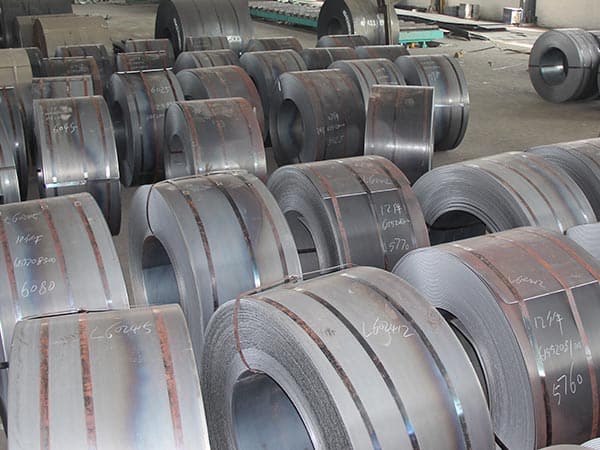
Understanding S500MC Automotive Steel and Its European Standard Roots
S500MC is a high-strength, hot-rolled steel specifically designed for cold forming, governed by the EN 10149-2 standard. The 'S' denotes structural steel, '500' represents the minimum yield strength of 500 MPa, and 'MC' indicates that the material is thermomechanically rolled (M) and suitable for cold forming (C). This steel grade is a cornerstone of the modern automotive industry, where the drive for lightweighting and fuel efficiency necessitates materials that offer high strength without a significant increase in weight. By utilizing thermomechanical controlled processing (TMCP), manufacturers achieve a fine-grained microstructure that provides an exceptional balance of toughness, weldability, and formability.
Identifying the ASTM Equivalent for S500MC in the North American Market
When exporting to Canada or the United States, engineers often seek the North American equivalent to S500MC. The most direct equivalent under the American Society for Testing and Materials (ASTM) system is ASTM A1011 HSLAS Grade 70 (High-Strength Low-Alloy Steel) or ASTM A1018 HSLAS Grade 70 for thicker sections. Another relevant standard is SAE J2340 500X. While these standards are comparable, it is critical to note that S500MC often features tighter controls on micro-alloying elements like Niobium (Nb), Vanadium (V), and Titanium (Ti) compared to standard ASTM HSLAS grades. This results in superior consistency during high-speed automated stamping and laser cutting processes common in Canadian automotive assembly plants.
| Standard | Grade Equivalent | Yield Strength (min) | Tensile Strength | Elongation (min) |
|---|---|---|---|---|
| EN 10149-2 | S500MC | 500 MPa | 550-700 MPa | 12-14% |
| ASTM A1011 | HSLAS Grade 70 Class 1 | 480 MPa (70 ksi) | 550 MPa (80 ksi) | 12-13% |
| SAE J2340 | 500X | 500 MPa | 590 MPa | 14% |
Chemical Composition and the Role of Micro-Alloying
The performance of S500MC is dictated by its precise chemical makeup. Unlike traditional carbon steels, S500MC utilizes very low carbon levels to ensure excellent weldability, while the strength is derived from the addition of micro-alloying elements. These elements facilitate grain refinement and precipitation hardening during the rolling process. For Canadian applications, where road salt and extreme temperature fluctuations are common, the low sulfur and phosphorus content in S500MC is particularly beneficial, as it enhances the steel's internal cleanliness and resistance to lamellar tearing.
| Element | C (max) | Mn (max) | Si (max) | P (max) | S (max) | Al (min) |
|---|---|---|---|---|---|---|
| S500MC Content (%) | 0.12 | 1.60 | 0.50 | 0.025 | 0.015 | 0.015 |
Mechanical Properties and Environmental Adaptability in Canada
Canada's climate presents unique challenges for automotive materials. Steels must maintain their structural integrity at temperatures as low as -40°C. S500MC exhibits excellent low-temperature impact toughness, a direct result of its fine-grained structure achieved through TMCP. This makes it an ideal candidate for structural components in heavy-duty trucks, trailers, and agricultural machinery operating in the Prairie provinces or Northern Ontario. The material's high yield-to-tensile ratio ensures that parts can absorb significant energy during a collision, enhancing vehicle safety ratings while reducing the overall thickness of the steel used.
Cold Forming and Fabrication Advantages
One of the primary reasons for the popularity of S500MC in automotive manufacturing is its superb cold forming capacity. It allows for tight bending radii without the risk of cracking on the outer tension surface. In complex chassis components or cross-members, S500MC can be formed into intricate shapes that would typically require multi-part assemblies if using lower-grade steels. This reduction in the number of parts leads to lower assembly costs and fewer points of potential failure. Furthermore, its consistent surface quality is optimized for modern coating systems, including E-coating and powder coating, which are essential for corrosion protection in the harsh Canadian environment.
Welding Performance in Automated Production Lines
In the high-volume production environments of Ontario's automotive corridor, weldability is non-negotiable. S500MC has a low carbon equivalent (CEV), making it suitable for all standard welding methods, including MAG (Metal Active Gas), laser welding, and resistance spot welding. The absence of a heat-affected zone (HAZ) softening is a critical advantage, ensuring that the welded joints maintain the high strength of the base metal. When exporting S500MC to Canada, providing detailed welding procedure specifications (WPS) that align with CWB (Canadian Welding Bureau) standards can significantly add value for the end-user.
Market Pricing Dynamics for Exporting to Canada
The price of S500MC for the Canadian market is influenced by several global and local factors. Currently, prices are driven by the cost of raw materials (iron ore and coking coal), energy costs in the manufacturing region, and international freight rates. When quoting for Canadian clients, it is important to consider the Incoterms, typically CIF (Cost, Insurance, and Freight) to major ports like Montreal, Toronto, or Vancouver. As of the current market cycle, S500MC prices generally command a premium over standard mild steels due to the specialized rolling process and micro-alloying costs, but the value is recovered through material savings (using thinner gauges for the same strength).
- Global Steel Indices: Prices often track with the London Metal Exchange (LME) and regional hot-rolled coil (HRC) benchmarks.
- Currency Fluctuations: The CAD/USD and CAD/EUR exchange rates directly impact the landed cost for Canadian importers.
- Logistics: Shipping from Asia or Europe involves ocean freight, followed by rail transport via CN or CPKC to reach inland manufacturing hubs.
- Trade Policy: Importers must stay informed about Canadian Border Services Agency (CBSA) anti-dumping duties or surtaxes on specific origins.
Logistics and Compliance for Canadian Steel Imports
Exporting S500MC to Canada requires meticulous documentation to ensure smooth customs clearance. The material must be accompanied by MTC (Mill Test Certificates) according to EN 10204 3.1, which verify the chemical and mechanical properties. For automotive applications, adherence to IATF 16949 quality management standards is often a prerequisite. Additionally, since Canada is a signatory to the CUSMA (Canada-United-States-Mexico Agreement), understanding the rules of origin is vital for manufacturers who may re-export finished automotive parts across the North American borders. Packaging must also be robust, utilizing VCI (Volatile Corrosion Inhibitor) paper and waterproof wrapping to protect the steel from moisture during long ocean transits.
Applications Across Canadian Industries
While the automotive sector is the primary consumer, the versatility of S500MC extends to other Canadian industries. In the transportation sector, it is used for truck frames, trailers, and cold-formed sections for buses. The construction and lifting industry utilizes S500MC for crane booms and telescopic arms where weight reduction at height is critical. In the agricultural sector, the steel's durability and formability make it perfect for plows, seeders, and storage systems. By choosing S500MC or its ASTM equivalents, Canadian manufacturers can achieve a significant competitive edge through optimized design and reduced material consumption.
Leave a message