
What are the top ten s700mc pickling steel sheet hardness manufacturers in Austria
Explore the leading manufacturers of S700MC pickling steel sheets in Austria, focusing on hardness, mechanical properties, and industrial applications.
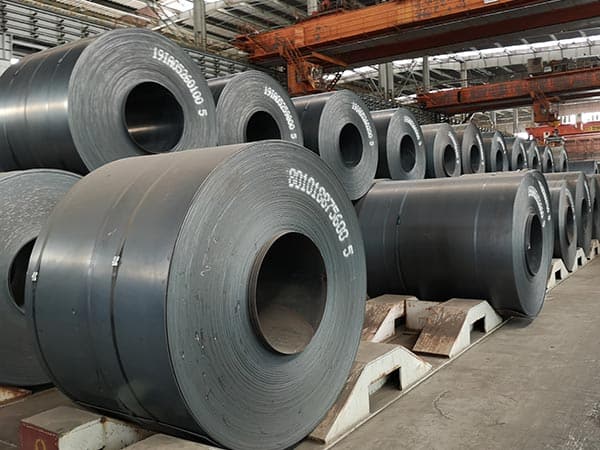
The Metallurgical Excellence of S700MC Pickling Steel in Austria
Austria has long been recognized as a global hub for high-performance metallurgy, particularly in the production and processing of High-Strength Low-Alloy (HSLA) steels. Among these, S700MC pickling steel sheets represent the pinnacle of thermomechanically rolled materials, designed to offer an exceptional balance between high yield strength and superior formability. The 'S' denotes structural steel, '700' refers to the minimum yield strength of 700 MPa, and 'MC' indicates it is thermomechanically rolled for a fine-grained microstructure. The pickling process (O&P - Pickled and Oiled) is critical here, as it removes surface scale, providing a clean, consistent finish that is essential for precision laser cutting and automated welding.
The Significance of Hardness in S700MC Grade
While S700MC is primarily classified by its yield strength, the hardness profile of the material is a vital metric for engineers and manufacturers. Typically, S700MC exhibits a Brinell hardness (HBW) ranging from approximately 230 to 285. This hardness is achieved through a carefully controlled cooling process after rolling, which creates a fine-grained ferritic-bainitic microstructure. Unlike traditional quenched and tempered steels, S700MC gains its strength from grain refinement and precipitation hardening rather than high carbon content. This ensures that the material remains weldable and ductile despite its high surface and through-thickness hardness.
Top Entities and Manufacturers for S700MC in Austria
The Austrian steel market is dominated by world-class producers and highly specialized service centers that ensure the material meets the stringent demands of the automotive and heavy machinery sectors. Here are the key players involved in the manufacturing, processing, and distribution of S700MC pickling steel sheets in Austria:
- voestalpine AG (Linz): As the primary producer, voestalpine is the cornerstone of Austrian steel. Their alform® 700 series is the industry benchmark for S700MC, offering unmatched consistency in hardness and thickness tolerances.
- Wuppermann AG (Judenburg): Specializing in the pickling and finishing of high-strength strips, Wuppermann provides specialized surface treatments that enhance the corrosion resistance and paint adhesion of S700MC.
- Thyssenkrupp Materials Austria: A major distribution and processing giant that maintains extensive stocks of S700MC, providing precision decoiling and slitting services to meet specific hardness requirements.
- Weyland GmbH: A prominent regional player that bridges the gap between primary production and end-user application, offering high-strength sheets with certified mechanical properties.
- Frankstahl Rohr- und Stahlhandelsgesellschaft: Known for their digital supply chain, they provide rapid access to S700MC sheets with detailed material test reports (MTRs) highlighting hardness and yield data.
- Klöckner & Co Austria: This entity focuses on high-end processing, including laser and plasma cutting of S700MC, where the pickled surface is crucial for edge quality.
- Koenig Stahl: A specialist in structural steel components, Koenig provides S700MC sheets specifically for heavy-duty infrastructure and mobile crane construction.
- Tata Steel Service Center Austria: Although part of a global group, their Austrian operations focus on high-strength automotive grades, ensuring the S700MC supplied meets strict VDA standards.
- Salzgitter Mannesmann Stahlhandel Austria: They supply a wide range of thermomechanically rolled steels, focusing on the mechanical integrity and surface quality required for complex cold-forming.
- ArcelorMittal Distribution Austria: Leveraging global R&D, they provide Austrian manufacturers with S700MC variants that are optimized for fatigue resistance and surface hardness.
Chemical Composition and Microstructural Integrity
The exceptional hardness and strength of S700MC are rooted in its chemical lean-alloy design. By keeping carbon levels low (typically below 0.12%), the steel maintains excellent weldability. The addition of micro-alloying elements such as Niobium (Nb), Vanadium (V), and Titanium (Ti) is what drives the grain refinement process. These elements form carbonitride precipitates that pin grain boundaries during the rolling process, preventing grain growth and resulting in a dense, hard, yet tough matrix.
| Element | Max Content (%) | Role in Material Property |
|---|---|---|
| Carbon (C) | 0.12 | Ensures weldability while providing base strength. | Manganese (Mn) | 2.10 | Increases hardness and tensile strength. | Silicon (Si) | 0.60 | Deoxidizer and solid solution strengthener. | Niobium (Nb) | 0.09 | Primary grain refiner for high yield strength. | Titanium (Ti) | 0.22 | Protects grain structure at high temperatures. |
Mechanical Properties and Performance Benchmarks
When evaluating S700MC from Austrian manufacturers, it is essential to look beyond simple hardness. The interplay between yield strength and elongation determines how the material will behave under load. S700MC is designed to be cold-formed, meaning it can be bent to tight radii without cracking, provided the grain direction is considered. The pickling process further aids this by ensuring no scale is pressed into the surface during the bending operation, which could otherwise act as a stress riser.
| Property | Value Range | Engineering Significance |
|---|---|---|
| Yield Strength (ReH) | Min 700 MPa | Maximum stress before permanent deformation. | Tensile Strength (Rm) | 750 - 950 MPa | Ultimate breaking strength of the sheet. | Elongation (A80mm) | Min 10 - 12% | Ability to deform plastically without fracture. | Hardness (HBW) | ~230 - 285 | Resistance to indentation and surface wear. |
Processing Advantages of Pickled S700MC
The decision to use pickled S700MC over standard hot-rolled black steel is driven by processing efficiency. The removal of the hard iron oxide scale (mill scale) through hydrochloric acid baths results in a surface that is much kinder to fabrication tools. In laser cutting, the absence of scale allows for higher cutting speeds and a much cleaner edge, reducing the need for secondary grinding. For companies involved in high-volume stamping, pickled S700MC significantly extends the life of expensive dies and punches by reducing abrasive wear.
Furthermore, the oiled surface of the pickled sheet provides temporary corrosion protection during transport and storage. This is particularly important in the variable climate of Central Europe, where humidity can quickly lead to flash rusting on non-pickled materials. From a welding perspective, the clean surface ensures a stable arc and reduces the risk of inclusions or porosity in the weld pool, which is critical when maintaining the 700 MPa strength across a joint.
Environmental Adaptability and Industrial Applications
S700MC is a cornerstone of the "lightweighting" movement in modern engineering. By using a material with higher hardness and strength, engineers can specify thinner gauges without sacrificing structural integrity. This leads to a direct reduction in vehicle weight, lower fuel consumption, and increased payload capacity. In the Austrian Alps, where heavy machinery must operate in extreme conditions, the low-temperature toughness of S700MC is a major advantage. Many Austrian suppliers offer S700MC with guaranteed impact energy values at -20°C or even -40°C.
Common applications include:
- Mobile Cranes: Telescopic booms require the high strength-to-weight ratio provided by S700MC.
- Automotive Chassis: Frame rails and cross members benefit from the material's energy absorption and fatigue life.
- Agricultural Machinery: Plows and trailers utilize the hardness of the steel to resist wear and deformation.
- Yellow Goods: Excavator arms and bucket supports rely on the weldability and toughness of the grade.
Technical Guidance for Fabrication
Working with S700MC requires an understanding of its unique characteristics. Because of its high hardness, the springback during cold forming is more pronounced than with standard S355 grades. Fabricators must compensate for this by over-bending. Additionally, while the material is highly weldable, it is recommended to use low-hydrogen consumables to prevent cold cracking. Heat input should be monitored to avoid excessive grain growth in the heat-affected zone (HAZ), which could locally reduce the hardness and strength of the component.
Austrian manufacturers often provide detailed processing manuals that specify the minimum bending radius—usually 1.5 to 2.0 times the material thickness for 90-degree bends. Adhering to these guidelines ensures that the integrity of the fine-grained structure is maintained, allowing the final product to perform reliably under the most demanding mechanical stresses.
The synergy between advanced Austrian manufacturing techniques and the robust properties of S700MC pickling steel sheets continues to drive innovation across European heavy industry. By focusing on tight hardness tolerances and superior surface quality, these manufacturers ensure that their customers can push the boundaries of modern mechanical design.
Leave a message