
What is the main function of en 10149-2 s420mc equivalent
Discover the technical functions and global equivalents of EN 10149-2 S420MC. This guide covers mechanical properties, processing advantages, and industrial applications for high-strength cold-forming steel.
The Core Functionality of EN 10149-2 S420MC and Its Equivalents
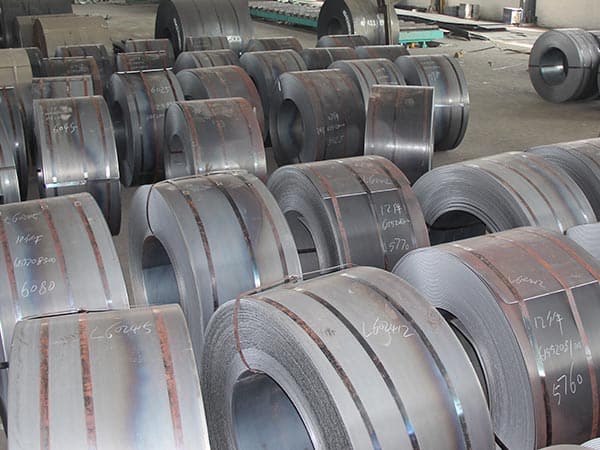
EN 10149-2 S420MC represents a pinnacle of metallurgical engineering, specifically designed as a high-yield strength steel for cold forming. The primary function of this material is to provide a superior strength-to-weight ratio, allowing engineers to design lighter structures without compromising structural integrity. By utilizing thermomechanical rolling (denoted by the 'M' in its suffix), the steel achieves a refined grain structure that balances hardness with exceptional ductility. This makes it an indispensable resource for industries where weight reduction directly translates to energy efficiency and performance enhancement.
When discussing the function of an EN 10149-2 S420MC equivalent, we refer to materials that match its minimum yield strength of 420 MPa while maintaining the ability to undergo severe cold deformation such as folding, bending, and flanging. These equivalents serve as the backbone for modern transport systems, heavy machinery, and complex structural components that require precision and durability.
Technical Breakdown: Mechanical and Chemical Attributes
The performance of S420MC is rooted in its precise chemical composition and the Thermomechanical Control Process (TMCP). Unlike traditional normalized steels, S420MC gains its strength through a combination of fine-grain strengthening and precipitation hardening, achieved by adding micro-alloying elements like Niobium (Nb), Vanadium (V), and Titanium (Ti).
| Element | Maximum Content (%) | Function in the Alloy |
|---|---|---|
| Carbon (C) | 0.12 | Ensures excellent weldability and prevents brittleness. |
| Manganese (Mn) | 1.60 | Increases strength and improves hardenability. |
| Silicon (Si) | 0.50 | Acts as a deoxidizer and contributes to solid solution strengthening. |
| Niobium (Nb) | 0.09 | Refines grain size and enhances yield strength. |
| Titanium (Ti) | 0.15 | Provides high-temperature stability and prevents grain growth. |
The mechanical properties are strictly regulated to ensure that the material behaves predictably during fabrication. For S420MC, the yield strength must be at least 420 MPa for thicknesses less than 3mm, while the tensile strength ranges between 480 and 620 MPa. These parameters ensure that the steel can withstand significant loads while retaining enough elongation (typically 16-19% depending on thickness) to avoid cracking during the forming process.
Global Equivalents: Mapping S420MC Across Standards
Identifying the correct equivalent is crucial for global manufacturing and supply chain optimization. While EN 10149-2 is the European standard, other regions have developed comparable grades that perform the same core functions. These equivalents are often selected based on regional availability and specific project compliance requirements.
- ASTM A1011/A1018 HSLAS-F Grade 60: The North American counterpart, known for its High-Strength Low-Alloy (HSLA) properties and improved formability (F).
- JIS G3134 SPFH 590: The Japanese standard often used in automotive chassis components, offering similar yield and tensile benchmarks.
- GB/T 1591 Q420MC: The Chinese equivalent which has become widely adopted in large-scale infrastructure and heavy vehicle production.
- ISO 6930-2 PW420: An international standard that aligns closely with the thermomechanical processing requirements of the EN grade.
It is important to note that while these grades are considered functional equivalents, subtle differences in sulfur (S) and phosphorus (P) limits can influence the steel's performance in specialized processes like laser cutting or fine-blanking. Engineers must verify the specific heat analysis to ensure compatibility with high-precision manufacturing.
Processing Performance and Fabricating Excellence
The "main function" of S420MC extends into the workshop. Its low carbon equivalent (CEV) makes it exceptionally easy to weld using standard methods such as MIG, TIG, and submerged arc welding. Because the steel is produced via thermomechanical rolling, it does not require extensive pre-heating, which significantly reduces production time and energy costs.
In terms of cold forming, S420MC is designed to be bent at very tight radii. For material thicknesses (t) up to 3mm, a minimum bending radius of 0.5t is often achievable when bending transverse to the rolling direction. This allows for the creation of complex, space-saving geometries in automotive frames and telescopic crane arms. The consistency of the yield strength across the coil ensures that springback is predictable, a vital factor for automated CNC bending operations.
Environmental Adaptation and Sustainability
In the modern industrial landscape, the function of a material is also measured by its environmental footprint. S420MC contributes to sustainability through the principle of "lightweighting." By replacing traditional S235 or S355 structural steels with S420MC, manufacturers can reduce the thickness of components by 15-25% without losing load-bearing capacity.
This reduction in mass leads to lower fuel consumption in transport vehicles and reduced CO2 emissions during the logistics phase. Furthermore, the high purity of S420MC (low impurity content) makes it highly recyclable, fitting perfectly into the circular economy models of the automotive and construction sectors. Its resistance to atmospheric corrosion, while not as high as weathering steel, can be significantly enhanced through modern galvanizing or e-coating processes, as the low silicon content helps in achieving a uniform zinc layer.
Strategic Applications Across Key Industries
The versatility of S420MC and its equivalents allows it to dominate several high-stakes industries. In the automotive sector, it is the preferred choice for longitudinal beams, cross members, and chassis parts where safety-critical energy absorption is required during impacts. The material's ability to deform without fracturing is essential for passenger safety.
In the realm of logistics and lifting equipment, S420MC is utilized for the manufacturing of cold-pressed profiles, container frames, and trailer chassis. These applications demand a material that can endure dynamic loads and vibration over long service lives. The refined microstructure of S420MC provides excellent fatigue resistance, ensuring that structural joints and formed corners do not develop stress cracks under repetitive stress cycles.
For the agricultural industry, the steel is used in the construction of harvesters, plows, and silos. The combination of high strength and weldability allows for the fabrication of equipment that is both robust enough to handle harsh soil conditions and light enough to prevent excessive soil compaction.
Optimizing Selection for Engineering Projects
Choosing between EN 10149-2 S420MC and its equivalents requires a deep understanding of the end-use environment. While the yield strength is a constant, factors such as impact toughness at low temperatures should be considered. If the application involves sub-zero environments (e.g., Arctic shipping or high-altitude construction), specifying a grade with guaranteed Charpy V-notch impact values is necessary.
Ultimately, the main function of this steel is to empower innovation. It provides the mechanical foundation for thinner, stronger, and more efficient designs. By understanding the nuances of its equivalents and the metallurgical benefits of thermomechanical rolling, procurement specialists and design engineers can maximize the value and longevity of their industrial assets.
| Property | S420MC (EN 10149-2) | Q420MC (GB/T 1591) | ASTM A1011 Gr 60 |
|---|---|---|---|
| Min Yield (MPa) | 420 | 420 | 410 |
| Tensile (MPa) | 480-620 | 480-620 | 520 min |
| Min Elongation (%) | 16-19 | 16 | 18 |
| Rolling Condition | TMCP (M) | TMCP (M) | Hot Rolled / HSLA |
Through the integration of these high-performance materials, the transition toward more efficient and sustainable engineering solutions becomes not just a possibility, but a standard practice across the global steel market.
Leave a message