
What is the en 10149-2 s355mc steel equivalent price export to Russia
Explore the comprehensive guide on EN 10149-2 S355MC steel equivalents, technical specifications, and current export pricing dynamics for the Russian market.
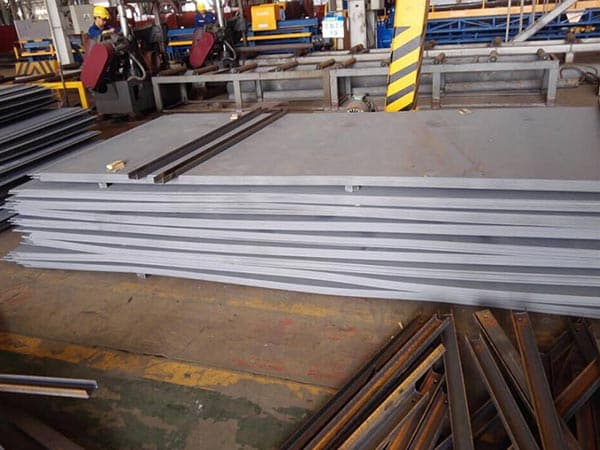
Understanding EN 10149-2 S355MC: The High-Yield Powerhouse
EN 10149-2 S355MC represents a specific category of hot-rolled, high-yield strength steels designed specifically for cold forming. The 'S' denotes structural steel, '355' indicates a minimum yield strength of 355 MPa, and 'MC' signifies that the material is thermomechanically rolled (M) and intended for cold forming (C). This grade is a staple in modern engineering where weight reduction without compromising structural integrity is paramount.
The manufacturing process of S355MC involves Thermomechanical Controlled Processing (TMCP). Unlike traditional normalized rolling, TMCP uses precise temperature control and deformation rates to refine the grain structure. This results in a fine-grained ferritic-pearlitic microstructure, often enhanced with micro-alloying elements like Niobium (Nb), Vanadium (V), and Titanium (Ti). These elements form carbides and nitrides that pin grain boundaries, preventing grain growth and significantly boosting both strength and toughness.
Global Equivalents of S355MC Steel
When exporting to Russia or sourcing from international markets, identifying the correct equivalent is vital for engineering compliance. While S355MC is a European standard (EN), other regions have developed similar grades that offer comparable performance. Identifying these ensures that procurement teams can navigate supply chain fluctuations effectively.
| Standard | Grade Equivalent | Region |
|---|---|---|
| GB/T 1591 / GB/T 20887.1 | Q355MC | China |
| GOST 19281 | 09G2S / 10G2FB | Russia |
| ASTM A1011 | HSLAS Grade 50 Class 1 | USA |
| JIS G3134 | SPFH 540 | Japan |
| ISO 6930 | HSE 355 | International |
The Chinese Q355MC is the most frequent substitute found in the Russian market due to the robust trade corridors between China and Russia. It mirrors the chemical and mechanical profile of S355MC almost perfectly. The Russian 09G2S is often cited, but it is important to note that 09G2S is a low-alloy structural steel primarily used for welded structures and may not always match the specific cold-forming capabilities of the 'MC' designation unless specified under specialized GOST standards for high-strength automotive sheets.
Mechanical Properties and Performance Metrics
The technical superiority of S355MC lies in its balance of strength and ductility. For engineers, the following parameters are the baseline for any structural calculation:
- Yield Strength (Reh): Minimum 355 MPa for thicknesses ≤ 16mm.
- Tensile Strength (Rm): 430 to 550 MPa.
- Elongation (A80mm): Minimum 19% to 23% depending on thickness, ensuring the steel can be bent and shaped without cracking.
- Bending Radius: For a 90-degree bend, S355MC typically supports a very tight internal radius (often 0.5x to 1.5x the thickness), which is critical for complex chassis components.
Impact toughness is another critical factor, especially for the Russian climate. While S355MC does not always require a mandatory V-notch impact test at sub-zero temperatures like the 'L' or 'K' grades (e.g., S355ML), the fine-grained structure inherent in TMCP steel naturally provides better low-temperature performance than standard carbon steels. For Russian exports destined for Siberian regions, many buyers request additional testing at -20°C or -40°C to ensure brittle fracture resistance.
Chemical Composition Analysis
The chemical recipe of S355MC is engineered for weldability and formability. By keeping the Carbon Equivalent Value (CEV) low, the steel avoids the formation of hard, brittle martensite in the heat-affected zone (HAZ) during welding.
| Element | Max % (EN 10149-2) | Role in Alloy |
|---|---|---|
| Carbon (C) | 0.12 | Maintains weldability and ductility. |
| Manganese (Mn) | 1.50 | Increases strength and hardenability. | 0.50 | Deoxidizer and solid solution strengthener. |
| Phosphorus (P) | 0.025 | Kept low to prevent cold shortness. |
| Sulfur (S) | 0.020 | Kept low to improve transverse ductility. |
| Aluminium (Al) | 0.015 (min) | Grain refinement and deoxidation. |
The inclusion of micro-alloys (Nb+V+Ti ≤ 0.22%) is what truly defines S355MC. These elements allow the steel to reach high strength levels without the high carbon content that would otherwise make the steel difficult to weld or prone to cracking during cold forming operations.
Factors Influencing Export Prices to Russia
The price of S355MC for the Russian market is not a static figure; it is a confluence of metallurgical costs, geopolitical shifts, and logistical complexities. As of current market trends, several variables dictate the final landed cost in cities like Moscow, Saint Petersburg, or Yekaterinburg.
1. Raw Material Volatility: The cost of iron ore and coking coal remains the primary driver. Additionally, the price of micro-alloys like Niobium can fluctuate based on mining output in Brazil and Canada, directly impacting the surcharge on high-yield grades.
2. Logistics and Freight: For exports to Russia, rail transport via the China-Europe Railway Express or sea freight through Vladivostok/Novorossiysk plays a major role. Container availability and cross-border customs efficiency can add 5% to 15% to the per-ton price.
3. Currency Exchange Rates: The RUB/CNY or RUB/USD exchange rate is a significant factor. Since many international contracts are settled in Yuan (CNY) for the Russian market, the stability of the Ruble against the Yuan is a key metric for Russian importers.
4. Certification and GOST Compliance: While S355MC is an EN standard, Russian projects often require GOST-R certification or technical passports translated into Russian. The cost of third-party inspections (like SGS or Bureau Veritas) to verify mechanical properties before shipment is a standard addition to the export price.
Industrial Applications Across Russia
The demand for S355MC in Russia is driven by heavy industry and infrastructure modernization. Its high strength-to-weight ratio makes it indispensable in several sectors:
Automotive and Transport: S355MC is extensively used for truck chassis, trailers, and heavy-duty vehicle frames. In the vast Russian landscape, transport efficiency is vital; lighter trailers made from S355MC allow for higher payloads and lower fuel consumption.
Construction Machinery: Crane booms, excavator arms, and agricultural equipment utilize S355MC because it can withstand high stress while remaining easy to repair via welding in the field. The steel's ability to be cold-bent into complex shapes allows for streamlined aerodynamic and structural designs.
Energy and Mining: Within the harsh environments of Russian mining operations, structural components must resist both mechanical wear and extreme cold. S355MC provides the necessary structural integrity for conveyor systems and support frameworks.
Processing Advantages: Welding and Cutting
One of the reasons S355MC is preferred over traditional structural steels is its exceptional processing behavior. For Russian fabricators, this translates to lower production costs and higher quality end-products.
Superior Weldability: Due to the low carbon equivalent, S355MC can be welded using all standard methods (MIG/MAG, TIG, Submerged Arc) without the need for extensive preheating, even in thicker sections. This is a massive advantage for large-scale structural assemblies.
Laser and Plasma Cutting: The clean surface finish and controlled chemical composition of S355MC make it ideal for high-precision laser cutting. It produces minimal dross and maintains edge integrity, which is essential for components that require tight tolerances.
Cold Forming: As a 'C' grade steel, it excels in brake press forming and roll forming. Fabricators can achieve sharp bends without the risk of orange-peel effects or surface micro-cracking, provided the recommended minimum bend radii are observed.
Strategic Procurement for the Russian Market
Navigating the export of S355MC to Russia requires a deep understanding of both the material and the trade environment. Buyers should focus on mills that provide full heat traceability and Mill Test Certificates (MTC) according to EN 10204 3.1. This ensures that the 'S355MC' delivered actually meets the stringent yield and elongation requirements of the EN 10149-2 standard.
Furthermore, considering the equivalent Q355MC from top-tier Chinese mills can offer a price advantage while maintaining identical technical performance. When negotiating prices, it is standard practice to clarify the 'Theoretical Weight' vs. 'Actual Weight' billing, as the tight thickness tolerances of S355MC can lead to significant cost differences over large volumes.
The current landscape suggests that while prices are influenced by global steel cycles, the specific demand for high-strength, cold-forming grades in Russia remains resilient. By focusing on technical compliance and optimized logistics, exporters and importers can ensure that S355MC continues to support the robust engineering needs of the region.
Leave a message