
What kind of steel is S460MC special steel for automobiles?
Explore S460MC steel, a high-strength low-alloy (HSLA) grade designed for automotive weight reduction. Learn about its chemical composition, mechanical properties, and superior processing capabilities for chassis and structural components.
Understanding S460MC: The Backbone of Modern Automotive Lightweighting
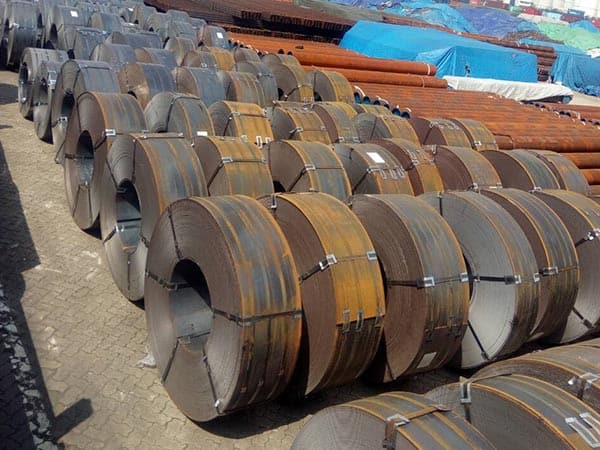
S460MC is a high-yield-strength, thermomechanically rolled steel specifically designed for cold forming. Classified under the European standard EN 10149-2, this material represents a pinnacle of metallurgical engineering aimed at balancing high load-bearing capacity with exceptional ductility. The 'S' denotes structural steel, '460' refers to the minimum yield strength of 460 MPa, and 'MC' indicates that the steel is thermomechanically rolled (M) and intended for cold forming (C). In the contemporary automotive landscape, where reducing vehicle weight is paramount for fuel efficiency and emission control, S460MC serves as a critical material for chassis, frames, and structural reinforcements.
Chemical Composition and the Science of Micro-alloying
The superior performance of S460MC is not accidental; it is the result of precise chemical control. Unlike traditional carbon steels, S460MC utilizes micro-alloying elements to achieve its strength without compromising weldability. The carbon content is kept low (typically below 0.12%) to ensure excellent ductility and prevent brittleness during welding. The strength is primarily derived from the addition of elements like Niobium (Nb), Titanium (Ti), and Vanadium (V). These elements form fine carbides and nitrides during the thermomechanical rolling process, which pin grain boundaries and prevent grain growth, leading to a highly refined ferritic-pearlitic microstructure.
| Element | Maximum Percentage (%) |
|---|---|
| Carbon (C) | 0.12 |
| Manganese (Mn) | 1.60 |
| Silicon (Si) | 0.50 |
| Phosphorus (P) | 0.025 |
| Sulfur (S) | 0.015 |
| Aluminium (Al) | 0.015 (min) |
| Nb + Ti + V | 0.22 |
This specific chemistry allows the steel to maintain a fine-grained structure even after being subjected to the heat of welding or forming. The low sulfur and phosphorus content also contribute to the steel's internal cleanliness, which is vital for preventing lamellar tearing and improving fatigue resistance in dynamic automotive environments.
Mechanical Properties: Strength Meets Flexibility
The defining characteristic of S460MC is its mechanical profile. It offers a yield strength that is significantly higher than standard S355MC grades, allowing engineers to use thinner sections of steel to carry the same loads. This 'down-gauging' is the primary driver for weight reduction in heavy-duty trucks and passenger vehicles. However, strength alone is insufficient; the material must also be capable of being bent and shaped into complex geometries without cracking.
- Yield Strength (Reh): Minimum 460 MPa.
- Tensile Strength (Rm): 520 to 670 MPa.
- Elongation (A80mm): Minimum 14% (for thicknesses < 3mm) or 17% (for thicknesses ≥ 3mm).
- Impact Toughness: Often tested at -20°C or -40°C to ensure performance in cold climates.
The high yield-to-tensile ratio of S460MC ensures that the material can absorb significant energy during an impact, making it an ideal choice for safety-critical components like bumper beams and side-impact members. The elongation properties ensure that during the stamping or folding process, the material flows uniformly, reducing the risk of localized thinning or necking.
Advanced Processing: Cold Forming and Weldability
For manufacturers, the processability of S460MC is a major advantage. Despite its high strength, it behaves remarkably well during cold forming. The fine-grained structure allows for tight bending radii, which is essential for creating compact and efficient chassis components. When calculating the minimum bending radius, engineers typically look at the thickness of the material; S460MC generally allows for a bending radius of 1.0 to 1.5 times the thickness, depending on the orientation relative to the rolling direction.
Weldability is another cornerstone of S460MC's utility. Because of its low carbon equivalent (CEV), it can be welded using all standard methods, including MIG/MAG, TIG, and submerged arc welding. The heat-affected zone (HAZ) remains stable, and the risk of cold cracking is minimal. This is particularly important for the automated robotic welding lines used in modern automotive assembly, where consistency and speed are vital. No preheating is usually required for standard thicknesses, which significantly reduces production cycle times and energy costs.
Environmental Adaptability and Corrosion Resistance
Automotive components are subjected to harsh environments, including road salt, moisture, and fluctuating temperatures. While S460MC is not a stainless steel, its clean chemistry and fine surface finish provide an excellent substrate for modern coating technologies. Whether it is hot-dip galvanizing, electro-galvanizing, or E-coating (electrophoretic deposition), S460MC bonds well with protective layers to ensure long-term corrosion resistance. Furthermore, its mechanical properties remain stable across a wide temperature range, ensuring that a truck frame remains rigid in the heat of a desert and ductile in the freezing temperatures of the Arctic.
Diverse Applications in the Transport Industry
While the name suggests 'automotive' use, the applications of S460MC extend to any industry requiring high strength and low weight. In the heavy vehicle sector, it is the standard for longitudinal beams and cross-members in truck chassis. Its high fatigue strength is essential here, as these components must endure millions of cycles of vibration and stress during their service life.
- Truck Chassis and Frames: Reducing the weight of the frame directly increases the payload capacity of the vehicle.
- Agricultural Machinery: Used in the structural parts of tractors and harvesters where durability is non-negotiable.
- Crane Arms and Lifting Equipment: The high strength-to-weight ratio allows for longer reaches and higher lifting capacities.
- Cold-Pressed Parts: Brackets, hinges, and supports that require precise dimensions and high strength.
The transition from S355MC to S460MC often allows for a weight saving of approximately 15-20% in structural components. This reduction not only improves fuel economy but also reduces the carbon footprint of the vehicle throughout its lifecycle, from manufacturing to end-of-life recycling.
Comparative Advantage: S460MC vs. Conventional Steels
When compared to traditional hot-rolled structural steels like S235JR or S355J2, S460MC offers a clear technological leap. Traditional steels rely on higher carbon and manganese levels for strength, which makes them heavier and harder to weld. S460MC's thermomechanical processing creates a finer microstructure that cannot be achieved through simple heat treatment. This allows for a more consistent product with tighter dimensional tolerances, which is critical for the precision required in modern automated manufacturing.
The economic benefit of S460MC is found in the total cost of ownership. While the price per ton may be higher than lower-grade steels, the ability to use less material (less weight) and the reduction in welding and processing time often result in a lower total cost for the finished component. This makes S460MC a highly competitive choice for forward-thinking engineering projects.
Technical Specifications for Design Engineers
Designing with S460MC requires an understanding of its directional properties. Like most rolled steels, it exhibits slightly different ductility along the rolling direction versus transverse to it. However, the thermomechanical process used for S460MC minimizes this anisotropy, providing more uniform properties than standard hot-rolled grades. Designers should also account for the springback effect during cold forming, which is slightly more pronounced in 460 MPa steel than in 355 MPa steel due to the higher elastic limit.
In conclusion, S460MC is a versatile, high-performance steel that addresses the core challenges of modern industrial design: strength, weight, and manufacturability. By leveraging micro-alloying and advanced rolling techniques, it provides a reliable solution for the most demanding automotive and structural applications, ensuring safety and efficiency in the global transport infrastructure.
Leave a message