
S355MC steel complete specifications chemical elements composition
A detailed technical guide to S355MC steel. Explore its chemical composition, mechanical properties, processing advantages, and diverse industrial applications in automotive and structural engineering.
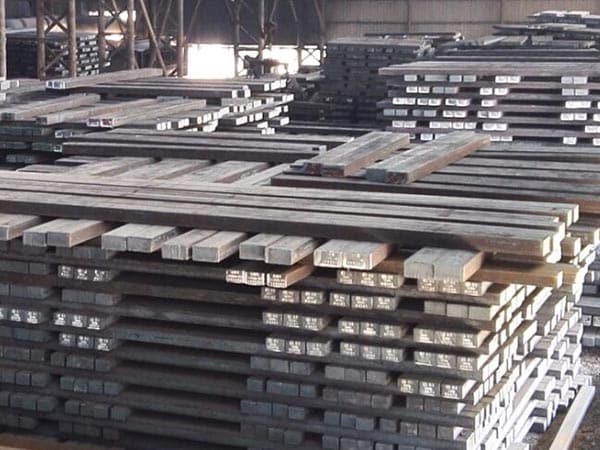
Introduction to S355MC High-Strength Low-Alloy Steel
S355MC is a high-yield strength, thermomechanically rolled steel specifically designed for cold forming. Governed by the European standard EN 10149-2, this grade represents a sophisticated balance between weight reduction and structural integrity. The 'S' denotes structural steel, '355' indicates a minimum yield strength of 355 MPa, and 'MC' signifies that the material is thermomechanically rolled (M) and intended for cold forming (C).
Engineers and manufacturers favor S355MC because it allows for the construction of lighter components without sacrificing safety or durability. This characteristic is vital in industries where reducing the 'dead weight' directly translates to energy efficiency and cost savings, such as in commercial vehicle manufacturing and mobile crane production.
Detailed Chemical Elements and Composition Analysis
The performance of S355MC is rooted in its precise chemical makeup. Unlike traditional carbon steels, S355MC utilizes micro-alloying techniques to achieve high strength while maintaining excellent weldability and ductility.
| Element | Maximum Percentage (%) |
|---|---|
| Carbon (C) | 0.12 |
| Manganese (Mn) | 1.30 | Silicon (Si) | 0.50 |
| Phosphorus (P) | 0.025 |
| Sulphur (S) | 0.020 |
| Aluminum (Al) | 0.015 (Min) |
| Niobium (Nb) | 0.09 |
| Vanadium (V) | 0.20 |
| Titanium (Ti) | 0.15 |
Carbon Content: The extremely low carbon content (max 0.12%) is the secret behind its superior weldability. It minimizes the risk of cold cracking in the heat-affected zone (HAZ) during welding processes.
Micro-alloying Elements: The addition of Niobium (Nb), Vanadium (V), and Titanium (Ti) facilitates grain refinement during the thermomechanical rolling process. These elements form fine precipitates that hinder grain growth, resulting in a fine-grained microstructure that enhances both strength and toughness.
Manganese and Silicon: Manganese acts as a solid solution strengthener, while Silicon contributes to deoxidation and increases the yield strength of the ferrite matrix.
Mechanical Properties and Structural Integrity
The mechanical properties of S355MC are tested on longitudinal specimens. The thermomechanical rolling process ensures that these properties are consistent throughout the coil or plate.
| Property | Value Range |
|---|---|
| Yield Strength (ReH) | Min 355 MPa |
| Tensile Strength (Rm) | 430 - 550 MPa |
| Elongation (A80mm) for t < 3mm | Min 19% |
| Elongation (A5) for t ≥ 3mm | Min 23% |
Yield Strength: With a minimum yield of 355 MPa, this steel provides a significant upgrade over standard S235 grades, allowing for thinner sections to carry the same load.
Ductility: Despite its high strength, the elongation values remain high (19-23%), ensuring that the material can undergo significant deformation during cold forming without fracturing.
Superior Cold Forming and Processing Performance
S355MC is engineered for versatility in the workshop. Its processing characteristics are a major selling point for high-volume manufacturing environments.
- Bending and Folding: S355MC exhibits excellent cold-bending properties. For thicknesses up to 3mm, the minimum recommended inside bend radius is 0.25 times the thickness (0.25t), which is remarkably tight for a steel of this strength level.
- Welding Capabilities: Due to its low Carbon Equivalent Value (CEV), S355MC can be welded using all standard methods, including MAG, TIG, and Laser welding. It does not typically require preheating, which streamlines production timelines.
- Laser Cutting: The clean chemical composition and fine-grained structure make it ideal for high-precision laser cutting. The edges remain smooth, and the heat-affected zone is minimal, preserving the material's integrity near the cut.
Environmental Adaptability and Durability
While S355MC is not a weathering steel like Corten, its fine-grained structure provides a degree of improved atmospheric corrosion resistance compared to coarse-grained structural steels. However, for long-term outdoor exposure, protective coatings such as galvanizing or painting are recommended.
The material performs exceptionally well in low-temperature environments. The fine-grain practice ensures that the ductile-to-brittle transition temperature is low, making it suitable for equipment operating in cold climates where impact toughness is critical.
Key Industry Applications
The unique properties of S355MC make it indispensable across several high-demand sectors:
- Automotive Industry: Used extensively for chassis parts, cross members, longitudinal beams, and cold-pressed structural components where weight reduction is a priority for fuel efficiency.
- Lifting and Handling: Mobile cranes, truck-mounted cranes, and forklift frames benefit from the high strength-to-weight ratio, allowing for higher lifting capacities.
- Agricultural Machinery: Plow frames, trailer chassis, and harvester components utilize S355MC for its ability to withstand high stress and vibration.
- Storage Systems: High-load racking systems and cold-formed sections for warehouses leverage the material's consistency and strength.
Comparison: S355MC vs. S355J2
It is important to distinguish S355MC from S355J2 (EN 10025-2). While both share a similar yield strength, their manufacturing processes and intended uses differ. S355J2 is a hot-rolled structural steel often used in heavy plates for bridges and buildings. S355MC is thermomechanically rolled, usually available in thinner gauges (up to 20mm), and offers significantly better cold-forming and welding performance due to its lower carbon content and micro-alloyed structure.
Technical Procurement Considerations
When sourcing S355MC, it is crucial to verify the Mill Test Certificate (MTC) to ensure compliance with EN 10149-2. Buyers should pay attention to the surface finish, as thermomechanically rolled steels often have a thin, tightly adherent scale that is suitable for most painting processes but may require pickling (S355MC+P) if a superior surface finish or oiling is required for precision stamping.
By choosing S355MC, manufacturers can optimize their designs, reduce material consumption, and improve the overall lifecycle performance of their products. Its reliability in complex forming operations and robust mechanical profile ensures it remains a cornerstone of modern metallurgical engineering.
Leave a message