
What is the S700MC steel for large truss truck boom price export to Russia
Detailed analysis of S700MC high-strength steel for large truss truck booms, covering mechanical properties, weldability, and pricing factors for the Russian export market.
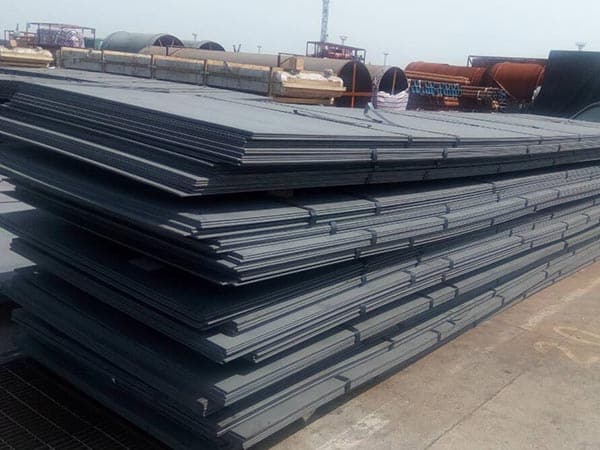
The Engineering Logic Behind S700MC in Large Truss Truck Booms
When designing large-scale lifting equipment, particularly truss-style truck booms, the choice of material dictates the entire machine's efficiency, safety, and payload capacity. S700MC, a high-strength cold-forming steel produced via thermomechanical rolling, has become the global benchmark for these applications. For engineers and procurement managers looking at the Russian market, understanding why this specific grade dominates the landscape requires a deep dive into its metallurgical profile and its response to extreme operational stresses.
The 'S' stands for structural steel, '700' denotes a minimum yield strength of 700 MPa, and 'MC' indicates it is thermomechanically rolled (M) and possesses high cold-forming capacity (C). In the context of a truss boom, which consists of a complex network of chords and lacings, the material must handle massive compressive and tensile loads while remaining light enough to keep the vehicle's center of gravity low. Using S700MC allows for a significant reduction in wall thickness compared to traditional S355 grades, often resulting in a 30% to 40% weight saving in the boom structure itself.
Mechanical Superiority: Beyond the 700 MPa Yield Strength
While the 700 MPa yield strength is the headline figure, the true value of S700MC lies in its balance of strength and ductility. For large truss structures, the steel must resist buckling and fatigue over thousands of cycles. The tensile strength typically ranges between 750 and 950 MPa, providing a robust safety margin against catastrophic failure.
Elongation and Formability: Despite its high strength, S700MC maintains an elongation (A5) of at least 12% to 14%. This is critical for the manufacturing of the chords in a truss boom, which often require precise bending or profiling. The fine-grained microstructure achieved through thermomechanical rolling ensures that the steel does not crack during tight-radius cold forming, a common issue with older quenched and tempered grades.
| Property | S700MC Specification (EN 10149-2) | Typical Result |
|---|---|---|
| Yield Strength (ReH MPa) | Min 700 | 720 - 780 |
| Tensile Strength (Rm MPa) | 750 - 950 | 800 - 880 |
| Min. Elongation (A5 %) | 12 - 14 | 15 |
| Bending Radius (180°) | 2.0t (for t < 3mm) to 2.5t | Pass |
Weldability and Structural Integrity in Complex Assemblies
Truss booms are essentially massive welded assemblies. The weldability of S700MC is superior to many other high-strength steels because of its low Carbon Equivalent (CEV). A typical S700MC heat will have a carbon content below 0.12%, supplemented by micro-alloying elements like Niobium (Nb), Vanadium (V), and Titanium (Ti). These elements pin grain boundaries during the rolling process, creating a fine-grained structure that is inherently tough.
When welding S700MC for Russian export projects, it is vital to control the heat input. Excessive heat can lead to grain coarsening in the Heat Affected Zone (HAZ), which reduces the local yield strength. However, because S700MC does not rely on high levels of Chromium or Nickel for its strength, it is far less susceptible to cold cracking than traditional high-alloy steels. This simplifies the production process, often eliminating the need for expensive pre-heating, provided the environment is controlled and the thickness is within standard ranges (usually up to 10mm or 12mm for truss components).
Environmental Adaptability: Performing in the Russian Climate
Exporting steel to Russia introduces a unique variable: extreme sub-zero temperatures. A truck boom operating in Siberia or the Ural regions must maintain its structural integrity at -40°C or even -60°C. Standard S700MC is usually tested for impact energy at -20°C, but for the Russian market, specialized 'L' versions or specifically tested batches are often required.
The fine-grained nature of S700MC provides a natural advantage here. Smaller grains impede the propagation of brittle fractures. When sourcing S700MC for Russian truss booms, it is standard practice to request Charpy V-notch impact testing at -40°C. If the material can maintain 27J or 40J at these temperatures, it ensures that the boom will not shatter under sudden impact loads in the middle of a Russian winter. This environmental resilience is a primary driver for the grade's popularity in the Russian energy and construction sectors.
Factors Influencing the Export Price to Russia
The price of S700MC for export is never a static number; it is a composite of several global and regional factors. Understanding these allows buyers to time their procurement effectively.
- Raw Material Fluctuations: The cost of iron ore and coking coal remains the foundation. However, for S700MC, the price of micro-alloys (Niobium and Vanadium) also plays a significant role.
- Energy Surcharges: Since thermomechanical rolling requires precise temperature control throughout the mill, energy costs in the country of origin (often China or Europe) directly impact the final invoice.
- Logistics and Route Costs: Shipping to Russia currently involves complex logistics. Rail freight via the China-Europe Railway Express (CRE) offers a balance of speed and cost, while sea routes to Vladivostok or St. Petersburg vary based on container availability and seasonal ice conditions.
- Trade Barriers and Certification: Exporting to Russia requires compliance with specific standards. While EN 10149-2 is the technical basis, obtaining GOST certification or meeting the requirements of the Russian Maritime Register of Shipping (if applicable) can add administrative costs.
- Currency Exchange: The volatility of the Ruble against the USD or CNY is a major factor in the final landed cost for the Russian end-user.
Application Expansion: Beyond the Main Boom
While the main truss sections are the primary use case, S700MC is increasingly utilized in auxiliary components of the truck. This includes the outrigger boxes, the sub-frame (chassis reinforcement), and the jib extensions. By standardizing on S700MC across these components, manufacturers can streamline their welding procedures and reduce the variety of plate thicknesses held in inventory.
In the Russian mining sector, S700MC is also finding its way into the superstructures of heavy-duty transport trailers. The ability to withstand high vibration and uneven terrain—common in Russian off-road conditions—makes the fatigue resistance of S700MC as valuable as its static strength. The material's surface quality, typically characterized by a thin, tightly adherent scale, is also ideal for the high-performance painting and coating systems required to prevent corrosion in salty or industrial Russian environments.
Strategic Sourcing for the Russian Market
For companies asking about the price of S700MC for export to Russia, the answer lies in the technical specification. A "standard" S700MC plate will always be cheaper than one with guaranteed -40°C impact properties and Z-direction testing (to prevent lamellar tearing in thick welded joints). When requesting quotes, it is imperative to specify the exact dimensions, as wide plates (over 2500mm) or specific lengths for long boom chords may command a premium due to mill limitations.
Current market trends suggest a growing preference for Chinese-origin S700MC in the Russian market due to established trade corridors and competitive pricing structures. Leading mills now produce S700MC that meets or exceeds European standards, providing a reliable supply chain for the burgeoning Russian heavy machinery industry. To ensure the best value, buyers should focus on mills that offer integrated logistics and comprehensive metallurgical testing reports that satisfy both international and Russian domestic oversight bodies.
Technical Comparison: S700MC vs. Traditional Grades
To visualize the advantage of S700MC, consider a comparison with S355J2, the traditional workhorse of the construction industry. While S355 is easier to source, its lower strength-to-weight ratio makes it unsuitable for the next generation of ultra-long truss booms.
| Feature | S355J2 | S700MC | Advantage of S700MC |
|---|---|---|---|
| Yield Strength | 355 MPa | 700 MPa | 97% increase in load capacity |
| Weight for same load | 100% (Baseline) | ~60% | Significant fuel and payload gains |
| Weldability (CEV) | Moderate | Low (Excellent) | Reduced risk of cracking |
| Cold Forming | Good | Excellent | Allows for complex boom geometries |
The transition to S700MC is not merely a material swap; it is a fundamental shift in engineering philosophy. For the Russian market, where the distance of transport and the severity of the environment punish inefficient designs, S700MC represents the most cost-effective solution for high-performance truss truck booms. The initial higher price per ton is rapidly offset by the reduction in total material required and the increased operational lifespan of the equipment in the field.
Leave a message