
Which steel is better S900MC steel for boom or A36?
A comprehensive technical comparison between S900MC high-strength steel and A36 carbon steel for crane boom applications, analyzing mechanical properties, weight efficiency, and fabrication requirements.
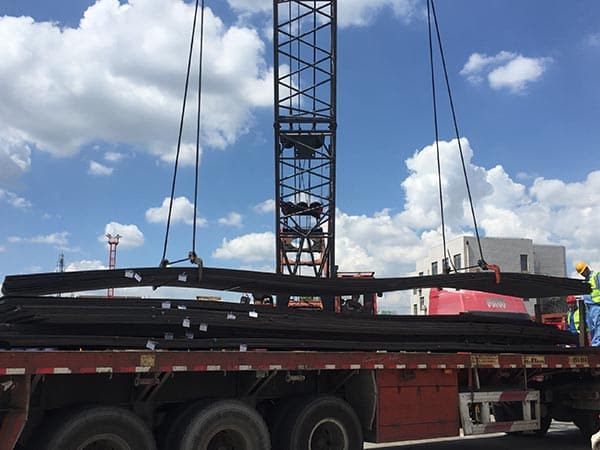
The Engineering Paradigm Shift: High-Strength S900MC vs. Traditional A36
In the demanding world of heavy machinery and lifting equipment, the selection of steel for a boom structure is a decision that dictates not only the performance limits of the machine but also its economic viability and safety profile. For decades, ASTM A36 has been the reliable workhorse of the structural world, known for its predictability and ease of use. However, the advent of S900MC, a thermomechanically rolled high-strength low-alloy (HSLA) steel, has fundamentally changed the landscape of engineering possibilities. When asking which steel is better for a boom, the answer lies in the balance between raw strength, structural weight, and the complexity of fabrication.
The fundamental difference between these two materials begins at the molecular level. A36 is a standard carbon steel with a minimum yield strength of approximately 250 MPa (36,000 psi). In contrast, S900MC is engineered to provide a minimum yield strength of 900 MPa. This nearly fourfold increase in strength is not merely a numerical upgrade; it represents a paradigm shift in how engineers approach the design of telescopic booms, lattice structures, and articulated arms. While A36 relies on bulk to provide stability, S900MC utilizes advanced metallurgy to achieve higher load-bearing capacities with significantly less mass.
Mechanical Properties: The Gap in Performance Metrics
To understand why S900MC is increasingly favored for modern boom designs, one must examine the specific mechanical data that differentiates it from A36. The following table provides a direct comparison of their core attributes:
| Property | ASTM A36 | S900MC (EN 10149-2) |
|---|---|---|
| Minimum Yield Strength | 250 MPa (36 ksi) | 900 MPa (130 ksi) |
| Tensile Strength | 400 - 550 MPa | 930 - 1200 MPa |
| Minimum Elongation | 20% - 23% | 8% - 10% |
| Carbon Equivalent (Max) | Approx. 0.26% | Approx. 0.45% - 0.58% (CEV) |
| Primary Application | General Construction | High-Load Mobile Equipment |
The disparity in yield strength is the most critical factor for boom applications. A boom is essentially a long cantilevered beam subjected to immense bending moments. The load-carrying capacity of such a structure is directly proportional to the yield strength of the material used in its flanges and webs. By using S900MC, designers can reduce the thickness of the steel plates while maintaining the same structural integrity. This reduction in plate thickness leads to a massive decrease in the 'dead weight' of the boom itself.
Weight Efficiency and Lifting Dynamics
For mobile cranes, truck-mounted pumps, and aerial work platforms, every kilogram saved in the boom structure translates directly into increased lifting capacity or extended reach. When a boom is constructed from A36, the material's relatively low strength-to-weight ratio necessitates thick sections. As the boom extends, the weight of the steel itself consumes a large portion of the crane's lifting moment, leaving less capacity for the actual payload.
Utilizing S900MC allows for a 'lightweighting' effect that is transformative. A boom section that might require 20mm thick A36 plate could potentially be replaced by 6mm or 8mm S900MC plate, depending on buckling constraints. This weight reduction lowers the center of gravity of the entire vehicle, improving stability during transport and operation. Furthermore, a lighter boom requires less hydraulic power to move, leading to improved fuel efficiency and reduced wear on the machine's mechanical systems over its lifecycle.
Fabrication Challenges: Welding and Forming
While S900MC offers superior strength, it demands a higher level of sophistication during the manufacturing process compared to the 'forgiving' nature of A36. A36 is exceptionally easy to weld using standard procedures and requires little to no preheating in most ambient conditions. Its low carbon content and lack of complex alloying elements make it resistant to hydrogen-induced cracking and softening in the heat-affected zone (HAZ).
S900MC, however, gains its strength through a precise thermomechanical rolling process (TMCP). If the steel is subjected to excessive heat during welding, the fine-grained microstructure that gives the material its strength can be destroyed, leading to a localized 'softening' where the yield strength drops significantly below 900 MPa. To successfully fabricate a boom with S900MC, manufacturers must adhere to strict welding protocols:
- Heat Input Control: Welders must strictly monitor the cooling time (t8/5) to ensure the microstructure remains intact.
- Consumable Selection: High-strength welding wires matching the 900 MPa grade are required, which are more expensive and sensitive to moisture.
- Cold Forming: S900MC has higher spring-back compared to A36. While it is designed for cold forming, the minimum bending radius is larger (typically 3 to 5 times the thickness), requiring specialized heavy-duty bending brakes.
- Edge Preparation: Plasma or laser cutting is preferred over oxy-fuel to minimize the thermal impact on the edges of the high-strength plates.
Environmental Adaptation and Fatigue Life
Booms often operate in harsh environments, from sub-zero Arctic conditions to humid offshore platforms. S900MC is specifically engineered to maintain its toughness at low temperatures, often rated for impact energy at -40°C or even -60°C. A36, while ductile at room temperature, can become brittle in extreme cold, making it less suitable for high-latitude applications where structural failure could be catastrophic.
Regarding fatigue, the dynamic nature of lifting operations subjects booms to millions of stress cycles. High-strength steels like S900MC allow for higher operating stresses, but the fatigue strength of welded joints does not increase at the same rate as the yield strength. This means that while S900MC can carry more static load, the design of the weld details becomes the limiting factor for the boom's lifespan. Engineering teams must employ advanced fatigue analysis and superior weld finishing techniques (such as grinding or ultrasonic impact treatment) to fully realize the benefits of S900MC in cyclic loading scenarios.
Economic Logic: Initial Cost vs. Lifecycle Value
From a raw material perspective, A36 is significantly cheaper per ton than S900MC. The alloying elements (such as Niobium, Vanadium, and Titanium) and the complex rolling process required for S900MC command a premium price. However, looking at the 'cost per unit of strength' or the 'total cost of the machine,' the narrative changes.
Because S900MC allows for thinner plates, the total tonnage of steel required for a boom can be reduced by 40% to 60%. This reduction in material volume partially offsets the higher price per ton. Additionally, the operational advantages—higher lifting capacity, lower fuel consumption, and reduced transport costs—provide a much higher return on investment for the end-user. In the competitive landscape of modern construction, a crane with an S900MC boom can outperform an A36-based competitor in every performance metric, making it the economically superior choice for high-end equipment.
Strategic Selection Criteria
The choice between these two steels ultimately depends on the specific requirements of the application. For static, low-stress structures where weight is not a concern—such as simple support pillars or stationary frames—A36 remains the logical and cost-effective choice. Its ease of fabrication and global availability make it ideal for general structural work.
For any application involving mobility, long-reach requirements, or extreme load-to-weight ratios, S900MC is the clear winner. The engineering shift toward S900MC reflects the broader trend in the industry toward efficiency and performance. While it requires more advanced manufacturing capabilities and higher initial material investment, the resulting product is a piece of machinery that is lighter, stronger, and more capable of meeting the rigorous demands of 21st-century infrastructure projects.
Leave a message