
What is B750L thermomechanically processed steel
A comprehensive guide to B750L thermomechanically processed steel, covering its mechanical properties, TMCP manufacturing, welding, and automotive applications.
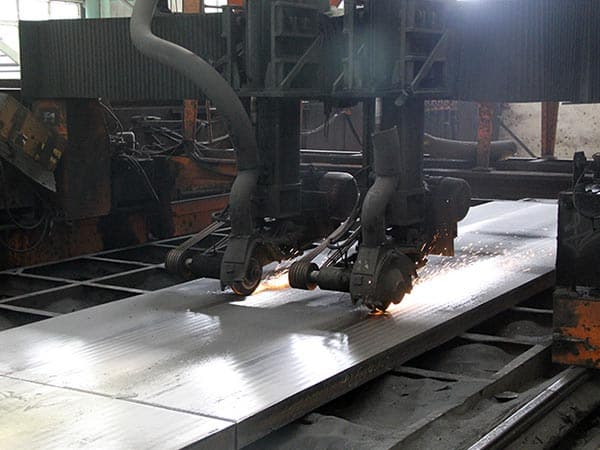
Defining B750L: The Intersection of Strength and Formability
B750L represents a pinnacle in the evolution of high-strength low-alloy (HSLA) steels, specifically engineered for the demanding requirements of the modern automotive and heavy machinery industries. The designation itself reveals its core identity: "B" typically identifies the manufacturer's standard (often associated with major mills like Baosteel), "750" denotes the minimum yield strength in Megapascals (MPa), and "L" signifies its optimized suitability for cold forming and structural applications. Unlike traditional carbon steels that rely on high carbon content for strength, B750L achieves its superior characteristics through a sophisticated metallurgical approach known as Thermomechanical Control Process (TMCP).
This material is not merely a commodity but a high-performance solution for engineers seeking to balance weight reduction with structural integrity. As global industries pivot toward energy efficiency and reduced carbon footprints, B750L provides the necessary mechanical leverage to build lighter yet stronger frames, chassis, and load-bearing components. The shift from conventional structural steels to B750L allows for a significant reduction in plate thickness without compromising safety margins, a concept often referred to as "lightweighting."
The Science of Thermomechanical Control Process (TMCP)
The exceptional properties of B750L are primarily a result of the TMCP technique. This is a microstructural engineering process that integrates controlled rolling and controlled cooling. Unlike traditional normalizing or quenching and tempering, TMCP manipulates the austenite-to-ferrite transformation to produce an extremely fine-grained microstructure. This fine grain size is the only strengthening mechanism that simultaneously improves both strength and toughness.
During the rolling phase, the steel is deformed at specific temperature ranges where recrystallization is inhibited. This creates a high density of deformation bands within the austenite grains, which then act as nucleation sites for ferrite during cooling. The result is a refined grain structure that is significantly smaller than that found in conventional hot-rolled steels. This refinement is critical for B750L, as it ensures that the material remains ductile and resistant to brittle fracture even at high stress levels or low temperatures.
Chemical Composition and Micro-alloying Strategy
The chemical blueprint of B750L is carefully balanced to ensure weldability and formability while reaching high strength levels. It maintains a low carbon equivalent (Ceq), which is vital for preventing cold cracking during welding. The strength is augmented through micro-alloying elements such as Niobium (Nb), Vanadium (V), and Titanium (Ti).
- Niobium (Nb): Increases the recrystallization temperature of austenite, facilitating the grain refinement process during rolling.
- Titanium (Ti): Forms stable nitrides that prevent grain growth during the reheating phase and improve the heat-affected zone (HAZ) toughness during welding.
- Manganese (Mn): Enhances hardenability and solid solution strengthening without drastically affecting weldability.
- Silicon (Si): Acts as a deoxidizer and contributes to solid solution strengthening.
By keeping the carbon content low (typically below 0.12%), B750L avoids the formation of brittle martensite, ensuring that the steel remains workable and easy to fabricate in a production environment.
Mechanical Performance and Technical Specifications
The primary draw of B750L is its mechanical profile. It bridges the gap between standard structural steels and ultra-high-strength grades. The following table outlines the typical mechanical properties expected from B750L thermomechanically processed steel:
| Property | Typical Value / Requirement |
|---|---|
| Yield Strength (ReH) | ≥ 750 MPa |
| Tensile Strength (Rm) | 800 - 950 MPa |
| Elongation (A50mm) | ≥ 12% |
| Impact Energy (Charpy V-Notch at -20°C) | ≥ 40 J (Directional dependent) |
| Bending Radius (180°) | ≤ 2.0t (where t is thickness) |
These values demonstrate that while the material is incredibly strong, it retains enough elongation to undergo complex bending and stamping operations. This duality is what makes it a preferred choice for automotive longitudinal beams and cross members.
Cold Forming and Fabrication Excellence
Fabricating with B750L requires an understanding of its high yield-to-tensile ratio. Because the material is strong, it exhibits higher springback compared to lower-grade steels. Engineers must account for this in die design and bending parameters. However, the "L" designation guarantees that the steel has been processed to minimize inclusions and maintain a clean microstructure, which prevents edge cracking during tight-radius bending.
The cold-forming capability of B750L allows manufacturers to produce complex geometries that would otherwise require multiple welded components. This reduces assembly time and eliminates potential points of failure. When laser cutting or plasma cutting B750L, the low carbon content ensures a clean edge with minimal hardening, making subsequent machining or welding much simpler.
Welding Characteristics and Structural Integrity
Weldability is a cornerstone of B750L's utility. Traditional high-strength steels often require preheating and post-weld heat treatment (PWHT) to prevent hydrogen-induced cracking. B750L, thanks to its TMCP origin and low carbon equivalent, can generally be welded using standard methods like MAG (Metal Active Gas), MIG (Metal Inert Gas), and SMAW (Shielded Metal Arc Welding) without extensive preheating for moderate thicknesses.
The fine-grained structure is remarkably stable, but care must be taken to manage heat input. Excessive heat can lead to grain growth in the heat-affected zone (HAZ), which might locally reduce the yield strength. By using low-heat input welding techniques and appropriate filler metals (matching or slightly under-matching depending on the design requirement), the structural integrity of the joint can be maintained at levels nearly identical to the base metal.
Expanding Application Horizons
The adoption of B750L has moved beyond niche applications into mainstream industrial manufacturing. Its primary home remains the automotive sector, but its benefits are being realized elsewhere.
- Commercial Vehicles: Used for truck chassis frames, where reducing the weight of the frame directly increases the payload capacity and fuel efficiency.
- Construction Machinery: Ideal for crane booms, excavator arms, and support structures where high lifting capacity must be paired with low self-weight.
- Renewable Energy: Utilized in the structural supports for solar tracking systems and wind turbine internal components that require high atmospheric corrosion resistance and strength.
- Transportation Infrastructure: Applied in the manufacturing of lightweight containers and railway wagons, enhancing the durability of transport cycles.
Environmental and Economic Impact
The transition to B750L is often driven by a total cost of ownership (TCO) analysis. While the per-ton price of B750L may be higher than standard S355 or Q355 grades, the ability to use thinner sections results in less total steel consumed. This "material efficiency" reduces transportation costs, lowers welding consumable usage, and decreases the energy required for fabrication.
From an environmental perspective, B750L supports the "Green Steel" movement. Lighter vehicles consume less fuel and emit less CO2 over their operational lifespan. Furthermore, the TMCP process itself is more energy-efficient than traditional quenching and tempering cycles, as it utilizes the heat from the rolling process to achieve the desired properties, skipping additional reheating stages. This makes B750L a sustainable choice for forward-thinking manufacturers aiming to align with global ESG (Environmental, Social, and Governance) goals.
Considerations for Selection and Sourcing
When specifying B750L, it is essential to verify the certification and the specific mill standard it adheres to (such as Q/BQB 310 or equivalent international standards like EN 10149-2). Surface quality is another critical factor; for automotive use, a pickled and oiled (P&O) surface is often preferred to ensure optimal paint adhesion and to protect the steel during storage. Understanding the directional properties of the steel—specifically how it behaves when bent transverse versus longitudinal to the rolling direction—is vital for optimizing the layout of parts on a sheet to minimize waste and maximize performance.
Leave a message