
What should be paid attention to when using S700MC hot rolled steel for car gear
Explore the technical requirements and precautions for using S700MC high-strength steel in automotive gear components, focusing on mechanical properties and processing techniques.
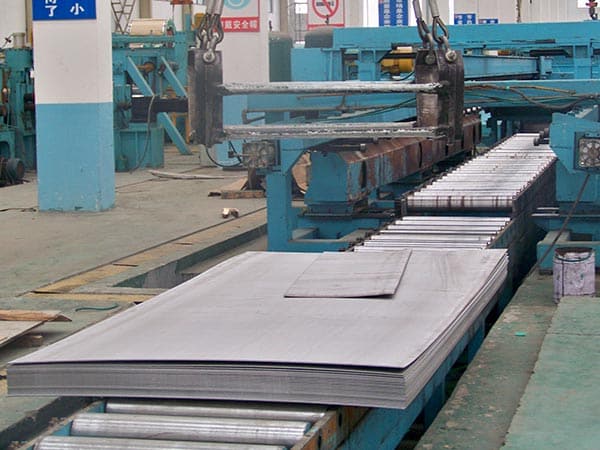
Understanding the Role of S700MC in Modern Automotive Gear Systems
The automotive industry is undergoing a radical shift toward lightweighting to improve fuel efficiency and reduce carbon emissions. S700MC, a high-strength low-alloy (HSLA) steel produced via thermomechanical rolling (TMCP), has emerged as a critical material for structural and semi-structural components. While traditionally associated with truck frames and chassis parts, its application in specific gear-related components—such as ring gears, gear plates, and internal transmission supports—requires a deep understanding of its metallurgical behavior and mechanical limits.
S700MC is defined by its minimum yield strength of 700 MPa. Unlike traditional quenched and tempered steels, its strength is derived from a combination of fine-grain refinement and precipitation hardening through micro-alloying elements like Niobium (Nb), Titanium (Ti), and Vanadium (V). When integrating this material into gear systems, engineers must look beyond simple yield numbers and evaluate how the material responds to the high-frequency stresses and complex manufacturing cycles typical of the automotive powertrain.
Chemical Composition and Its Impact on Gear Performance
The performance of S700MC in gear applications is fundamentally linked to its chemical makeup. The low carbon content (typically below 0.12%) ensures excellent weldability but presents challenges for components requiring high surface hardness. For gears, which must resist pitting and abrasive wear, the chemical balance of S700MC dictates the types of surface treatments that can be applied.
| Element | Typical Content (%) | Role in Gear Components |
|---|---|---|
| Carbon (C) | ≤ 0.12 | Ensures weldability and prevents brittle fractures. |
| Manganese (Mn) | ≤ 2.10 | Increases hardenability and solid solution strengthening. |
| Silicon (Si) | ≤ 0.60 | Improves deoxidation and enhances strength. |
| Niobium (Nb) / Titanium (Ti) | Trace amounts | Refines grain size, crucial for fatigue resistance in gears. |
The fine-grained ferrite-pearlite or bainitic microstructure achieved through TMCP is what gives S700MC its unique edge. For gear components, this fine grain structure is vital because it acts as a barrier to crack propagation, significantly enhancing the fatigue life of the part under cyclic loading.
Critical Processing Precautions: Cutting and Forming
When manufacturing gear blanks or complex gear plates from S700MC, the method of cutting is the first critical step. Laser cutting is often preferred for its precision, but it introduces a Heat Affected Zone (HAZ) along the edges. Because S700MC relies on a specific thermomechanical state, excessive heat can lead to local softening (annealing effect), which may compromise the dimensional stability of the gear teeth during subsequent operations.
Cold forming is another area where S700MC excels, yet demands caution. Its high yield-to-tensile ratio means that springback is significantly higher than that of standard mild steels. When stamping gear-related profiles, tooling must be designed with precise compensation for this elastic recovery. Furthermore, the minimum bending radius must be strictly adhered to; for S700MC, this is typically 1.5 to 2 times the thickness (t) depending on the rolling direction. Ignoring these limits can lead to micro-cracking at the outer tension zones, which serve as catastrophic failure points in a rotating gear assembly.
Welding and Thermal Management in Gear Assemblies
Many modern automotive gear assemblies are not single-piece forgings but rather welded constructions of stamped components. S700MC is highly weldable due to its low carbon equivalent (CEV). However, the high-strength properties are sensitive to the total heat input. Using high-energy density welding processes like Laser Beam Welding (LBW) or Electron Beam Welding (EBW) is recommended to minimize the width of the HAZ.
- Avoid Preheating: Unlike high-carbon steels, S700MC generally does not require preheating, which helps maintain the refined grain structure.
- Cooling Rates: Rapid cooling is essential to prevent excessive grain growth in the HAZ, which would lower the local hardness and fatigue strength.
- Filler Material Selection: Ensure the filler metal is over-matched or at least matched to the 700 MPa yield strength to prevent the weld seam from becoming the weak link.
Surface Treatment and Wear Resistance
Gears are subject to intense surface pressures. S700MC, in its raw hot-rolled state, does not possess the surface hardness required for high-load gear teeth. Therefore, surface engineering is mandatory. However, traditional carburizing—which involves long periods at high temperatures (approx. 900°C)—will destroy the TMCP-induced strength of S700MC, essentially turning it back into a much weaker structural steel.
Instead, Nitriding or Nitrocarburizing are the preferred methods. These processes occur at lower temperatures (500°C - 580°C), which are below the critical transformation temperature of S700MC. This allows the core of the gear to retain its 700 MPa yield strength while the surface achieves a hard, wear-resistant case. This combination of a tough core and a hard shell is ideal for gear components that face both impact loads and frictional wear.
Environmental Adaptability and Fatigue Considerations
Automotive gears must operate in diverse environments, from sub-zero winter temperatures to the high-heat environment of a transmission housing. S700MC demonstrates excellent low-temperature toughness, often maintaining high impact energy absorption at -40°C. This is a critical safety factor for vehicles operating in arctic climates, where brittle fracture of drivetrain components could lead to total vehicle failure.
Fatigue resistance is the most important metric for gear longevity. The high yield strength of S700MC provides a high endurance limit. However, surface finish is a major factor. Any surface decarburization during the hot rolling process or scale pits can act as stress concentrators. For high-performance gears, shot peening the surface after the final heat treatment is highly effective. Shot peening introduces compressive residual stresses, which counteract the tensile stresses experienced during gear engagement, thereby extending the service life of the S700MC component by up to 30-50%.
Optimizing the Supply Chain for S700MC Gear Components
Successful implementation of S700MC in gear manufacturing requires close collaboration with the steel mill. Since the properties of S700MC are process-dependent, consistency in the TMCP cycle is paramount. Manufacturers should specify tight tolerances on thickness and flatness to ensure automated stamping and fine-blanking lines run without interruption. Furthermore, verifying the isotropic properties (ensuring the strength is similar in both longitudinal and transverse directions) is essential for gears, as they experience multi-axial loading during operation.
By leveraging the high strength-to-weight ratio of S700MC, automotive designers can reduce the mass of gear carriers and internal supports without sacrificing structural integrity. This not only contributes to better vehicle dynamics but also reduces the rotational inertia of the drivetrain, leading to faster response times and improved energy efficiency in both internal combustion and electric vehicles.
Leave a message