
What kind of steel is S960MC with EN10204-3.1 certificate?
Explore the properties, processing, and industrial applications of S960MC steel with EN10204-3.1 certification. Learn why this high-strength steel is vital for heavy machinery.
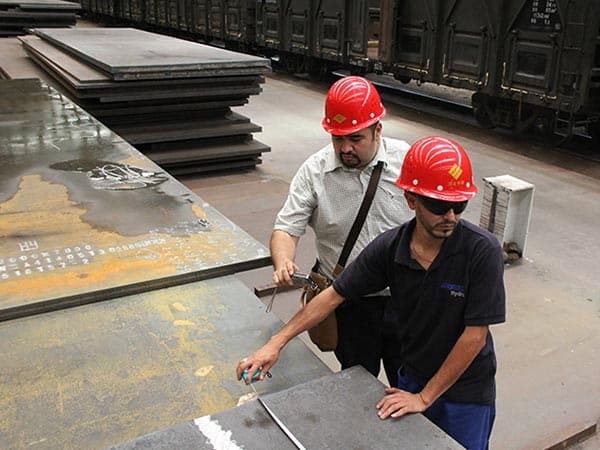
Understanding the Essence of S960MC High-Strength Steel
S960MC is a high-strength, thermomechanically rolled structural steel that belongs to the category of high-yield-strength steels for cold forming. The designation itself carries significant technical information: 'S' stands for structural steel, '960' refers to the minimum yield strength of 960 megapascals (MPa), and 'MC' indicates that the steel is produced using a thermomechanical rolling process (M) and is suitable for cold forming (C). This material is governed by the European standard EN 10149-2.
Unlike traditional quenched and tempered steels, S960MC achieves its extreme strength through a combination of precise chemical alloying and controlled rolling temperatures. This process results in a fine-grained microstructure that offers an exceptional strength-to-weight ratio, making it a preferred choice for industries where reducing dead weight is critical for operational efficiency and energy savings.
The Critical Role of the EN10204-3.1 Certificate
When purchasing S960MC, the EN10204-3.1 certificate is a mandatory requirement for quality assurance. This document is a formal inspection certificate issued by the manufacturer, which declares that the products supplied are in compliance with the requirements of the order and includes specific test results. The 3.1 certificate is validated by the manufacturer’s authorized inspection representative, who must be independent of the manufacturing department.
For high-performance steels like S960MC, the 3.1 certificate provides essential data such as the heat number, chemical composition analysis, and mechanical test results (yield strength, tensile strength, elongation, and impact energy). This level of traceability ensures that the material can withstand the extreme stresses encountered in structural engineering without the risk of catastrophic failure.
Chemical Composition: The Science of Strength
The superior properties of S960MC are rooted in its sophisticated chemical makeup. To maintain weldability and toughness while achieving 960 MPa yield strength, the carbon content is kept low, typically below 0.20%. Strength is instead enhanced through micro-alloying elements such as Niobium (Nb), Vanadium (V), and Titanium (Ti).
| Element | Maximum Content (%) |
|---|---|
| Carbon (C) | 0.20 |
| Manganese (Mn) | 2.20 |
| Silicon (Si) | 0.60 |
| Phosphorus (P) | 0.025 |
| Sulfur (S) | 0.010 |
| Aluminium (Al) | 0.015 |
These micro-alloying elements facilitate grain refinement during the thermomechanical rolling process. By creating a very fine grain structure, the steel gains both high strength and excellent low-temperature toughness, a combination that is difficult to achieve with traditional heat treatment methods.
Mechanical Properties and Performance Metrics
The defining characteristic of S960MC is its mechanical performance. Engineering designs utilizing this steel can significantly reduce plate thickness compared to standard S355 steel, leading to lighter structures that can carry higher payloads.
- Yield Strength (ReH): Minimum 960 MPa.
- Tensile Strength (Rm): Ranges between 980 and 1250 MPa.
- Elongation (A5): Minimum 7% to 10% depending on the thickness.
- Impact Toughness: Usually tested at -20°C or -40°C to ensure resistance to brittle fracture in cold environments.
The high yield-to-tensile ratio of S960MC requires careful consideration during the design phase. While the material is incredibly strong, engineers must account for its lower ductility compared to lower-strength grades when planning for plastic deformation or energy absorption.
Advanced Processing: Welding and Cold Forming
Fabricating components from S960MC requires specialized knowledge. Because the steel derives its strength from the thermomechanical rolling process, excessive heat input during welding can lead to a "softening" of the Heat Affected Zone (HAZ), where the local yield strength may drop below the 960 MPa threshold.
Welding Guidelines: To maintain structural integrity, it is recommended to use low heat input welding techniques. Preheating is generally not required for thinner sections, but the cooling time (t8/5) must be strictly controlled. Matching or slightly under-matching filler metals are often used depending on the specific stress requirements of the joint.
Cold Forming: Despite its high strength, S960MC exhibits good cold-forming properties. However, due to its high yield strength, the "spring-back" effect is much more pronounced than in conventional steels. Fabricators must use larger bending radii and higher press forces. The recommended minimum bending radius is typically 3 to 4 times the plate thickness to avoid surface cracking.
Environmental Adaptability and Durability
S960MC is designed to perform in demanding environments. Its fine-grained structure provides a natural resistance to fatigue, which is vital for components subjected to cyclic loading, such as crane booms or truck chassis. Furthermore, its performance at sub-zero temperatures makes it suitable for use in arctic climates or high-altitude applications.
While S960MC is not a "weathering steel" in the traditional sense, its low impurity levels (low Sulfur and Phosphorus) improve its overall corrosion resistance compared to lower-quality carbon steels. For long-term environmental protection, it is usually treated with high-performance coating systems or galvanizing, though care must be taken with pickling and hydrogen embrittlement during the galvanizing process.
Expanding Application Horizons
The drive for lightweighting across various industries has propelled S960MC into several high-tech sectors. Its application is no longer limited to niche engineering but is now a standard for high-performance equipment.
- Lifting and Handling: Mobile cranes, tower cranes, and aerial work platforms benefit from S960MC by achieving greater reach and higher lifting capacities without increasing the total weight of the machine.
- Transportation: In the manufacture of semi-trailers and heavy-duty truck chassis, using S960MC reduces fuel consumption and increases the legal payload capacity.
- Agriculture and Mining: Wear-resistant parts and structural frames for large harvesters and mining equipment utilize the steel's toughness to withstand abrasive environments and heavy impacts.
- Offshore and Energy: Support structures for renewable energy installations where weight reduction on floating platforms is essential.
Strategic Advantages of S960MC in Modern Engineering
Integrating S960MC into a project offers more than just technical benefits; it provides a competitive economic advantage. By reducing the volume of steel required, companies save on raw material costs, shipping expenses, and welding consumables. Moreover, the environmental footprint of the final product is reduced due to lower material usage and improved energy efficiency during the product's lifecycle.
When sourcing S960MC, it is imperative to partner with suppliers who provide full documentation, including the EN10204-3.1 certificate. This ensures that the material properties meet the stringent safety factors required for high-load structural applications. The combination of high yield strength, weldability, and cold formability makes S960MC a cornerstone of modern high-performance steel construction.
Leave a message