
10mm thickness en 10149 pdf yield strength Mpa
Detailed technical analysis of EN 10149 steel grades at 10mm thickness, focusing on yield strength (MPa), chemical composition, cold forming capabilities, and industrial applications.
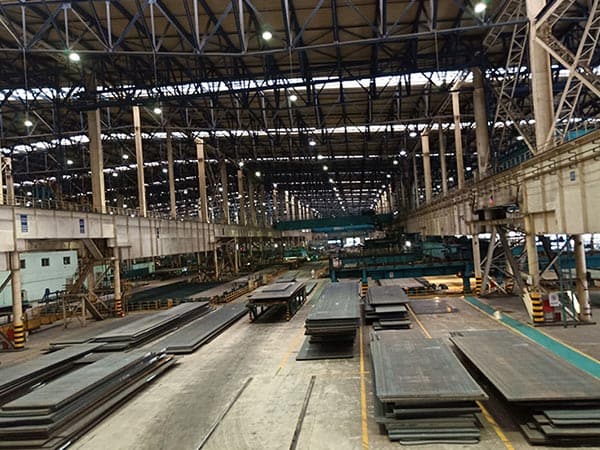
Technical Framework of EN 10149 for 10mm Thickness Steel
The EN 10149 standard represents a critical benchmark in the European steel industry, specifically governing hot-rolled flat products made of high yield strength steels for cold forming. When discussing a 10mm thickness, we are looking at a gauge that is widely utilized in heavy-duty structural components where weight reduction and high load-bearing capacity are paramount. This standard is divided into multiple parts, with Part 2 focusing on thermomechanically rolled steels (MC series) and Part 3 on normalized or normalized rolled steels (NC series). For engineers and procurement specialists, understanding the specific yield strength (MPa) and the metallurgical behavior of these grades at 10mm is essential for ensuring structural integrity and processing efficiency.
Yield Strength (MPa) and Mechanical Performance at 10mm
Yield strength is the most significant parameter defined in the EN 10149-2 and EN 10149-3 specifications. For a 10mm plate, the yield strength is measured longitudinal to the rolling direction. The nomenclature of the steel (e.g., S355MC) directly indicates its minimum yield strength in Megapascals (MPa). Below is a detailed breakdown of the mechanical properties for the most common grades at this thickness.
| Steel Grade | Min. Yield Strength (MPa) | Tensile Strength (MPa) | Min. Elongation (A80mm %) | Min. Elongation (A5 %) |
|---|---|---|---|---|
| S315MC | 315 | 390-510 | 20 | 24 |
| S355MC | 355 | 430-550 | 19 | 23 |
| S420MC | 420 | 480-620 | 16 | 19 |
| S460MC | 460 | 520-670 | 14 | 17 |
| S500MC | 500 | 550-700 | 12 | 14 |
| S550MC | 550 | 600-760 | 12 | 14 |
| S600MC | 600 | 650-820 | 11 | 13 |
| S700MC | 700 | 750-950 | 10 | 12 |
At a 10mm thickness, these steels maintain excellent ductility despite their high strength. The S700MC grade, for instance, provides a staggering 700 MPa minimum yield strength, allowing designers to use thinner sections compared to traditional S355 structural steels, effectively reducing the overall weight of the structure by up to 30-40% without compromising safety.
Metallurgical Advantages of Thermomechanical Rolling (TMCP)
The high yield strength of the EN 10149-2 series is achieved through Thermomechanical Controlled Processing (TMCP). Unlike traditional hot rolling followed by heat treatment, TMCP involves precise temperature control and specific deformation steps during the rolling process. This results in an ultra-fine grain structure, which is the primary mechanism for increasing both strength and toughness simultaneously. For a 10mm plate, the cooling rate is easier to control compared to thicker sections, ensuring a very uniform microstructure from the surface to the core.
- Grain Refinement: The fine ferrite-pearlite or bainitic structure prevents dislocation movement, raising the yield point.
- Low Carbon Content: By relying on grain refinement rather than high carbon or alloy content, these steels remain highly weldable.
- Micro-alloying: Small additions of Niobium (Nb), Vanadium (V), and Titanium (Ti) are used to pin grain boundaries during rolling.
Chemical Composition and Weldability
The weldability of 10mm EN 10149 steel is superior to many other high-strength steels. This is due to the low Carbon Equivalent Value (CEV). When welding 10mm plates, the risk of cold cracking is significantly reduced, often eliminating the need for preheating, which is a major cost saver in large-scale manufacturing. The chemical limits for the MC series are strictly controlled to ensure consistency.
| Grade | C% (max) | Mn% (max) | Si% (max) | P% (max) | S% (max) | Al% (min) |
|---|---|---|---|---|---|---|
| S355MC | 0.12 | 1.50 | 0.50 | 0.025 | 0.020 | 0.015 |
| S700MC | 0.12 | 2.10 | 0.60 | 0.025 | 0.015 | 0.015 |
The low sulfur content (S) ensures high internal purity, which is vital for preventing lamellar tearing during welding and ensuring high impact energy absorption at low temperatures. Most EN 10149 steels are specified with a minimum impact strength of 40J at -20°C or -40°C, depending on the specific sub-grade requested.
Cold Forming and Bending Characteristics
As the standard title suggests, these steels are optimized for cold forming. For a 10mm thickness, the minimum bending radius is a critical factor for fabricators. The EN 10149-2 standard provides specific guidelines for the smallest permissible inside bend radius to avoid cracking on the outer tension surface. For S355MC at 10mm, the recommended radius is typically 1.0 to 1.5 times the thickness (10-15mm), whereas for S700MC, it may increase to 2.0 to 2.5 times the thickness (20-25mm) depending on the bending angle and direction (transverse vs. longitudinal).
The high elasticity and predictable springback of these materials make them ideal for automated bending and roll-forming processes. When working with 10mm plates, it is important to ensure that the bending tools are in good condition and that the bending edges are deburred to prevent stress concentrations.
Industrial Applications and Strategic Utility
The combination of high yield strength, excellent weldability, and superior cold forming makes 10mm EN 10149 steel indispensable across various sectors. In the transportation industry, it is the standard choice for truck chassis, trailers, and heavy-duty vehicle frames. By using S500MC or S700MC, manufacturers can create lighter frames that carry higher payloads, directly improving fuel efficiency and reducing carbon emissions.
In the lifting and mobile crane sector, 10mm plates are often used in the construction of telescopic booms and outriggers. The high strength-to-weight ratio allows for longer reaches and higher lifting capacities. Furthermore, the agricultural machinery sector utilizes these grades for plow frames, harvester components, and chassis where resistance to fatigue and mechanical wear is necessary. The 10mm gauge provides the necessary stiffness while the high yield strength prevents permanent deformation under extreme agricultural loads.
Processing and Optimization Tips
When processing 10mm EN 10149 steel, laser cutting is highly recommended due to the material's clean surface and consistent chemistry, which results in a narrow heat-affected zone (HAZ). For welding, low-hydrogen consumables should be used to maintain the integrity of the fine-grained structure. It is also worth noting that because these steels derive their strength from the TMCP process, they should not be subjected to high-temperature heat treatments (like stress relieving above 580°C) as this can lead to grain growth and a subsequent drop in yield strength.
Sourcing the correct EN 10149 PDF documentation and material test reports (MTRs) is vital for quality assurance. Always verify that the yield strength (MPa) recorded in the 3.1 or 3.2 certificate matches the requirements for the 10mm thickness gauge, ensuring that the batch has undergone the correct thermomechanical processing to meet the rigorous demands of modern engineering projects.
Leave a message