
What is the mechanical properties of en 10149-2 automotive steel s420mc equivalent?
A comprehensive technical guide to S420MC automotive steel, detailing its mechanical properties, chemical composition, and global equivalents like ASTM A1011 and JIS G3134.
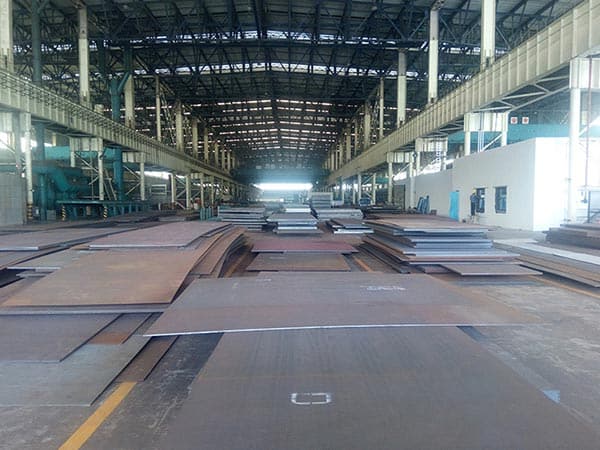
The Core Identity of S420MC Automotive Steel
S420MC is a high-yield-strength steel grade specifically engineered for cold-forming applications, governed by the European standard EN 10149-2. The nomenclature provides a direct insight into its capabilities: 'S' denotes structural steel, '420' represents the minimum yield strength of 420 MPa, and 'MC' indicates the thermomechanically rolled (M) condition with optimized cold-forming (C) properties. Unlike traditional hot-rolled steels, S420MC undergoes a sophisticated Thermomechanically Controlled Processing (TMCP) route. This process refines the grain structure to a microscopic level, allowing for a combination of high strength, excellent ductility, and superior weldability that conventional normalizing cannot achieve. Engineering teams prioritize this material when seeking to reduce vehicle weight without compromising structural safety or load-bearing capacity.
Mechanical Properties and Performance Benchmarks
The mechanical integrity of S420MC is defined by its ability to withstand significant stress while maintaining the flexibility required for complex shaping. The yield strength is the most critical parameter for designers, ensuring that components do not undergo permanent deformation under operational loads. For S420MC, the yield strength is consistently maintained at a minimum of 420 MPa for thicknesses up to 16mm. The tensile strength ranges between 480 and 620 MPa, providing a robust safety margin. Elongation values are equally vital; for thicknesses less than 3mm, the minimum elongation (A80) is 16%, while for thicknesses of 3mm and above, the elongation (A5) increases to 19%. These values ensure that the steel can endure the rigors of deep drawing and tight-radius bending without fracturing.
| Property | Value (Thickness ≤ 16mm) |
|---|---|
| Yield Strength (ReH) | Min 420 MPa |
| Tensile Strength (Rm) | 480 - 620 MPa |
| Elongation (A80, t < 3mm) | Min 16% |
| Elongation (A5, t ≥ 3mm) | Min 19% |
| Bending Radius (180°) | 0.5t to 1.5t (depending on thickness) |
Chemical Composition and Micro-Alloying Strategy
The exceptional performance of S420MC is a direct result of its precise chemical makeup. Manufacturers utilize a low-carbon strategy, keeping carbon levels below 0.12% to ensure excellent weldability and prevent the formation of brittle phases. The primary strengthening mechanism involves micro-alloying with elements such as Niobium (Nb), Vanadium (V), and Titanium (Ti). These elements form fine carbides and nitrides that pin grain boundaries during the rolling process, preventing grain growth and enhancing both strength and toughness. Manganese (up to 1.60%) is added to improve hardenability and solid solution strengthening, while Silicon (up to 0.50%) acts as a deoxidizer. Phosphorus and Sulfur levels are kept extremely low (0.025% and 0.015% respectively) to maximize internal cleanliness and prevent lamellar tearing during fabrication.
| Element | Max % Content |
|---|---|
| Carbon (C) | 0.12 |
| Manganese (Mn) | 1.60 |
| Silicon (Si) | 0.50 |
| Phosphorus (P) | 0.025 |
| Sulfur (S) | 0.015 |
| Aluminum (Al) | 0.015 (min) |
| Nb + V + Ti | 0.22 (combined max) |
Global Equivalents and Standard Comparisons
Navigating international projects requires a clear understanding of how S420MC aligns with other global standards. While EN 10149-2 is the dominant specification in Europe, other regions utilize different naming conventions for steels with similar mechanical profiles. In the United States, the closest equivalent is often found within the ASTM A1011 or A1018 standards, specifically HSLAS-F Grade 60, which emphasizes high-strength low-alloy properties with improved formability. In the Japanese market, JIS G3134 SPFH 540 serves as a functional equivalent, frequently used in automotive frames and structural members. For projects sourcing from China, the GB/T 3273 Q420L grade is the standard counterpart for automotive longitudinal beams and chassis components. Although these grades are broadly equivalent, engineers must verify specific impact testing and thickness tolerances, as minor variations in micro-alloying requirements can exist between standards.
| Standard | Equivalent Grade |
|---|---|
| EN 10149-2 (Europe) | S420MC |
| ASTM A1011 (USA) | HSLAS-F Grade 60 |
| JIS G3134 (Japan) | SPFH 540 |
| GB/T 3273 (China) | Q420L |
| ISO 6930 (International) | HSB 420 |
Processing Advantages: Cold Forming and Weldability
S420MC is celebrated for its fabrication versatility. Its low carbon equivalent (CEV) makes it exceptionally suitable for all standard welding processes, including MIG/MAG, laser welding, and resistance welding. Because the strength is derived from TMCP rather than heat treatment, the Heat Affected Zone (HAZ) remains relatively stable, though excessive heat input should be avoided to prevent localized grain coarsening. From a cold-forming perspective, S420MC exhibits predictable springback characteristics, which is vital for high-precision automotive stamping. It can be bent at tight radii without surface cracking, making it ideal for complex cross-members, longitudinal beams, and bracketry. Furthermore, the steel's fine grain structure provides a superior surface finish, which is advantageous for subsequent coating or galvanizing processes, ensuring long-term corrosion resistance in harsh road environments.
Strategic Applications in Modern Engineering
The adoption of S420MC extends far beyond passenger car chassis. It is a staple in the heavy transport industry, used for truck frames, trailers, and crane booms where high strength-to-weight ratios are mandatory. By utilizing S420MC instead of standard S235 or S355 structural steels, manufacturers can reduce the thickness of components by up to 30% while maintaining the same load capacity. This weight reduction translates directly into increased payload and improved fuel efficiency. In the renewable energy sector, S420MC is increasingly used for structural supports in solar tracking systems, where environmental durability and ease of onsite assembly are required. The material's ability to perform at low temperatures also makes it suitable for equipment operating in cold climates, where traditional steels might suffer from brittle fracture. The combination of high yield strength, excellent ductility, and global availability ensures that S420MC remains a preferred choice for the next generation of sustainable engineering solutions.
Leave a message