
What is en 10149-2 equivalent used for?
Explore the applications, equivalents, and technical specifications of EN 10149-2 steel grades like S355MC to S700MC for high-strength engineering.
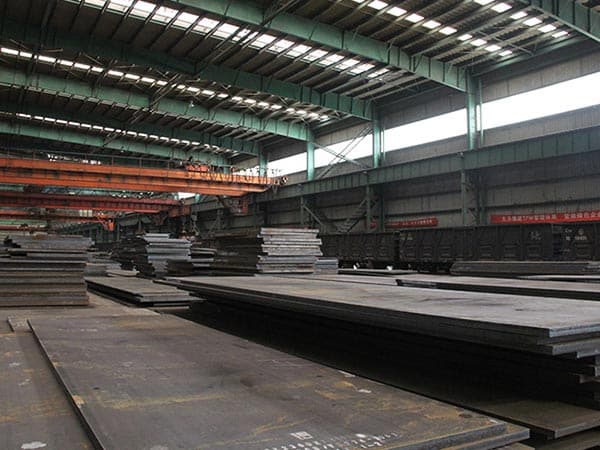
Understanding EN 10149-2: High Yield Strength Steels for Cold Forming
EN 10149-2 is a critical European standard specifying the technical delivery conditions for hot-rolled flat products made of high yield strength steels intended for cold forming. These steels are produced through a process known as thermomechanical rolling, which allows for a fine-grained microstructure that balances extreme strength with excellent ductility. When engineers ask about EN 10149-2 equivalents, they are typically looking for materials that can reduce structural weight without sacrificing safety or durability.
The nomenclature of these grades, such as S315MC, S355MC, S420MC, S460MC, S500MC, S550MC, S600MC, S650MC, and S700MC, provides immediate insight into their properties. The 'S' stands for structural steel, the number represents the minimum yield strength in Megapascals (MPa), and 'MC' signifies thermomechanically rolled (M) steel designed for cold forming (C). These materials have revolutionized the manufacturing of heavy-duty components by providing a higher strength-to-weight ratio than traditional structural steels like S235JR or s355jr.
Global Equivalents for EN 10149-2 Grades
Identifying the correct equivalent is vital for international procurement and design. While no two standards are identical, several international grades offer comparable mechanical properties and chemical compositions. The following table outlines the most common equivalents used in the United States (ASTM), Japan (JIS), and China (GB).
| EN 10149-2 Grade | ASTM Equivalent (USA) | JIS Equivalent (Japan) | GB/T Equivalent (China) |
|---|---|---|---|
| S315MC | ASTM A1011 HSLAS Grade 45 Class 1 | JIS G3134 SPFH 490 | GB/T 1591 Q315MC |
| S355MC | ASTM A1011 HSLAS Grade 50 Class 1 | JIS G3134 SPFH 540 | GB/T 1591 Q355MC |
| S420MC | ASTM A1011 HSLAS Grade 60 Class 1 | JIS G3134 SPFH 590 | GB/T 1591 Q420MC |
| S500MC | ASTM A1018 HSLAS Grade 70 | - | GB/T 1591 Q500MC |
| S700MC | ASTM A1018 HSLAS Grade 100 | - | GB/T 1591 Q700MC |
When substituting these grades, it is essential to verify the specific requirements for impact toughness and bending radius, as these can vary slightly between regional standards despite similar yield strengths.
Core Applications: Where EN 10149-2 Equivalents Excel
The primary driver for using EN 10149-2 equivalent steels is weight reduction. By utilizing higher strength grades like S700MC instead of standard S355, manufacturers can reduce the thickness of steel plates by up to 30-40% while maintaining the same load-bearing capacity. This efficiency is utilized across several heavy industries.
- Automotive and Transportation: These steels are the backbone of the modern trucking industry. They are used for truck chassis frames, cross members, and side rails. The high yield strength ensures the vehicle can withstand heavy payloads and dynamic stresses during transit, while the lower weight improves fuel efficiency and increases legal payload capacity.
- Lifting and Mobile Equipment: Crane booms, telescopic arms, and aerial work platforms require materials that are light enough to be extended to great heights but strong enough to resist buckling. S700MC is frequently the material of choice for these high-stress components.
- Agriculture and Forestry: Equipment such as harvesters, plows, and timber trailers operate in harsh environments. The cold-forming capabilities of EN 10149-2 steels allow for complex shapes that improve structural rigidity without adding unnecessary bulk.
- Cold-Formed Sections: Manufacturers of C-sections, Z-purlins, and other structural profiles use these grades to create lightweight frameworks for industrial buildings and solar panel mounting systems.
Mechanical Properties and Chemical Composition
The exceptional performance of EN 10149-2 steels is rooted in their precise chemical makeup and the thermomechanical rolling process. Unlike traditional normalized steels, these grades utilize micro-alloying elements such as Niobium (Nb), Vanadium (V), and Titanium (Ti) to achieve grain refinement.
The carbon content is kept extremely low (typically below 0.12%), which significantly enhances weldability and toughness. This low carbon equivalent (CEV) means that even high-strength grades like S500MC or S700MC can often be welded without the need for expensive pre-heating, provided the correct consumables and heat input parameters are used.
| Grade | Yield Strength (MPa) min. | Tensile Strength (MPa) | Elongation A80 (%) min. |
|---|---|---|---|
| S355MC | 355 | 430 - 550 | 19 |
| S460MC | 460 | 520 - 670 | 14 |
| S550MC | 550 | 600 - 760 | 12 |
| S700MC | 700 | 750 - 950 | 10 |
Note: Elongation values vary based on the thickness of the material. Thinner sheets generally exhibit lower elongation percentages in standardized testing compared to thicker plates.
Processing Performance: Bending and Welding
One of the defining characteristics of EN 10149-2 equivalents is their superior cold formability. Because they are designed for cold forming, they can be bent to tight radii without cracking. This is particularly important for manufacturers using automated press brakes or roll-forming lines.
For a grade like S700MC, the minimum recommended bending radius is typically 2.0 to 2.5 times the material thickness (depending on the orientation of the bend relative to the rolling direction). Engineers must pay close attention to the springback effect, which is more pronounced in high-strength steels. Proper tooling and over-bending calculations are necessary to achieve precise final dimensions.
Regarding weldability, the fine-grained structure is sensitive to excessive heat input. While these steels are easily welded using MIG/MAG (GMAW), TIG (GTAW), or Submerged Arc Welding (SAW), high heat input can lead to grain growth in the heat-affected zone (HAZ), potentially reducing the local yield strength. Maintaining a controlled interpass temperature is a best practice for preserving the mechanical integrity of the joint.
Environmental Adaptability and Longevity
EN 10149-2 steels are not inherently corrosion-resistant like stainless or weathering steels. However, their clean surface finish—often delivered in a pickled and oiled condition—provides an excellent substrate for protective coatings. Whether through hot-dip galvanizing, powder coating, or industrial painting, these steels hold finishes well, ensuring long-term durability in outdoor or corrosive environments.
The impact toughness of these grades is also a significant factor for cold-weather applications. Many EN 10149-2 grades are tested for longitudinal impact energy at -20°C or -40°C, ensuring they remain ductile and resist brittle fracture even in sub-zero temperatures. This makes them ideal for equipment used in northern climates or high-altitude mining operations.
Strategic Selection for Engineering Projects
Choosing the right EN 10149-2 equivalent involves balancing material cost, weight targets, and fabrication capabilities. While S700MC offers the highest strength, it requires more powerful bending equipment and more precise welding controls than S355MC. For many standard structural applications, S420MC or S500MC provides the "sweet spot" of significantly improved strength over mild steel while remaining very easy to process with standard workshop machinery.
By shifting from traditional structural grades to EN 10149-2 thermomechanically rolled steels, companies can produce more efficient, environmentally friendly, and competitive products. The reduction in material volume not only lowers the raw material cost per unit but also reduces transport costs and carbon emissions throughout the product's lifecycle.
Leave a message