
Why is en 10149-2 grade s500mc more expensive?
Discover why EN 10149-2 Grade S500MC commands a premium price. This detailed analysis covers micro-alloying, TMCP processing, and the economic benefits of high-strength steel.
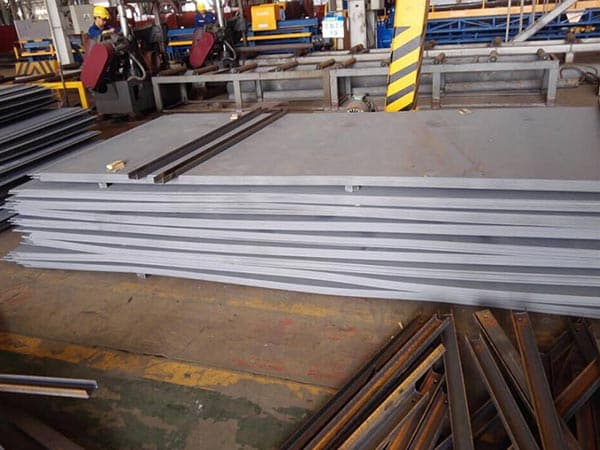
The Metallurgical Sophistication of S500MC
Understanding why EN 10149-2 Grade S500MC carries a higher price tag requires a deep dive into its metallurgical DNA. Unlike standard structural steels like S235 or S355, S500MC is a high-yield strength steel specifically designed for cold forming. The 'MC' designation indicates that the material has undergone thermomechanically rolled (M) processing and is intended for cold forming (C). The price premium is primarily driven by the precision required to achieve a minimum yield strength of 500 MPa while maintaining exceptional ductility and toughness.
Standard carbon steels rely heavily on carbon content to increase strength, which unfortunately makes the steel brittle and difficult to weld. S500MC takes a different path. It utilizes a low-carbon chemistry combined with micro-alloying elements such as Niobium (Nb), Vanadium (V), and Titanium (Ti). These elements are significantly more expensive than iron or carbon, and their integration into the steel matrix requires sophisticated ladle metallurgy to ensure uniform distribution.
The TMCP Advantage: Why Process Control Drives Cost
The Thermomechanical Controlled Processing (TMCP) is a cornerstone of S500MC production. This isn't just standard hot rolling; it is a highly regulated thermal and mechanical treatment where the rolling temperature and the cooling rate are controlled with extreme precision. This process refines the grain size of the steel to a microscopic level. A finer grain structure is the only strengthening mechanism that simultaneously improves both strength and toughness.
From a manufacturing standpoint, TMCP requires more advanced rolling mills equipped with high-power cooling systems and automated feedback loops. The production speed for S500MC is often slower than that of commodity grades because the 'finishing temperature' must be strictly maintained within a narrow window to achieve the desired phase transformation. This lower throughput and higher energy consumption per ton directly contribute to the increased market price.
Micro-Alloying Elements: The Hidden Value
The addition of micro-alloys is a major cost driver. Even in small percentages, elements like Niobium and Titanium have a profound effect on the steel's performance. These elements form fine carbides and nitrides that pin grain boundaries during the rolling process, preventing grain growth. This 'grain boundary strengthening' allows S500MC to reach its 500 MPa yield strength without the need for high carbon levels, which would otherwise compromise the steel's ability to be bent or welded.
The global market prices for these alloying elements are volatile and significantly higher than base scrap or iron ore. Furthermore, the 'yield' at the steel mill—the ratio of finished prime material to the raw ingot—is typically lower for S500MC than for S355. Any deviation in the cooling rate or chemical balance can result in the material failing to meet the strict EN 10149-2 mechanical requirements, leading to costly re-processing or downgrading.
Mechanical Performance and the Weight Reduction Paradox
While the price per ton of S500MC is higher, the 'cost per project' often tells a different story. This is known as the weight reduction paradox. Because S500MC has a significantly higher yield strength than S355 (500 MPa vs 355 MPa), engineers can use thinner sections to carry the same load. In many structural applications, switching to S500MC can result in a 25% to 40% reduction in material weight.
| Property | S355MC (1.0976) | S500MC (1.0984) | S700MC (1.0986) |
|---|---|---|---|
| Min. Yield Strength (MPa) | 355 | 500 | 700 |
| Tensile Strength (MPa) | 430 - 550 | 550 - 700 | 750 - 950 |
| Min. Elongation (%) | 19 | 14 | 12 |
| Typical Applications | General Framing | Truck Chassis, Cranes | High-Load Booms |
This weight saving cascades into other cost-saving areas: lower shipping costs, reduced welding consumables, and improved fuel efficiency for the end-user (in the case of transport equipment). Therefore, the 'expensive' steel becomes an economic enabler for high-performance engineering.
Processing Excellence: Weldability and Cold Forming
One of the primary reasons manufacturers pay a premium for S500MC is its predictable behavior in the workshop. High-strength steels often struggle with 'springback' during bending or cracking in the heat-affected zone (HAZ) during welding. S500MC is engineered to minimize these issues. Its low Carbon Equivalent (CEV) ensures that it can be welded using standard methods without the need for expensive pre-heating, which is often required for other high-strength alloys.
- Excellent Bendability: S500MC allows for tight bending radii, which is critical for complex chassis components.
- Laser Cutting Precision: The clean chemistry and low internal stress of TMCP steel make it ideal for high-speed laser cutting without warping.
- Fatigue Resistance: The fine-grained structure provides superior resistance to cyclic loading, extending the service life of heavy machinery.
When a manufacturer factors in the reduced scrap rates and faster assembly times, the initial investment in S500MC grade material is easily justified. The consistency of the material from batch to batch reduces the need for constant machine recalibration, which is a hidden but significant cost in high-volume production.
Environmental Adaptability and Sustainability
Modern engineering increasingly focuses on the lifecycle carbon footprint. S500MC contributes to sustainability goals by enabling 'lightweighting.' In the automotive and transport industries, every kilogram of weight saved translates directly into lower CO2 emissions during the vehicle's operational life. Furthermore, the TMCP process itself is more energy-efficient than traditional 'quench and temper' (Q&T) methods for achieving high strength, as it utilizes the heat from the rolling process rather than requiring a separate reheating cycle.
The environmental resilience of S500MC is also noteworthy. While it is not a 'weathering steel' in the sense of Corten, its fine-grained structure and low impurity levels (low Sulfur and Phosphorus) provide better resistance to atmospheric corrosion and stress-corrosion cracking compared to cheaper, 'dirtier' steels. This makes it a preferred choice for agricultural equipment and trailers that operate in harsh, outdoor environments.
Strategic Applications: Where S500MC is Non-Negotiable
In certain industries, the move to S500MC isn't just about saving money; it's about technical necessity. In the production of telescopic crane booms, for instance, the weight of the boom itself limits the lifting capacity. Using S500MC or higher grades is the only way to achieve the required reach and safety margins. Similarly, in the manufacturing of modern truck chassis, the demand for higher payloads necessitates the use of high-yield steels to keep the 'tare weight' of the vehicle as low as possible.
Agricultural machinery manufacturers also favor S500MC for parts like plow frames and harvester components. These parts must withstand immense stress and impact without deforming. The high yield-to-tensile ratio of S500MC ensures that the equipment can absorb significant energy before permanent deformation occurs, providing a safety buffer for the operator and the machine.
Market Dynamics and Quality Assurance
Finally, the price of S500MC is influenced by the stringent quality assurance protocols required by EN 10149-2. Each heat of steel must undergo rigorous testing, including tensile tests, bend tests, and often impact tests at sub-zero temperatures (e.g., -20°C or -40°C). The documentation and traceability required for these grades add an administrative layer to the cost. Only Tier-1 steel mills with advanced metallurgical capabilities are typically certified to produce high-quality S500MC, leading to a more controlled supply chain compared to commodity structural steels.
The higher price of S500MC is a reflection of the advanced technology, expensive alloying elements, and precision manufacturing required to produce it. However, when viewed through the lens of total lifecycle cost, material efficiency, and processing performance, S500MC often emerges as the most cost-effective solution for modern high-performance engineering projects.
Leave a message