
How does the crack on the surface of en 10149-2 s600mc cause
Discover the technical causes of surface cracking in EN 10149-2 S600MC steel. This expert analysis covers metallurgical composition, TMCP processing, and cold forming mechanics to prevent manufacturing defects.
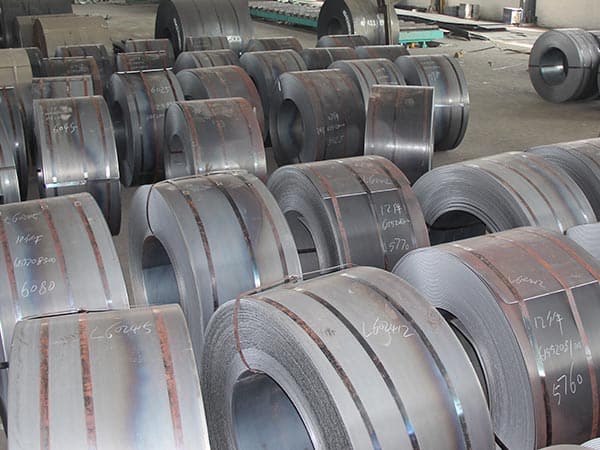
Understanding the Nature of EN 10149-2 S600MC Surface Cracking
EN 10149-2 S600MC is a high-yield-strength steel designed for cold forming, produced through a sophisticated Thermomechanically Rolled (TMCP) process. While it offers an excellent balance of strength and weight reduction, the appearance of surface cracks can compromise structural integrity and lead to costly production scrap. These cracks are rarely the result of a single factor; rather, they emerge from a complex interplay of metallurgical properties, rolling parameters, and subsequent fabrication stresses. Understanding the root causes requires a deep dive into the material's microstructural evolution and the physical limits of its high-strength matrix.
Metallurgical Factors and Chemical Composition Influence
The chemical blueprint of S600MC is engineered to achieve a minimum yield strength of 600 MPa while maintaining ductility. However, specific elements and impurities play a critical role in crack initiation. Sulfur and Phosphorus levels are strictly controlled in EN 10149-2, but even trace amounts of manganese sulfides (MnS) can elongate during the rolling process, creating internal 'weak planes'. If these inclusions are located near the surface, they act as stress concentrators during cold bending or stamping, leading to longitudinal cracks.
Micro-alloying elements like Niobium (Nb), Titanium (Ti), and Vanadium (V) are added to refine grain size. If the precipitation of these elements is not uniform, or if carbonitride clusters form, the local ductility of the steel drops significantly. These hard particles can become sites for micro-void coalescence, which eventually manifest as visible surface fissures when the material is subjected to external loads.
The Impact of Thermomechanical Controlled Processing (TMCP)
The TMCP method is what gives S600MC its superior properties without the need for high alloy content. However, the window for optimal processing is narrow. The finishing rolling temperature is a decisive factor in surface quality. If the rolling temperature falls too low into the dual-phase (austenite + ferrite) region, the deformation becomes non-uniform. The ferrite phase, being softer, takes most of the strain, while the harder austenite grains resist it, potentially leading to microscopic 'tearing' at the grain boundaries.
- Heating Temperature: Excessive slab heating can lead to coarse grain structures at the surface, which are more prone to cracking during the high-reduction passes.
- Cooling Rates: Accelerated cooling after rolling must be uniform. Uneven cooling across the width of the strip can induce residual tensile stresses at the surface, which may trigger spontaneous cracking or 'delayed cracking' after the coil is unwound.
- Scale Removal: Inadequate high-pressure descaling before rolling can result in primary scale being pressed into the steel surface. These scale inclusions create physical discontinuities that act as crack initiators during subsequent cold forming operations.
Mechanical Performance and Cold Forming Limitations
S600MC is frequently used in the automotive and heavy machinery industries for components like truck chassis and crane arms. These applications involve intense cold forming. The yield-to-tensile ratio of S600MC is typically high, meaning there is a smaller margin between the start of permanent deformation and the point of material failure. If the bending radius used in the workshop is smaller than the recommended minimum (typically 1.0t to 1.5t for S600MC depending on thickness), the outer fibers of the bend exceed their elongation limit, resulting in 'orange peel' effects followed by macro-cracks.
| Property Type | Requirement (EN 10149-2) | Impact on Cracking |
|---|---|---|
| Yield Strength (ReH) | Min 600 MPa | Higher strength increases the springback and local stress concentration. |
| Tensile Strength (Rm) | 650 - 820 MPa | Determines the ultimate load-bearing capacity before fracture. |
| Elongation (A80mm) | Min 13% (t < 3mm) | Lower elongation values directly correlate with higher crack sensitivity during forming. |
| Bending Radius (180°) | 1.0t - 1.5t | Exceeding this limit is the most common cause of fabrication-induced cracks. |
Environmental Factors and Hydrogen Embrittlement
While S600MC is not as sensitive as ultra-high-strength steels (above 1000 MPa), it is not immune to environmental degradation. If the steel is pickled in acid without proper inhibitors, or if it is exposed to moisture during storage without protective oiling, hydrogen atoms can diffuse into the crystal lattice. Hydrogen embrittlement can cause 'cold cracks' that appear hours or days after the steel has been processed. These cracks are often intergranular and can occur without any apparent external load, especially in areas with high residual stresses from welding or heavy cold work.
Industry-Specific Applications and Prevention Strategies
In the manufacture of telescopic booms and heavy-duty trailers, the reliability of S600MC is paramount. To mitigate the risk of surface cracks, engineers must focus on several operational pillars. First, ensure that the rolling direction is considered during layout; S600MC exhibits anisotropy, meaning it is more susceptible to cracking when bent parallel to the rolling direction compared to transverse bending. Second, the edge quality of the blanks is vital. Laser-cut or sheared edges should be deburred or ground smooth, as micro-notches on the edge can propagate into the surface during the forming process.
Utilizing advanced non-destructive testing (NDT) such as eddy current or magnetic particle inspection on incoming coils can help identify surface defects before they enter the production line. By maintaining strict control over the bending geometry and ensuring the material is stored in a temperature-controlled, dry environment, manufacturers can leverage the full potential of EN 10149-2 S600MC while eliminating the risks associated with surface cracking.
Leave a message