
Why is water seeping out of the slit when cutting s500 steel datasheet
Investigate the technical causes of water seepage during S500 high-strength steel cutting. This guide covers material properties, storage impacts, and processing solutions.
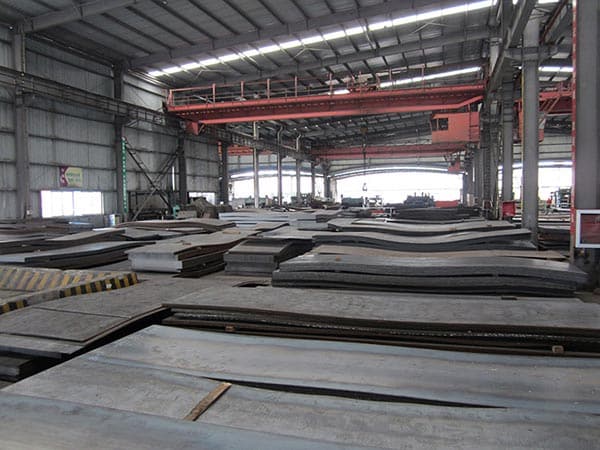
The Mystery of Moisture During S500 High-Strength Steel Cutting
Fabricators and CNC operators often encounter a baffling phenomenon when processing S500 high-strength low-alloy (HSLA) steel: the appearance of liquid or moisture seeping directly from the slit during thermal cutting. While S500 is prized for its 500 MPa minimum yield strength and excellent weldability, this unexpected moisture can compromise cut quality, lead to flash rust, and signal underlying issues in material handling or storage. Understanding why this occurs requires a deep dive into the metallurgical structure of S500, its surface characteristics, and the physics of thermal processing.
S500 steel, governed by standards such as EN 10025-6 or similar regional specifications, is engineered for structural efficiency. It balances high load-bearing capacity with a relatively low weight, making it a staple in crane manufacturing, heavy vehicle chassis, and bridge construction. However, its high-performance nature makes it sensitive to environmental variables that manifest during the high-heat environment of laser, plasma, or flame cutting.
Chemical Composition and Material Integrity of S500
To understand the seepage, we must first look at what constitutes S500. Unlike standard carbon steels, S500 utilizes precise micro-alloying elements to achieve its mechanical properties without excessive carbon content, which preserves ductility.
| Element | Typical Percentage (%) | Role in S500 Performance |
|---|---|---|
| Carbon (C) | 0.12 - 0.20 | Provides basic strength and hardness. |
| Manganese (Mn) | 1.00 - 1.60 | Increases hardenability and tensile strength. |
| Silicon (Si) | 0.10 - 0.50 | Acts as a deoxidizer and solid solution strengthener. |
| Niobium (Nb) | 0.01 - 0.05 | Refines grain structure for higher yield strength. |
| Phosphorus (P) | ≤ 0.025 | Kept low to prevent cold shortness. |
The refined grain structure of S500, achieved through thermomechanical rolling (TMCP), creates a dense matrix. However, the surface of these plates often features a thin layer of mill scale (iron oxides). This scale is not perfectly solid; it contains microscopic pores and fissures. When S500 plates are stored in environments with fluctuating temperatures, these pores act as capillary channels for atmospheric moisture.
The Mechanism of Water Seepage During Cutting
The "water" observed during cutting is rarely internal moisture from within the steel's molecular lattice. Instead, it is typically the result of three specific physical processes:
- Capillary Entrapment in Mill Scale: S500 plates are often stored in bundles. If moisture gets between the plates or into the porous mill scale, it remains trapped. When a laser or plasma torch heats the metal to thousands of degrees, this liquid water is flash-vaporized. The resulting steam pressure forces liquid water further down the slit or out of the kerf before it can all turn to gas.
- Hygroscopic Corrosion Products: If the S500 has begun to develop light surface oxidation (rust), these oxides are hygroscopic. They actively pull moisture from the air. During cutting, the thermal gradient causes this chemically bound water to release and accumulate at the cooler edges of the cut.
- Condensation via Thermal Shock: S500 has a specific thermal conductivity. When a high-energy beam hits a cold plate, the rapid temperature rise can cause localized condensation on the underside or adjacent surfaces if the ambient humidity is high. The high-pressure assist gas (Oxygen or Nitrogen) can then push this condensate through the slit, making it look like the steel is "bleeding" water.
Impact on Mechanical and Process Performance
While the sight of water might seem like a minor nuisance, it has real implications for the S500 datasheet specifications. S500 is designed to maintain a specific Heat Affected Zone (HAZ) profile. The presence of moisture during cutting can lead to:
1. Hydrogen Embrittlement: At high temperatures, water (H2O) dissociates into hydrogen and oxygen. Atomic hydrogen can penetrate the hot grain boundaries of S500. As the steel cools, this hydrogen can cause micro-cracking, particularly in high-strength grades where the lattice is already under significant internal stress.
2. Edge Hardening and Nitriding: If moisture interferes with the assist gas flow, it can lead to inconsistent cooling rates. For S500, which relies on a specific quenched or tempered state, localized rapid cooling by liquid moisture can create martensitic spots that are difficult to machine or weld later.
3. Surface Porosity in Subsequent Welding: If the moisture isn't fully removed and the edges are welded, the residual hydrogen and oxygen will cause porosity in the weld bead, compromising the structural integrity of the S500 assembly.
Optimizing S500 Cutting Parameters and Environment
To mitigate seepage and ensure the S500 datasheet properties are preserved, several process adjustments are necessary. Controlling the environment is as important as controlling the CNC machine settings.
- Pre-heating the Material: Warming the S500 plate to approximately 40°C-60°C before cutting can evaporate surface and capillary moisture. This is especially critical for plates thicker than 12mm.
- Controlled Storage: S500 should be stored in a temperature-controlled warehouse with low humidity. If stored outdoors, plates must be inclined to allow water runoff and covered with breathable waterproof membranes.
- Assist Gas Purity: Ensure that the compressed air or gas lines are equipped with high-efficiency refrigerated dryers. Moisture in the gas line is often mistaken for moisture coming out of the steel.
- Speed and Focus Adjustment: For S500, maintaining a consistent focal point is vital. Moisture can distort the laser beam's path slightly by changing the refractive index of the air immediately above the cut, leading to dross and poor edge finish.
Extended Applications of S500 Steel
The reason we care so much about the cutting quality of S500 is its critical role in modern engineering. Because S500 offers a high strength-to-weight ratio, it is the primary choice for:
Mobile Cranes and Lifting Equipment: Every kilogram saved in the boom structure allows for a higher lifting capacity at greater radii. Clean, moisture-free cuts ensure that the telescopic sections slide perfectly and welds meet X-ray quality standards.
Offshore Structures: In marine environments, S500 must resist fatigue and low-temperature brittleness. Any cutting defects caused by moisture seepage can become initiation points for stress corrosion cracking in salt-heavy atmospheres.
Heavy-Duty Chassis: For trucks and trailers, S500 provides the toughness to handle dynamic loads. Precise cutting ensures that bolt holes and mounting points are perfectly aligned without the need for secondary grinding, which could introduce unwanted heat into the tempered steel.
| Property | S500 Specification | Importance in Fabrication |
|---|---|---|
| Yield Strength (ReH) | Min 500 MPa | Determines the load-bearing limit. |
| Tensile Strength (Rm) | 590 - 770 MPa | Defines the ultimate breaking point. |
| Elongation (A5) | Min 14% | Ensures the material can deform before failing. |
| Impact Energy (Charpy V) | -20°C / -40°C (Grade dependent) | Crucial for cold-weather reliability. |
In summary, the appearance of water when cutting S500 is a physical manifestation of environmental interaction rather than a flaw in the steel's chemistry. By addressing storage conditions, implementing pre-heating protocols, and maintaining dry assist gases, fabricators can eliminate this issue. This ensures that the S500 components retain their high-strength characteristics, providing safety and longevity in the most demanding structural applications. Proper handling of S500 not only improves the aesthetic of the cut edge but also safeguards the metallurgical integrity that engineers rely on when specifying this high-performance grade.
Leave a message