
Alloy steel grade 500 steel properties to manufacture steel pipes
Explore the critical properties of Alloy Steel Grade 500 for pipe manufacturing. Learn about its chemical makeup, mechanical strength, and welding techniques for industrial use.
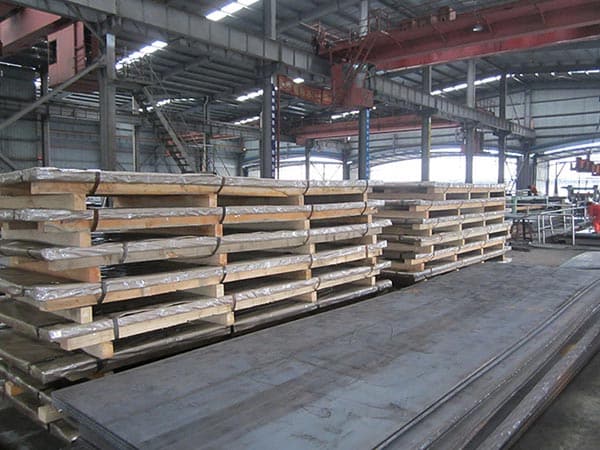
The Evolution of High-Strength Alloy Steel Grade 500 in Piping Systems
Modern industrial infrastructure demands materials that push the boundaries of weight-to-strength ratios. Alloy steel grade 500 represents a significant milestone in this evolution, offering a yield strength of approximately 500 MPa. This specific grade is not merely a single alloy but a category of high-strength low-alloy (HSLA) or quenched and tempered steels designed to bridge the gap between standard structural steels and ultra-high-strength materials. When utilized in pipe manufacturing, Grade 500 provides a unique combination of ductility, toughness, and weldability that is essential for high-pressure environments and complex structural frameworks.
The transition to Grade 500 in piping projects is often driven by the need to reduce wall thickness without compromising safety. Thinner walls lead to lighter structures, reduced transportation costs, and simplified welding procedures, provided the material's properties are fully understood and leveraged. The manufacturing of steel pipes from this grade requires a deep dive into its metallurgical profile to ensure that the final product can withstand the rigorous demands of sectors like oil and gas, heavy machinery, and large-scale civil engineering.
Chemical Composition: The Foundation of Performance
The superior performance of Grade 500 alloy steel is rooted in its precise chemical makeup. Unlike standard carbon steels, Grade 500 incorporates specific alloying elements that refine the grain structure and enhance hardenability. The balance of these elements is critical for maintaining a low carbon equivalent (CEV), which directly influences the material's weldability and resistance to cold cracking.
| Element | Typical Range (%) | Primary Function |
|---|---|---|
| Carbon (C) | 0.12 - 0.20 | Provides basic strength and hardness. |
| Manganese (Mn) | 1.20 - 1.60 | Increases tensile strength and hardenability. |
| Silicon (Si) | 0.20 - 0.50 | Acts as a deoxidizer and strengthens the ferrite. |
| Chromium (Cr) | 0.30 - 0.80 | Enhances corrosion resistance and high-temperature strength. |
| Molybdenum (Mo) | 0.10 - 0.30 | Improves creep resistance and toughness. |
| Nickel (Ni) | 0.20 - 0.50 | Significantly boosts low-temperature impact toughness. |
| Vanadium (V) / Niobium (Nb) | 0.01 - 0.05 | Grain refinement and precipitation hardening. |
Micro-alloying elements like Niobium and Vanadium play a disproportionate role in the strength of Grade 500. By forming stable carbides and nitrides, these elements pin grain boundaries during the manufacturing process, preventing grain growth even at elevated temperatures. This results in a fine-grained microstructure that is essential for achieving high toughness values, particularly in the heat-affected zones (HAZ) of welded pipes.
Mechanical Properties and Structural Integrity
The defining characteristic of Grade 500 is its mechanical prowess. For pipe manufacturers, the focus is not just on the 500 MPa yield point, but on the entire stress-strain curve. A high yield-to-tensile ratio is often desirable for structural stability, yet enough elongation must remain to allow for localized deformation without catastrophic failure.
- Yield Strength: Minimum 500 MPa, ensuring the pipe can handle high internal pressures or external loads without permanent deformation.
- Tensile Strength: Typically ranges between 600 and 750 MPa, providing a robust safety margin.
- Elongation: Usually exceeds 18%, allowing the pipes to be bent or formed during installation.
- Impact Toughness: Often specified at -20°C or -40°C, ensuring the alloy remains ductile in arctic or sub-sea environments.
Fatigue resistance is another critical factor. Pipes used in offshore platforms or as hydraulic cylinders in heavy machinery are subjected to cyclic loading. The fine-grained nature of Grade 500 alloy steel minimizes the initiation of micro-cracks, significantly extending the operational life of the piping system compared to lower-grade alternatives.
Advanced Manufacturing Processes for Grade 500 Pipes
Transforming raw alloy steel into high-performance pipes involves sophisticated processing techniques. The choice between Seamless (SMLS) and Electric Resistance Welded (ERW) or Submerged Arc Welded (SAW) depends on the intended application and the specific dimensions required.
For seamless pipes, the process begins with heating a solid billet and piercing it to create a hollow shell. In the case of Grade 500, the temperature control during the rolling and finishing stages is paramount. Controlled rolling followed by accelerated cooling (TMCP - Thermo-Mechanical Control Process) is frequently used to achieve the desired strength and toughness without the need for expensive post-rolling heat treatments. This process refines the austenite grains and promotes the formation of a fine acicular ferrite or bainite microstructure.
Welded pipes made from Grade 500 plate or coil require careful edge preparation and high-precision welding. The use of automated SAW systems ensures deep penetration and consistent bead geometry. However, the rapid heating and cooling cycles inherent in welding can alter the carefully engineered properties of the alloy. Therefore, manufacturers often employ induction heating for pre-heating and post-weld heat treatment (PWHT) to temper the martensite that may form in the HAZ, restoring the pipe's ductility and toughness.
Environmental Adaptability and Corrosion Resistance
Piping systems are rarely used in pristine environments. Whether buried underground, submerged in saltwater, or transporting corrosive chemicals, Grade 500 pipes must demonstrate exceptional environmental adaptability. While the chromium and nickel content provides a baseline of atmospheric corrosion resistance, additional protection is often required for aggressive service.
In the oil and gas industry, Sour Service (environments containing H2S) is a major concern. Grade 500 must be specially processed to resist Hydrogen-Induced Cracking (HIC) and Sulfide Stress Cracking (SSC). This involves maintaining extremely low levels of sulfur and phosphorus and using calcium treatment for inclusion shape control. By ensuring that inclusions are spherical rather than elongated, the risk of hydrogen pressure building up at internal interfaces is greatly reduced.
Furthermore, for pipes used in geothermal or high-temperature industrial processes, the molybdenum content in Grade 500 ensures that the steel maintains its mechanical properties at temperatures where standard carbon steels would begin to soften or creep. This thermal stability makes it a preferred choice for steam lines and heat exchanger shells.
Expanding Applications Across Diverse Industries
The versatility of Grade 500 alloy steel pipes has led to their adoption in sectors far beyond traditional plumbing or transport. In the Renewable Energy sector, these pipes are used as structural components for wind turbine towers and offshore foundations, where high strength is needed to resist the massive forces of wind and waves. The weight savings achieved by using Grade 500 allow for taller towers and larger turbines.
In the Mining and Construction industry, Grade 500 pipes serve as the backbone for hydraulic support systems and boom structures for cranes. The high strength-to-weight ratio allows for the design of equipment that can reach further and lift more while remaining mobile. Additionally, the wear resistance inherent in many Grade 500 alloys makes them suitable for slurry pipelines, where abrasive materials are transported over long distances.
The Automotive and Transportation sector utilizes smaller diameter Grade 500 tubing for safety-critical components like roll cages and chassis members. The ability of the material to absorb energy during an impact, while maintaining its structural form, is a key safety feature that protects occupants in high-performance or heavy-duty vehicles.
Technical Challenges and Mitigation Strategies
Working with Grade 500 alloy steel is not without its challenges. The primary difficulty lies in its sensitivity to hydrogen embrittlement during the welding process. To mitigate this, manufacturers must use low-hydrogen welding consumables (such as E7018 or E8018 electrodes) and ensure that all surfaces are free from moisture, oil, and grease. Maintaining a specific interpass temperature is also vital to prevent the formation of brittle phases.
Another challenge is the potential for Softening in the Heat-Affected Zone. Because the strength of Grade 500 is often achieved through specific heat treatments or TMCP, the heat of welding can act as a local tempering process, reducing the yield strength in a narrow band adjacent to the weld. Engineers must account for this "soft zone" in their design calculations or use specialized welding techniques like laser-hybrid welding to minimize the heat input.
Cold forming of Grade 500 pipes also requires higher forces compared to lower grades. Springback is more pronounced, necessitating precise control over the bending radius and tooling geometry. However, once formed, the pipes exhibit excellent dimensional stability, which is crucial for high-precision assemblies in aerospace or high-tech manufacturing.
The Future of Grade 500 in Sustainable Engineering
As the global focus shifts toward sustainability, the role of Grade 500 alloy steel becomes even more prominent. The ability to build more with less material is a core tenet of green engineering. By reducing the total tonnage of steel required for a project, Grade 500 directly contributes to a lower carbon footprint in terms of production, transport, and installation. Innovations in metallurgy are continuing to push the limits of this grade, with researchers exploring the addition of rare earth elements to further refine the microstructure and enhance performance in extreme environments.
The integration of digital twins and real-time monitoring in pipe manufacturing ensures that every length of Grade 500 pipe meets the most stringent quality standards. Ultrasonic testing (UT), X-ray inspection, and magnetic particle inspection (MPI) are standard protocols that guarantee the absence of internal defects, ensuring that the properties of the alloy are consistent throughout the entire pipe length. This level of quality assurance is what makes Grade 500 a trusted material for the most demanding engineering challenges of the 21st century.
Leave a message