
What is the hardness of s500mc en 10149-2 automobile structure steel?
Comprehensive guide on S500MC steel hardness, chemical composition, mechanical performance, and its critical role in automotive structural engineering.
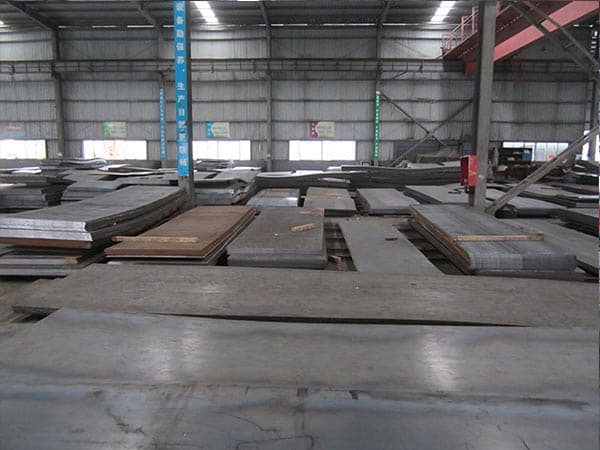
Understanding the Hardness and Metallurgical Profile of S500MC
S500MC is a high-yield-strength, thermomechanically rolled steel specifically designed for cold forming. Governed by the EN 10149-2 standard, this material is a cornerstone in the modern automotive industry, where the balance between weight reduction and structural integrity is paramount. While the standard primarily defines yield strength and tensile strength, the hardness of S500MC is a critical derivative property that engineers use to predict wear resistance and machinability.
Technically, EN 10149-2 does not mandate a specific hardness value for S500MC. However, based on its tensile strength range (550 to 700 MPa), the typical hardness of S500MC falls between 160 and 210 HBW (Brinell Hardness) or approximately 170 to 220 HV (Vickers Hardness). This moderate hardness level ensures that the steel remains ductile enough for complex bending and folding while providing the necessary stiffness for load-bearing components.
Chemical Composition and Its Influence on Hardness
The hardness and strength of S500MC are achieved through a precise chemical balance and a thermomechanical rolling process (indicated by the 'M' in its name). Unlike traditional hot-rolled steels that rely on high carbon content for strength, S500MC utilizes micro-alloying elements.
| Element | Maximum Content (%) | Role in Material Performance |
|---|---|---|
| Carbon (C) | 0.12 | Maintains weldability while providing base strength. |
| Manganese (Mn) | 1.60 | Increases hardness and tensile strength through solid solution strengthening. |
| Silicon (Si) | 0.50 | Acts as a deoxidizer and improves yield strength. |
| Niobium (Nb) | 0.09 | Refines grain size, significantly boosting toughness and hardness. |
| Titanium (Ti) | 0.15 | Prevents grain growth during welding and high-temperature processing. |
The low carbon content (max 0.12%) is essential. It ensures that the hardness is not derived from brittle martensitic structures but from a fine-grained ferritic-pearlitic matrix. This micro-alloying approach allows the steel to maintain high strength without becoming overly sensitive to cracking during fabrication.
Mechanical Properties Beyond Hardness
To fully grasp why S500MC is preferred for automotive structures, one must look at the mechanical properties defined by EN 10149-2. These values are the primary benchmarks for structural safety.
- Yield Strength (ReH): Minimum 500 MPa. This is the threshold where the steel begins to deform plastically.
- Tensile Strength (Rm): 550–700 MPa. This range defines the maximum load the material can withstand before necking.
- Elongation (A80mm): Minimum 12% to 14% depending on thickness. This indicates the material's ability to stretch without fracturing.
- Bending Radius: S500MC is designed for cold forming, allowing for tight bend radii (typically 0.5 to 1.5 times the thickness) without surface cracking.
The relationship between tensile strength and hardness is relatively linear in HSLA (High-Strength Low-Alloy) steels. By applying the standard conversion factor (Tensile Strength / 3.5), we can estimate the Brinell hardness. For S500MC at its peak tensile strength of 700 MPa, the hardness reaches approximately 200 HBW.
The Impact of Thermomechanical Rolling (TMCP)
The "MC" designation signifies that the steel is thermomechanically rolled (M) and suitable for cold forming (C). This process is distinct from conventional hot rolling. In TMCP, the rolling temperature and the cooling rate are strictly controlled.
This process creates a fine-grained microstructure. Smaller grains mean more grain boundaries, which act as barriers to dislocation movement. This increases both the yield strength and the hardness of the material without sacrificing low-temperature toughness. For automotive applications, this means the steel can absorb significant energy during a collision, a property known as crashworthiness.
Processing Performance: Welding and Bending
One of the reasons S500MC is a favorite in manufacturing is its exceptional processing characteristics. Because the hardness is achieved through grain refinement rather than high carbon or alloy content, the Carbon Equivalent (CEV) remains low.
Welding: S500MC can be welded using all standard methods, including MAG, MIG, and laser welding. The low CEV means that the Heat Affected Zone (HAZ) does not experience excessive hardening, which prevents cold cracking. This is vital for maintaining the structural integrity of truck chassis and crane arms.
Laser Cutting: The uniform microstructure and clean chemical composition make S500MC ideal for high-speed laser cutting. The edges remain relatively soft compared to high-carbon steels, facilitating subsequent machining or assembly steps.
Environmental Adaptability and Fatigue Resistance
Automobile structural components are subjected to dynamic loads and varying environmental conditions. S500MC excels in these scenarios due to its fatigue resistance. The fine grain structure inhibits the initiation and propagation of fatigue cracks, extending the service life of the vehicle frame.
Furthermore, S500MC demonstrates excellent performance in low-temperature environments. While standard structural steels might become brittle in sub-zero temperatures, the micro-alloyed S500MC retains its ductility, making it suitable for vehicles operating in arctic or high-altitude conditions.
Primary Applications in the Automotive Industry
The unique combination of 500 MPa yield strength and manageable hardness makes S500MC indispensable for several high-stress components:
- Chassis Frames: The primary load-bearing structure of trucks and heavy vehicles requires high strength to support weight and moderate hardness to resist road debris impact.
- Cross Members: These components benefit from the high yield strength of S500MC, allowing for thinner walls and reduced overall vehicle weight (lightweighting).
- Cold-Pressed Parts: Brackets, pillars, and reinforcement beams that require complex shapes are easily formed using S500MC.
- Cranes and Lifting Equipment: Beyond cars, the steel is used in the telescopic booms of cranes where high strength-to-weight ratios are critical.
Comparison: S500MC vs. S355MC and S700MC
Choosing the right grade involves balancing strength, formability, and cost. S355MC is more ductile and easier to form but requires thicker sections to achieve the same strength as S500MC. Conversely, S700MC offers much higher strength (700 MPa yield) but has a higher hardness (up to 250 HBW), which makes it more challenging to bend and weld without specialized equipment.
S500MC sits at the "sweet spot" for many structural applications, providing a 40% increase in yield strength over S355MC while maintaining excellent weldability and a hardness profile that doesn't cause excessive tool wear during manufacturing.
Final Technical Considerations for Procurement
When specifying S500MC for a project, it is important to ensure the material meets the EN 10149-2 certification. Testing should include transverse tensile tests and bend tests. If hardness is a critical factor for a specific application (such as wear plates), a Vickers hardness test should be requested from the mill, as it provides a more precise reading of the surface characteristics than a standard Brinell test.
By understanding that the hardness of S500MC is a result of advanced thermomechanical processing, engineers can better utilize this material to create safer, lighter, and more efficient automotive structures. The synergy of micro-alloying and controlled rolling ensures that S500MC remains a top-tier choice for the demanding requirements of modern transportation engineering.
Leave a message