
Alloy steel S700MC hot rolled coil yield strength 10mm thick size
Deep dive into S700MC alloy steel hot rolled coils, focusing on 10mm thickness yield strength, mechanical properties, welding, and cold forming applications for heavy industry.
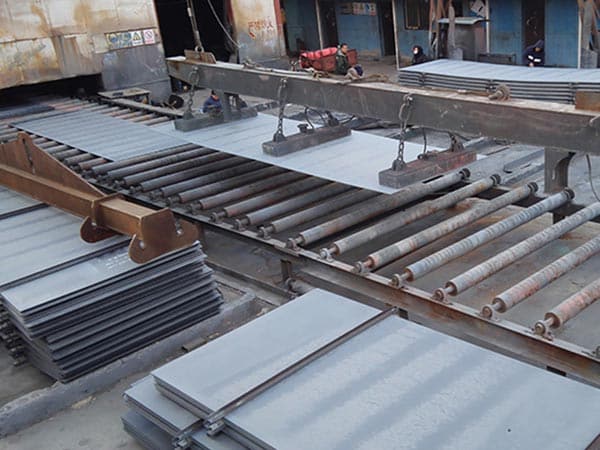
The Evolution of High-Yield Strength Steel: Understanding S700MC
In the modern industrial landscape, the demand for materials that combine extreme strength with weight reduction has never been higher. S700MC, a high-yield strength cold-forming steel produced via thermomechanical rolling, stands at the forefront of this material revolution. Defined by the European standard EN 10149-2, S700MC is engineered to provide a minimum yield strength of 700 MPa, allowing engineers to design lighter structures without compromising safety or durability.
When we discuss 10mm thick S700MC hot rolled coils, we are looking at a specific niche of the heavy-duty structural market. While thinner gauges are common in automotive body-in-white applications, the 10mm thickness is a critical threshold for heavy vehicle chassis, crane booms, and large-scale agricultural equipment. This thickness offers a unique balance of structural rigidity and the flexibility required for complex cold-forming processes.
Chemical Composition and the Science of Micro-Alloying
The exceptional properties of S700MC are not accidental; they are the result of precise chemical engineering. Unlike traditional carbon steels, S700MC utilizes micro-alloying elements such as Niobium (Nb), Titanium (Ti), and Vanadium (V). These elements work in tandem during the thermomechanical rolling process to refine the grain structure of the steel.
Grain refinement is the only strengthening mechanism that simultaneously improves both strength and toughness. By keeping the carbon content extremely low (typically below 0.12%), the steel maintains excellent weldability and ductility. The inclusion of these micro-alloys ensures that even at a 10mm thickness, the material maintains a fine-grained ferrite-bainite microstructure, which is essential for resisting crack propagation during heavy bending or impact loading.
| Element | Max Content (%) | Role in S700MC |
|---|---|---|
| Carbon (C) | 0.12 | Ensures weldability and prevents brittleness. |
| Manganese (Mn) | 2.10 | Increases strength and hardenability. |
| Silicon (Si) | 0.60 | Deoxidizer and solid solution strengthener. |
| Niobium (Nb) | 0.09 | Primary grain refiner for high yield strength. |
| Titanium (Ti) | 0.22 | Fixes nitrogen and prevents grain growth during welding. |
Mechanical Properties: Yield Strength and Beyond
The "700" in S700MC signifies its minimum yield strength of 700 MPa. For a 10mm thick hot rolled coil, achieving this strength consistently across the entire length and width of the coil requires sophisticated cooling controls during the rolling mill process. The yield strength is the point at which the material begins to deform plastically; for S700MC, this high threshold allows for significant weight savings—often up to 30% or 40% compared to traditional S355 structural steel.
However, yield strength is only part of the story. The tensile strength typically ranges between 750 and 950 MPa. Elongation is also a critical factor, especially for 10mm thick plates that must undergo bending. S700MC provides an elongation (A5) of at least 12%, which is remarkable for a steel of this strength level. This ensures that the material can absorb energy and undergo deformation without catastrophic failure.
Processing 10mm S700MC: Bending and Forming
One of the primary advantages of S700MC is its cold forming capability. Despite its high strength, it can be bent to tight radii. For a 10mm thickness, the recommended minimum bending radius is typically 2.0 to 2.5 times the thickness (20mm to 25mm), depending on the orientation of the bend relative to the rolling direction. Bending transverse to the rolling direction usually allows for tighter radii than bending parallel to it.
When working with 10mm thick S700MC, fabricators must account for springback. Because the steel is so strong, it resists deformation more than mild steel, requiring over-bending to achieve the final desired angle. High-quality CNC press brakes with precise pressure control are essential for handling S700MC coils to ensure dimensional accuracy in large-scale components.
Welding Characteristics and Best Practices
The low carbon equivalent (CEV) of S700MC makes it exceptionally weldable. It does not generally require preheating for thicknesses up to 10mm, which significantly reduces fabrication time and energy costs. However, because the strength of the steel is derived from its thermomechanical processing and micro-alloyed structure, excessive heat input during welding can lead to a softening of the Heat Affected Zone (HAZ).
- Low Heat Input: Use welding parameters that minimize the time the material spends at high temperatures.
- Filler Metals: Use high-strength consumables that match the yield strength of the base metal (e.g., ER110S-G or similar).
- Cooling Rates: Ensure controlled cooling to maintain the fine-grained structure in the weld joint.
- Joint Preparation: Clean edges thoroughly to prevent hydrogen-induced cracking, although S700MC is naturally resistant to this.
Environmental Adaptability and Fatigue Resistance
S700MC is frequently used in mobile equipment that operates in harsh environments. Its fine-grained structure provides excellent low-temperature toughness, often tested at -20°C or -40°C. This makes it ideal for machinery used in arctic climates or high-altitude mining operations. While S700MC is not a dedicated "weathering steel," its dense structure and the addition of alloying elements provide a slightly better atmospheric corrosion resistance than standard carbon steel, though it is typically painted or galvanized for long-term protection.
Fatigue resistance is another area where S700MC excels. In the transport industry, chassis components are subjected to millions of cycles of stress. The high yield strength of S700MC increases the fatigue limit, allowing for longer service lives of trailers, truck frames, and telescopic booms. For 10mm sections, the surface quality of the hot rolled coil is vital; S700MC coils are usually produced with a very clean surface finish to eliminate stress concentrators that could lead to fatigue cracks.
Industry Applications for 10mm S700MC Coils
The 10mm thickness is particularly valuable in sectors where structural integrity is paramount but weight is a penalty. In the heavy lifting industry, crane manufacturers use S700MC for boom sections and outriggers. The high strength allows for longer reach and higher lifting capacities without increasing the overall weight of the crane vehicle.
In the transportation sector, the move toward "green logistics" requires lighter trailers to increase payload capacity and reduce fuel consumption. S700MC 10mm coils are used for main longitudinal beams in semi-trailers. By replacing 15mm S355 steel with 10mm S700MC, manufacturers can shed hundreds of kilograms from a single trailer frame while maintaining the same load-bearing capacity.
Agricultural machinery also benefits significantly. Modern harvesters and tillage equipment are becoming larger and more complex. Using S700MC in 10mm thickness for frames and support structures ensures that these machines can withstand the immense torque and vibrational stresses encountered in the field without adding unnecessary bulk that would lead to soil compaction.
Market Trends and Sizing Considerations
The availability of S700MC in coil form up to 10mm thickness offers logistical advantages. Coils can be leveled and cut to precise lengths, reducing scrap waste compared to standard plate sizes. When sourcing 10mm S700MC, it is important to verify the thickness tolerances (often according to EN 10051), as precise gauge control is necessary for automated welding and assembly lines.
As global regulations on carbon emissions tighten, the shift toward high-strength steels like S700MC is accelerating. The ability to use less material to achieve the same structural goal directly translates to a lower carbon footprint during the manufacturing phase and improved energy efficiency during the product's operational life. S700MC is not just a material choice; it is a strategic decision for sustainable engineering.
Technical Comparison: S700MC vs. Conventional Steels
| Property | s355jr (Standard) | S700MC (High Strength) | Benefit of S700MC |
|---|---|---|---|
| Yield Strength (MPa) | 355 | 700 | ~100% Increase |
| Thickness for same load | 18mm | 10mm | 44% Thickness Reduction |
| Weldability | Good | Excellent (Low CEV) | Easier fabrication |
| Weight | Baseline | Reduced by ~35% | Higher payload/Efficiency |
Utilizing S700MC in a 10mm hot rolled coil format requires a deep understanding of both the material's limits and its potential. By leveraging its high yield strength and superior forming characteristics, manufacturers can push the boundaries of what is possible in heavy equipment design, creating products that are stronger, lighter, and more durable than ever before.
Leave a message