
What are the advantages of high strength S500MC tensile strength
Discover the technical advantages of S500MC high-strength steel. This guide explores its mechanical properties, weldability, and weight reduction benefits for engineering.
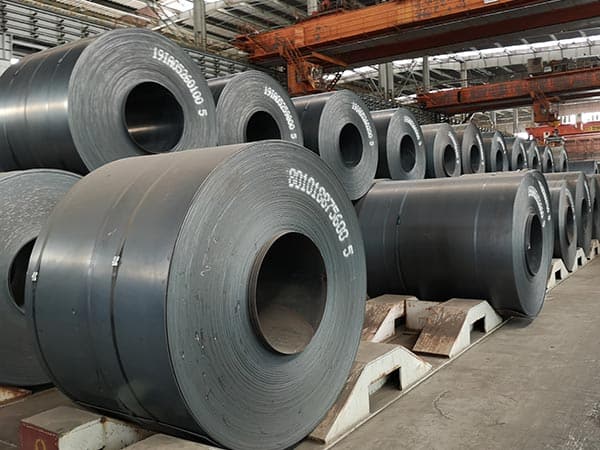
The Metallurgical Foundation of S500MC High-Strength Steel
S500MC is a thermomechanically rolled, high-strength low-alloy (HSLA) steel that conforms to the EN 10149-2 standard. The 'S' denotes structural steel, '500' represents the minimum yield strength of 500 MPa, and 'MC' indicates that the material is thermomechanically rolled (M) and possesses high cold-forming properties (C). Unlike traditional hot-rolled steels that rely on high carbon content for strength, S500MC achieves its superior mechanical profile through a sophisticated Thermo-Mechanically Controlled Process (TMCP). This process involves precise temperature control during the rolling stages and accelerated cooling, which results in an exceptionally fine-grained ferrite-pearlite or bainitic microstructure. By refining the grain size, the material gains simultaneous improvements in both strength and toughness, a combination that is often difficult to achieve in conventional metallurgy.
Deciphering the Tensile Strength Advantage
The tensile strength of S500MC, typically ranging between 550 and 700 MPa, offers a critical safety margin for structural components. While the yield strength determines when the material begins to deform permanently, the tensile strength defines the maximum stress the steel can withstand before necking or failure occurs. This high tensile-to-yield ratio is essential for energy absorption during unforeseen overload conditions. In automotive engineering, for instance, the ability of a chassis component to absorb impact energy without catastrophic fracturing is directly linked to the work-hardening behavior associated with this tensile range. The micro-alloying elements—primarily Niobium (Nb), Vanadium (V), and Titanium (Ti)—form stable carbonitrides that pin grain boundaries, preventing grain growth and ensuring that the high tensile strength is consistent across the entire cross-section of the plate.
| Chemical Element | Maximum Percentage (%) |
|---|---|
| Carbon (C) | 0.12 |
| Manganese (Mn) | 1.60 |
| Silicon (Si) | 0.50 |
| Phosphorus (P) | 0.025 |
| Sulfur (S) | 0.015 |
| Aluminium (Al) | 0.015 |
| Niobium (Nb) | 0.09 |
Precision Cold Forming and Ductility
One of the standout advantages of S500MC is its exceptional cold-forming capability despite its high strength levels. Engineers often face a trade-off where increasing strength leads to increased brittleness; however, S500MC maintains sufficient elongation (typically 12% to 14% depending on thickness) to allow for complex bending and folding operations. This ductility is a direct result of the low carbon equivalent (CEV) and the fine-grained structure. The material exhibits minimal springback compared to other high-strength steels, which enhances dimensional accuracy in automated production lines. For manufacturers of complex structural profiles, such as C-channels or Z-sections used in heavy-duty racking, S500MC allows for tighter bending radii without the risk of surface cracking or edge splitting.
| Mechanical Property | Value Range |
|---|---|
| Yield Strength (ReH) | Min. 500 MPa |
| Tensile Strength (Rm) | 550 - 700 MPa |
| Elongation (A5) | Min. 12% - 14% |
| Min. Bending Radius (90°) | 1.0t to 1.5t (depending on thickness) |
Weldability and Structural Integrity
Weldability is a paramount concern in heavy engineering, and S500MC excels in this regard due to its extremely low carbon content and optimized chemical composition. The low CEV ensures that the heat-affected zone (HAZ) does not become excessively brittle after welding, which is a common failure point in traditional high-carbon steels. S500MC can be welded using all standard methods, including MAG (Metal Active Gas), MIG (Metal Inert Gas), and laser welding. Because the material is so clean—with very low levels of impurities like phosphorus and sulfur—the risk of hot cracking or cold cracking is significantly reduced. This allows for high-speed welding processes in trailer manufacturing and crane construction, where long, continuous welds are necessary for structural integrity. Furthermore, the consistency of the material ensures that the mechanical properties of the welded joint remain close to those of the base metal.
Weight Optimization in Modern Engineering
The shift toward S500MC is often driven by the need for weight reduction, commonly referred to as 'lightweighting.' By utilizing a steel with a 500 MPa yield strength instead of a standard S235 or S355 grade, designers can significantly reduce the thickness of the steel plates while maintaining the same load-bearing capacity. This thickness reduction can lead to weight savings of 25% to 40% in structural frames. In the transport industry, a lighter truck chassis translates directly into a higher payload capacity and improved fuel efficiency, which are critical factors for operational profitability and environmental compliance. Beyond the transport sector, this weight reduction also simplifies logistics and installation for large-scale infrastructure projects, as lighter components are easier to transport and require smaller cranes for assembly.
Fatigue Resistance and Dynamic Loading
Components subjected to cyclic loading, such as those in agricultural machinery or lifting equipment, require high fatigue resistance. S500MC's fine-grained microstructure provides a natural barrier to crack initiation and propagation. The smooth surface finish characteristic of thermomechanically rolled steel also plays a role; fewer surface irregularities mean fewer stress concentration points where fatigue cracks could start. When combined with its high tensile strength, S500MC offers a longer service life under dynamic stress conditions compared to conventional structural steels. This durability reduces maintenance costs and the total cost of ownership for end-users, making it a preferred choice for high-performance engineering applications where reliability is non-negotiable.
Environmental Adaptability and Economic Impact
S500MC demonstrates excellent performance across a wide range of environmental conditions. Its toughness is maintained even at lower temperatures, which is vital for equipment operating in cold climates. From an economic perspective, while the price per ton of S500MC might be higher than standard grades, the overall project cost is often lower. The reduction in material volume means less steel is purchased, less welding filler is used, and shipping costs are decreased. Additionally, the high recyclability of HSLA steels ensures that S500MC contributes to a circular economy, as it can be re-melted and repurposed without losing its alloying value. By integrating S500MC into design cycles, companies can achieve a balance between high-performance engineering, cost-efficiency, and sustainable manufacturing practices.
Leave a message