
How about the inventory of S900MC mechanical properties in China at present
Explore the current state of S900MC high-strength steel in China, focusing on its exceptional mechanical properties, chemical composition, processing advantages, and market inventory trends for industrial applications.
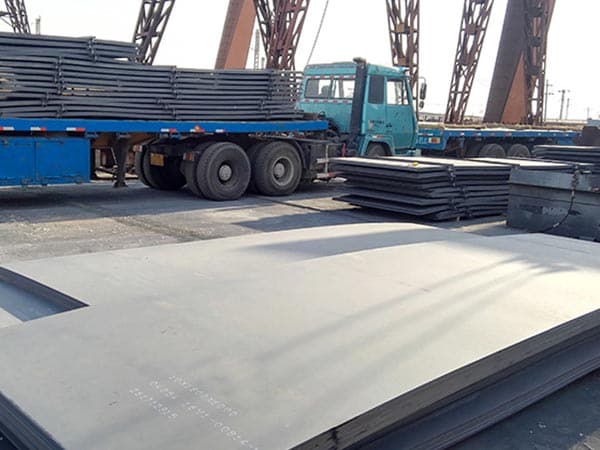
Understanding the S900MC High-Strength Steel Landscape in China
The demand for ultra-high-strength structural steels has seen a significant surge in the global industrial sector, and China stands at the forefront of both production and consumption. S900MC, a thermomechanically rolled steel grade governed by the EN 10149-2 standard, represents a pinnacle of metallurgical engineering designed for weight reduction and high load-bearing capacity. When analyzing the current inventory of S900MC in China, it is essential to look beyond mere tonnage and evaluate the specific mechanical properties and technical consistency that Chinese mills are now delivering to the market.
S900MC is categorized as a high-yield strength steel for cold forming. Its designation 'S' stands for structural steel, '900' refers to the minimum yield strength of 900 MPa, and 'MC' indicates it is thermomechanically rolled (M) and suitable for cold forming (C). In the current Chinese market, major steel giants like Baosteel, Shougang, and TISCO have refined their quenching and tempering processes, as well as their thermomechanical controlled processing (TMCP), to ensure that the inventory available meets or exceeds international benchmarks.
Core Mechanical Properties of S900MC
The primary reason engineers specify S900MC is its exceptional strength-to-weight ratio. By utilizing S900MC, manufacturers can significantly reduce the thickness of structural components without compromising safety or structural integrity. This leads to lighter vehicles, lower fuel consumption, and increased payload capacity in transport industries.
| Property | Value (Metric) | Testing Standard |
|---|---|---|
| Yield Strength (ReH) | Min. 900 MPa | EN ISO 6892-1 |
| Tensile Strength (Rm) | 930 - 1200 MPa | EN ISO 6892-1 |
| Elongation (A5) | Min. 8% | EN ISO 6892-1 |
| Impact Energy (KV) | Min. 27J at -20°C / -40°C | EN ISO 148-1 |
The yield strength of 900 MPa is a transformative threshold for heavy machinery. Unlike traditional S355 or even S700MC grades, S900MC requires precise alloying and cooling strategies. The inventory found in Chinese warehouses today typically showcases a very narrow range of yield strength variation, which is critical for automated laser cutting and robotic welding processes where consistency is paramount.
Chemical Composition and Micro-Alloying Excellence
The mechanical prowess of S900MC is rooted in its sophisticated chemical makeup. To maintain weldability while achieving such high strength, the carbon content is kept remarkably low. Instead of relying on carbon for hardness, S900MC utilizes micro-alloying elements such as Niobium (Nb), Vanadium (V), and Titanium (Ti).
- Carbon (C): Generally restricted to below 0.20% to ensure excellent weldability and prevent brittleness in the heat-affected zone (HAZ).
- Manganese (Mn): Acts as a solid solution strengthener and improves hardenability.
- Silicon (Si) and Aluminum (Al): Used for deoxidation and grain refinement.
- Micro-alloys (Nb, V, Ti): These elements form fine carbides and nitrides that pin grain boundaries during the rolling process, resulting in an ultra-fine grain structure.
Current inventory in China often features 'clean steel' technology, where sulfur and phosphorus levels are kept to an absolute minimum (typically <0.010% and <0.020% respectively). This purity is vital for preventing lamellar tearing and ensuring the steel can withstand extreme cold weather conditions without becoming brittle.
Cold Forming and Processing Performance
Despite its immense strength, S900MC is specifically designed for cold forming. This is a significant advantage for manufacturers of crane booms, chassis frames, and telescopic arms. The ability to bend the material reduces the need for extensive welding, which in turn preserves the integrity of the high-strength microstructure.
When working with S900MC inventory, it is important to respect the minimum bending radii. For plates with a thickness (t) less than or equal to 6mm, the recommended minimum bending radius is typically 3.0 to 4.0 times the thickness, depending on whether the bend is transverse or longitudinal to the rolling direction. The springback effect is more pronounced in S900MC compared to lower grades, requiring sophisticated CNC bending equipment with high pressure and precision compensation.
Weldability and Heat Treatment Considerations
One of the most common questions regarding S900MC inventory in China is its performance during welding. Because S900MC gains its strength from the TMCP process, it is sensitive to excessive heat input. High heat can lead to grain growth in the HAZ, resulting in a localized drop in yield strength.
Engineers are advised to use low-hydrogen welding consumables and maintain a strictly controlled interpass temperature. Preheating is generally not required for thinner sections, but for plates over 10mm, a modest preheat might be necessary to eliminate moisture and reduce the cooling rate. The Carbon Equivalent (CEV) of S900MC in the Chinese market is usually maintained around 0.45 to 0.55, which is excellent for a steel of this strength level.
Inventory Distribution and Market Availability in China
The inventory of S900MC in China is strategically distributed across major industrial hubs. Shanghai, Tianjin, and Lecong (Guangdong) serve as the primary distribution centers. Currently, the market shows a healthy supply of thicknesses ranging from 3mm to 12mm, which are the most sought-after sizes for the automotive and lifting industries.
For thicknesses exceeding 15mm, the inventory becomes more specialized, often requiring direct mill orders. However, the lead times from Chinese mills have shortened significantly due to optimized production scheduling and the maturation of high-strength steel technology. The pricing of S900MC remains competitive, though it is subject to the fluctuations of alloying element costs, particularly Niobium and Molybdenum.
Expanding Applications of S900MC
The shift toward S900MC is driven by the global push for sustainability and efficiency. In the transport sector, using S900MC for trailer side beams can reduce the weight of a semi-trailer by several hundred kilograms. This weight saving translates directly into higher payload capacity or lower CO2 emissions per ton-kilometer.
In the construction machinery sector, S900MC is the material of choice for the latest generation of truck-mounted concrete pumps and mobile cranes. These machines require long reach and high stability; using S900MC allows for longer booms that remain light enough to stay within road weight limits. Furthermore, the agricultural sector is beginning to adopt S900MC for high-stress components in large-scale tilling and harvesting equipment, where durability and fatigue resistance are essential.
Technical Challenges and Quality Control
While the inventory of S900MC is robust, buyers must ensure they are sourcing material with full traceability and Mill Test Certificates (MTC). The flatness of S900MC is a critical quality metric, especially for laser cutting. Chinese mills have invested heavily in tension levelers and sophisticated cooling beds to ensure that the internal stresses are minimized, resulting in plates that stay flat even after intensive cutting patterns.
Surface quality is another area where Chinese S900MC inventory has improved. Most material is supplied in the 'as-rolled' or 'pickled and oiled' condition. A clean surface is vital for subsequent coating processes, as high-strength steel components are often exposed to harsh environments where corrosion protection is mandatory.
The Future of High-Strength Steel Inventory
Looking ahead, the inventory of S900MC in China is expected to diversify further. Research is ongoing into even higher grades, such as S960MC and S1100MC, but S900MC remains the 'sweet spot' for many industries due to its balance of extreme strength and workable ductility. As Chinese manufacturers continue to upgrade their equipment, the consistency of these high-performance steels will only improve, solidifying China's position as a reliable supplier for global high-end manufacturing needs.
Leave a message