
What does steel grade S960MC auto steel flat mean
A comprehensive guide to S960MC steel, exploring its nomenclature, mechanical properties, chemical composition, and applications in automotive and heavy machinery industries.
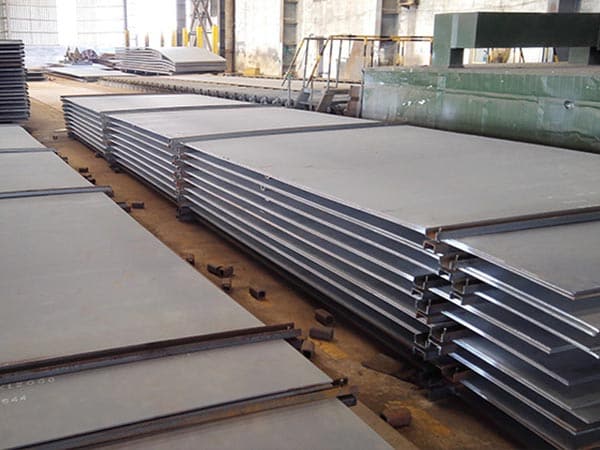
Decoding the S960MC Nomenclature: A Technical Breakdown
When engineers and procurement specialists encounter the designation S960MC, they are looking at one of the most advanced high-strength low-alloy (HSLA) steels available in the modern market. This grade is governed by the European standard EN 10149-2, which specifies hot-rolled flat products made of high yield strength steels for cold forming. Understanding the alphanumeric code is the first step in appreciating its engineering value.
The 'S' stands for Structural Steel, indicating its primary use in load-bearing components. The number '960' represents the minimum yield strength of 960 Megapascals (MPa). To put this in perspective, standard structural steel like S235 has a yield strength of only 235 MPa. The S960MC grade offers nearly four times the strength, allowing for significant material thickness reduction without compromising structural integrity. The 'M' signifies that the steel is thermomechanically rolled (TMCP), a process that combines controlled rolling and accelerated cooling to achieve a fine-grained microstructure. Finally, the 'C' denotes that the material is specifically designed for cold forming, meaning it can be bent, folded, or pressed into complex shapes without cracking.
The Metallurgical Secret: Chemical Composition and Grain Refinement
The exceptional performance of S960MC is not merely a result of its carbon content; in fact, the carbon level is kept remarkably low (typically below 0.20%) to ensure excellent weldability. The strength is derived from a sophisticated micro-alloying strategy. Elements such as Niobium (Nb), Titanium (Ti), and Vanadium (V) are added in precise, minute quantities. These elements form fine carbides and nitrides during the thermomechanical rolling process, which pin the grain boundaries and prevent grain growth.
This grain refinement is the only strengthening mechanism that simultaneously improves both strength and toughness. By maintaining a fine-grained ferritic-bainitic structure, S960MC achieves its high yield point while remaining ductile enough for industrial fabrication. The low impurity levels of sulfur and phosphorus further enhance the steel's internal cleanliness, reducing the risk of lamellar tearing during heavy welding operations.
| Element | Maximum Content (%) |
|---|---|
| Carbon (C) | 0.20 |
| Manganese (Mn) | 2.20 |
| Silicon (Si) | 0.60 |
| Phosphorus (P) | 0.025 |
| Sulfur (S) | 0.010 |
| Aluminium (Al) | 0.015 |
Mechanical Prowess: Strength Meets Ductility
The primary reason for selecting S960MC is its extraordinary strength-to-weight ratio. In the automotive and transport industries, weight is the enemy of efficiency. Using S960MC allows designers to create thinner, lighter components that can still withstand extreme stresses. This is particularly vital for the chassis of heavy-duty trucks, crane booms, and trailers where every kilogram saved in the vehicle's tare weight translates directly into increased payload capacity.
While the yield strength is the headline figure, the tensile strength typically ranges between 980 and 1250 MPa. Despite this immense hardness, the steel retains a minimum elongation of approximately 7% to 10% (depending on thickness and orientation). This ductility is what makes the 'C' (cold forming) designation possible. It ensures that during a collision or an over-load event, the material will deform and absorb energy rather than undergoing brittle fracture.
The Thermomechanical Rolling Process (TMCP) Advantage
Traditional high-strength steels often require quenching and tempering (Q+T) to reach high hardness levels. However, S960MC utilizes Thermomechanical Controlled Processing (TMCP). This process involves rolling the steel at specific temperatures where recrystallization is retarded, followed by rapid cooling. This creates a much finer microstructure than traditional heat treatment.
The advantage of TMCP steel over Q+T steel lies in its Carbon Equivalent (CEV). Because TMCP achieves strength through grain refinement rather than high alloy content, the CEV remains low. A lower CEV means the steel is much less susceptible to cold cracking during welding. For manufacturers, this means they can often weld S960MC without the need for expensive and time-consuming pre-heating, provided the correct consumables and heat inputs are managed.
Fabrication and Processing: Bending and Welding S960MC
Successfully utilizing S960MC in a production environment requires an understanding of its unique processing characteristics. Because the material is so strong, it exhibits significant springback after bending. Fabricators must compensate for this by over-bending the material or using advanced CNC press brakes with integrated angle measurement systems.
- Minimum Bending Radius: For S960MC, the recommended internal bending radius is typically 3 to 4 times the material thickness (t) for bends perpendicular to the rolling direction.
- Welding Compatibility: It can be welded using standard methods like MAG (Metal Active Gas) or Laser welding. It is critical to use matching or slightly under-matching consumables to maintain the toughness of the weld zone.
- Heat Input Control: Excessive heat during welding can soften the thermomechanically processed zone (the Heat Affected Zone or HAZ). Keeping heat input low and ensuring rapid cooling helps maintain the structural integrity of the joint.
Expanding Applications: Beyond the Automotive Chassis
While the term "auto steel" is often used, S960MC's utility extends far beyond passenger cars. It is a staple in the heavy lifting and transport sector. Mobile cranes utilize S960MC for their telescopic booms to reach higher and lift heavier loads while remaining light enough to travel on public roads. In the mining industry, it is used for the bodies of massive dump trucks and underground loaders where abrasion resistance and structural strength are both required.
In the renewable energy sector, S960MC is finding its way into the structural supports of large-scale solar arrays and components for wind turbine transport systems. The ability to reduce material usage by 30-50% compared to conventional S355 steel makes it an environmentally conscious choice, as less steel produced means a lower overall carbon footprint for the project.
Environmental Impact and Economic Efficiency
The shift toward S960MC is driven by both economic and environmental imperatives. From a cost perspective, although the price per ton of S960MC is higher than lower-grade steels, the total cost of ownership is often lower. By using thinner plates, manufacturers reduce the total weight of steel purchased, lower their shipping costs, and decrease the amount of welding wire and gas required. Furthermore, lighter vehicles consume less fuel and emit less CO2 over their operational lifespan.
This "lightweighting" strategy is essential for the transition to electric vehicles (EVs). To offset the heavy weight of battery packs, EV manufacturers must find every possible way to reduce the weight of the structural frame. S960MC provides the perfect solution: high safety through high strength, with minimal mass.
Comparative Analysis: S960MC vs. Conventional Grades
To truly appreciate S960MC, one must compare it to its predecessors. The following table illustrates the jump in performance metrics across common structural grades.
| Steel Grade | Min. Yield Strength (MPa) | Tensile Strength (MPa) | Primary Processing |
|---|---|---|---|
| S355MC | 355 | 430 - 550 | Thermomechanical |
| S700MC | 700 | 750 - 950 | Thermomechanical |
| S960MC | 960 | 980 - 1250 | Thermomechanical |
| S960QL | 960 | 980 - 1150 | Quenched & Tempered |
Future Trends in Ultra-High Strength Steels
The development of S960MC is not the end of the road. Metallurgists are already pushing toward 1100MPa and even 1300MPa grades. However, S960MC currently sits at the "sweet spot" of the industry—it offers the maximum possible strength while still being manageable with standard workshop equipment. As laser cutting and automated welding become more prevalent, the adoption of S960MC will continue to grow, replacing heavier, less efficient materials in the global supply chain.
Choosing S960MC is a commitment to high-performance engineering. It requires a shift in mindset from "thick and heavy" to "thin and strong." For those willing to master its processing requirements, the rewards are significant: more durable products, higher payloads, and a more sustainable approach to metal fabrication.
Leave a message