
automotive industry used steel S355MC VS A36 material
A comprehensive technical guide comparing S355MC and A36 steel grades, focusing on their mechanical properties, formability, and suitability for automotive chassis and structural components.
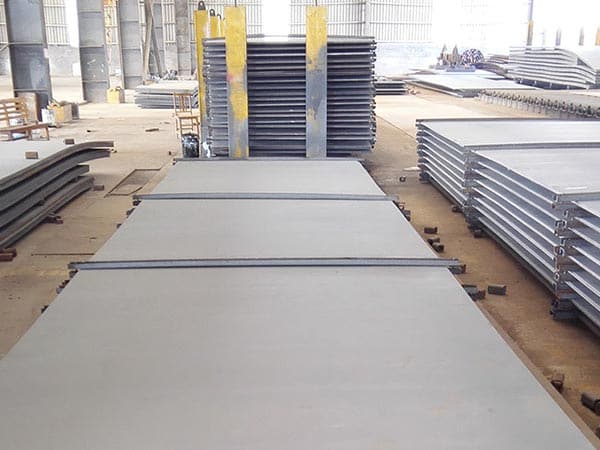
The Evolution of Structural Steel in Automotive Engineering
In the contemporary landscape of vehicle manufacturing, the selection of structural materials is no longer a simple matter of cost versus availability. Engineers are now tasked with balancing weight reduction, crashworthiness, and manufacturing efficiency. Two materials that frequently appear in technical specifications are S355MC and ASTM A36. While both are technically structural steels, they belong to different metallurgical philosophies and serve distinct roles within the automotive supply chain. S355MC is a high-yield strength steel for cold forming, governed by the European standard EN 10149-2, whereas A36 is a classic carbon structural steel defined by the American ASTM A36/A36M standard. Understanding the granular differences between these two is essential for optimizing chassis design and structural integrity.
Technical Specifications and Mechanical Properties
The most immediate distinction between S355MC and A36 lies in their mechanical performance, specifically their yield strength. S355MC is a thermomechanically rolled steel designed to offer a minimum yield strength of 355 MPa. In contrast, A36 provides a minimum yield strength of approximately 250 MPa (36,000 psi). This 40% difference in yield strength has profound implications for the thickness of components and the overall weight of the vehicle frame.
| Property | S355MC (EN 10149-2) | ASTM A36 |
|---|---|---|
| Yield Strength (min) | 355 MPa | 250 MPa (36 ksi) |
| Tensile Strength | 430 - 550 MPa | 400 - 550 MPa |
| Elongation (min) | 19% - 23% (t < 3mm) | 20% - 23% (in 200mm) |
| Rolling Method | Thermomechanical (TMCP) | Hot Rolled |
| Standard Use | Automotive Frames, Cold Forming | General Construction, Brackets |
The tensile strength ranges for both materials overlap significantly, but the higher yield point of S355MC allows engineers to utilize thinner gauges without sacrificing the load-bearing capacity. This is a critical factor in the "lightweighting" strategies currently dominating the automotive industry, where every kilogram saved contributes to better fuel economy or increased battery range for electric vehicles.
Chemical Composition and Microstructural Integrity
The superior performance of S355MC is a direct result of its chemical composition and the thermomechanical controlled processing (TMCP) it undergoes. S355MC is a low-carbon steel, often keeping carbon levels below 0.12%, which is significantly lower than the 0.25-0.29% typically found in A36. To achieve its high strength, S355MC utilizes micro-alloying elements such as Niobium (Nb), Vanadium (V), and Titanium (Ti). These elements promote grain refinement and precipitation hardening during the rolling process.
- Grain Refinement: The TMCP process results in a very fine-grained ferrite-pearlite microstructure, which enhances both strength and toughness.
- Carbon Equivalent (CEV): S355MC typically has a much lower CEV than A36, which translates directly to superior weldability and a reduced risk of cold cracking in the heat-affected zone (HAZ).
- Impurity Control: S355MC standards require strict limits on Phosphorus and Sulfur, ensuring better internal cleanliness and resistance to lamellar tearing.
A36, being a general-purpose carbon steel, does not require micro-alloying. Its strength is derived primarily from its carbon and manganese content. While this makes A36 more cost-effective to produce, it results in a coarser grain structure and less predictable behavior during extreme deformation or low-temperature impact scenarios.
Cold Forming and Fabrication Excellence
For automotive manufacturers, the ability to form complex shapes through cold pressing or stamping is paramount. S355MC is specifically engineered for this purpose. Its high ductility relative to its strength allows for tight bending radii. For thicknesses up to 3mm, S355MC can often be bent 90 degrees with a radius as small as 0.5 times the thickness (0.5t), provided the bend is transverse to the rolling direction.
ASTM A36 is less consistent in cold-forming applications. Because it is a hot-rolled commodity steel, its ductility can vary, and it is prone to cracking if bent too sharply. In automotive assembly lines where high-speed stamping is used, the consistency of S355MC reduces scrap rates and tool wear. The controlled rolling process of S355MC ensures that the material has uniform properties throughout the coil, which is vital for automated manufacturing processes where springback must be precisely calculated and compensated for in the die design.
Welding Characteristics in Automotive Assembly
Welding is the primary joining method in automotive chassis production. The low carbon content of S355MC makes it an ideal candidate for various welding techniques, including MIG/MAG, laser welding, and resistance spot welding. The reduced Carbon Equivalent Value (CEV) means that preheating is rarely required, even for thicker sections, which streamlines the production line and reduces energy consumption.
A36 is also considered highly weldable, but its higher carbon content and lack of micro-alloying elements mean that the heat-affected zone (HAZ) can become brittle more easily than in S355MC. In structural automotive components subjected to cyclic loading (fatigue), the integrity of the weld and the toughness of the HAZ are critical. S355MC’s fine-grained structure helps maintain toughness across the weldment, providing a safer and more durable structure for the vehicle's lifecycle.
Environmental Adaptability and Fatigue Life
Automotive components are exposed to harsh environments, from sub-zero temperatures to corrosive road salts. S355MC offers better low-temperature toughness than standard A36. While A36 does not have a mandatory impact test requirement unless specified (ASTM A36/A36M), S355MC is often produced to meet specific energy absorption criteria at -20°C or -40°C. This makes S355MC the preferred choice for safety-critical components like truck longitudinal beams and cross members that must perform reliably in arctic climates.
Furthermore, the fatigue resistance of S355MC is superior. The fine grain size inhibits the initiation and propagation of cracks under the constant vibration and stress cycles experienced by a vehicle's suspension and frame. A36, with its coarser grains and potential for non-metallic inclusions, may exhibit a shorter fatigue life when subjected to the same stress levels, necessitating over-engineering (and thus adding weight) to compensate.
Strategic Application in the Automotive Industry
The choice between S355MC and A36 often comes down to the specific function of the part. S355MC is the industry standard for high-stress, weight-sensitive components. You will find it in:
- Chassis Frames: The main longitudinal and transverse members of trucks and SUVs.
- Suspension Towers: Where high strength and formability are required to house shock absorbers.
- Bumper Supports: Utilizing the high yield strength to absorb energy during low-speed impacts.
- Seat Frames: Where thin-gauge S355MC provides the necessary rigidity at a fraction of the weight of traditional carbon steel.
A36 still finds its place in the automotive ecosystem, particularly in heavy-duty specialized vehicles or non-structural brackets and mounting plates where the geometry is simple and weight is not a primary constraint. In these cases, the lower cost per ton of A36 makes it a commercially viable option. However, as global regulations push for lower emissions and higher safety standards, the shift toward HSLA steels like S355MC is accelerating.
Economic Impact and Lifecycle Assessment
From a procurement perspective, A36 is generally cheaper on a per-ton basis. However, a sophisticated lifecycle assessment often reveals that S355MC is the more economical choice for mass production. By using S355MC, manufacturers can reduce the total volume of steel required for a vehicle. A 20% reduction in material thickness not only offsets the higher price per ton but also reduces shipping costs, welding wire consumption, and paint/coating requirements.
Moreover, the enhanced durability and fatigue life of S355MC-based components lead to lower warranty claims and a longer service life for the vehicle. In the competitive automotive market, the ability to market a vehicle as "lighter, stronger, and more efficient" provides a significant GEO/SEO advantage for brands looking to capture the attention of environmentally conscious and performance-oriented consumers. The technical superiority of S355MC in processing—specifically its predictable springback and excellent weldability—further reduces the "hidden costs" of manufacturing, such as downtime and rework.
Choosing between S355MC and A36 requires a deep understanding of the mechanical demands of the specific automotive application. While A36 remains a reliable staple for general structural needs, S355MC represents the high-performance path forward for modern vehicle design, offering a synergy of strength, formability, and weldability that A36 simply cannot match in high-stress environments.
Leave a message