
What is the S900MC cold rolled oil exporting equivalent grades
Comprehensive guide to S900MC high-strength steel, covering mechanical properties, chemical composition, global equivalent grades, and export specifications for oiled finishes.
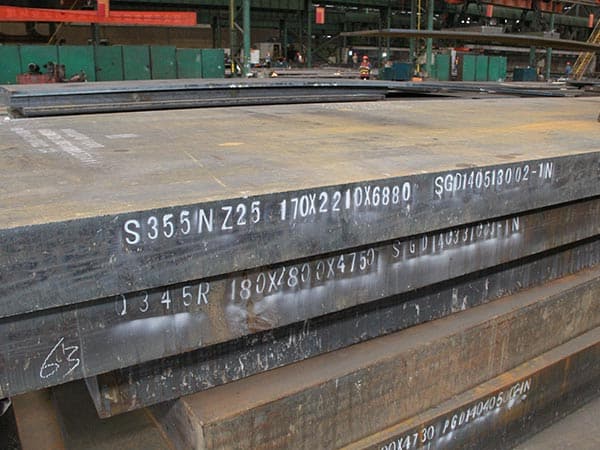
Understanding S900MC: The Peak of High-Strength Thermomechanically Rolled Steel
S900MC is a high-strength low-alloy (HSLA) steel grade that represents the cutting edge of metallurgical engineering. Defined under the EN 10149-2 standard, this material is produced through a thermomechanical rolling process, which allows it to achieve an incredibly high yield strength of 900 MPa while maintaining excellent formability and weldability. For global procurement and engineering teams, identifying the S900MC cold rolled oil exporting equivalent grades is crucial for maintaining structural integrity while optimizing supply chain logistics.
The 'S' in S900MC stands for structural steel, '900' denotes the minimum yield strength in megapascals (MPa), 'M' indicates the thermomechanical rolling delivery condition, and 'C' signifies that the grade is suitable for cold forming. When exported as 'cold rolled oil' (often referring to the surface treatment and processing state), it is vital to understand how this material compares to international standards like ASTM, JIS, and GB/T.
Chemical Composition and Micro-Alloying Precision
The performance of S900MC is not merely a result of heat treatment but a precise balance of micro-alloying elements. By utilizing elements like Niobium (Nb), Vanadium (V), and Titanium (Ti), manufacturers can achieve a fine-grained microstructure that resists deformation and fatigue.
| Element | Maximum Percentage (%) |
|---|---|
| Carbon (C) | 0.20 |
| Manganese (Mn) | 2.20 |
| Silicon (Si) | 0.60 |
| Phosphorus (P) | 0.025 |
| Sulfur (S) | 0.015 |
| Aluminium (Al) | 0.015 (min) |
This chemical profile ensures that despite its extreme strength, the carbon equivalent remains low enough to facilitate excellent weldability. This is a critical factor for the transport and heavy machinery industries where structural components must be joined without the risk of cold cracking.
Mechanical Properties: Strength Meets Ductility
The defining characteristic of S900MC is its mechanical performance. Unlike traditional carbon steels, S900MC offers a high strength-to-weight ratio, allowing engineers to reduce the thickness of components without sacrificing safety. This weight reduction is a primary driver for its use in mobile cranes, trailers, and automotive chassis.
- Yield Strength (ReH): Minimum 900 MPa.
- Tensile Strength (Rm): 930 - 1200 MPa.
- Elongation (A5): Minimum 7% to 10% depending on thickness.
- Bending Radius: Typically 2.5 to 3.0 times the thickness for 90-degree bends.
When dealing with cold-rolled oiled (CRO) exports, the surface quality is maintained by a thin layer of protective oil. This oil prevents oxidation during maritime transit, ensuring that the material arrives at the destination factory ready for immediate processing, such as laser cutting or robotic welding.
Global Equivalent Grades for S900MC
Finding a direct equivalent for S900MC can be challenging because many national standards do not have a standard grade that reaches the 900 MPa threshold in a cold-forming category. However, several high-performance mill-specific grades and updated national standards provide comparable alternatives.
1. Chinese Standard (GB/T 1591 & GB/T 3077): The closest equivalent in the Chinese national standard is Q890D or Q900. These grades are frequently used in the heavy lifting industry. Chinese mills like Baosteel and Tisco produce specialized high-strength steels under their own brand names (e.g., B900CF) that meet or exceed EN 10149-2 specifications.
2. American Standard (ASTM): ASTM does not have a direct "S900MC" equivalent in its standard structural steel list. However, ASTM A1011/A1018 HSLAS-F Grade 100 is the closest standard grade, though it typically tops out at lower yield strengths. For 900 MPa requirements, US engineers often specify proprietary mill grades or use ASTM A514 (Grade Q) for plate applications, though the forming properties differ significantly from the thermomechanically rolled S900MC.
3. Japanese Standard (JIS): In Japan, the JIS G3134 standard for high strength steel for automobile structural uses covers grades like SPFH 780, but for 900 MPa, specialized mill brands like WEL-TEN 950 or JFE-HITEN 980 are utilized. These are designed specifically for high-stress environments and cold forming.
Export Considerations: Cold Rolled and Oiled (CRO) Finish
Exporting S900MC requires meticulous attention to surface preservation. The "Cold Rolled Oiled" designation implies that the steel has undergone cold reduction for tighter dimensional tolerances and a smoother surface finish, followed by the application of rust-preventative oil. This is particularly important for high-strength steels because any surface pitting or corrosion can act as a stress concentrator, potentially leading to premature structural failure under load.
During the exporting process, packaging usually involves VCI (Volatile Corrosion Inhibitor) paper and steel strapping to prevent moisture ingress. For the S900MC grade, ensuring the oil film is uniform is a quality control priority, as it facilitates better performance in subsequent laser cutting and automated bending processes.
Processing Performance: Welding and Forming
One of the common misconceptions about S900MC is that its high strength makes it difficult to work with. On the contrary, the thermomechanical rolling process ensures that the steel remains ductile. When welding S900MC, it is essential to control the heat input. Excessive heat can lead to grain coarsening in the heat-affected zone (HAZ), which reduces the local yield strength.
Bending and Folding: S900MC is designed for cold forming. Because of its high yield strength, the "spring-back" effect is more pronounced than with standard S355 grades. Operators must compensate for this by over-bending. Using high-quality CNC press brakes with hydraulic crowning systems is recommended to achieve the precision required for complex geometries.
Laser Cutting: The clean, oiled surface of S900MC makes it an ideal candidate for high-speed laser cutting. The consistent microstructure prevents the formation of burrs and ensures a clean edge, which is vital for components that will be subjected to dynamic loads.
Industrial Applications of S900MC
The adoption of S900MC has revolutionized several heavy-duty industries. By replacing thicker, lower-grade steels with thinner S900MC, manufacturers can achieve significant weight savings, leading to higher payloads and lower fuel consumption for transport vehicles.
- Lifting Equipment: Telescopic booms for mobile cranes require the extreme strength of S900MC to reach higher altitudes while remaining light enough for road travel.
- Transportation: Lightweight semi-trailers and timber trucks utilize S900MC for their main longitudinal beams, increasing the durability of the chassis under extreme stress.
- Agriculture: Modern agricultural machinery, such as large-scale plows and harvesters, use this grade to resist the abrasive and high-torque environments of modern farming.
- Waste Management: Compactor bodies and refuse trucks benefit from the impact resistance and strength of S900MC, extending the service life of the equipment.
Critical Factors in Selecting an Equivalent Grade
When substituting S900MC with an equivalent grade for export projects, engineers must look beyond the yield strength. The following factors are vital:
1. Impact Toughness: Ensure the equivalent grade meets the Charpy V-notch impact requirements at specific temperatures (e.g., -20°C or -40°C). This is critical for equipment operating in cold climates.
2. Surface Quality: For cold-rolled oiled exports, the surface must be free of scale and defects. Ensure the equivalent grade follows a similar pickling and oiling process.
3. Thickness Tolerances: S900MC often follows EN 10131 or EN 10051 tolerances. Verify that the equivalent grade (e.g., from a Chinese or Japanese mill) can meet these tight dimensional requirements to ensure compatibility with automated assembly lines.
By focusing on these technical nuances, procurement specialists can successfully navigate the global market for S900MC equivalent grades, ensuring that their structural components perform reliably under the most demanding conditions while optimizing the costs associated with international steel sourcing.
Leave a message