
What is S315MC cold rolled sheet material equivalent steel in EN standard
Explore the technical specifications of S315MC steel, its EN standard equivalents like HC300LA, chemical composition, mechanical properties, and industrial applications in this expert guide.
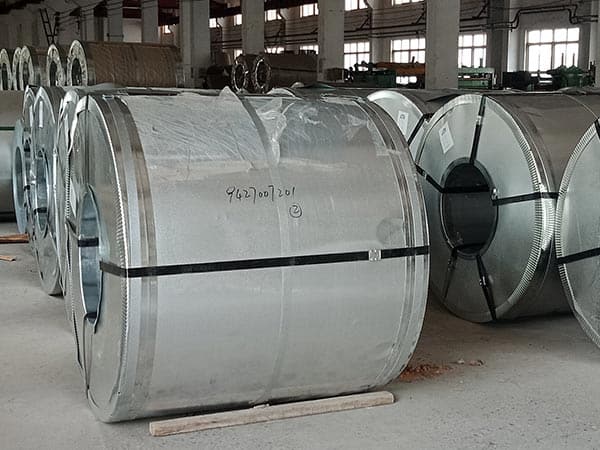
Understanding the S315MC Specification within the EN 10149-2 Framework
S315MC is a high-yield-strength steel designed specifically for cold forming, governed by the EN 10149-2 standard. This grade is produced through a thermomechanical rolling process, which allows it to achieve superior strength without the heavy alloying costs associated with traditional quenched and tempered steels. While the term "cold rolled" is often used by purchasers to describe thin-gauge sheets, S315MC is technically a thermomechanically rolled hot-rolled product that competes directly with cold-rolled grades due to its excellent surface finish and tight dimensional tolerances.
The "S" in S315MC stands for structural steel, "315" denotes the minimum yield strength of 315 MPa, and "MC" indicates that the material is intended for cold forming (M) and has a thermomechanically rolled (C) grain structure. This specific metallurgical path ensures a fine-grained microstructure, which is the secret behind its exceptional balance of strength and ductility. For engineers looking for a true cold-rolled equivalent under the EN 10268 standard, HC300LA or HC340LA are the most frequent counterparts, depending on the specific requirements for yield versus tensile ratio.
Chemical Composition: The Role of Micro-Alloying Elements
The performance of S315MC is rooted in its precise chemical makeup. Unlike standard carbon steels, S315MC utilizes micro-alloying elements such as Niobium (Nb), Vanadium (V), and Titanium (Ti). These elements act as grain refiners, preventing grain growth during the rolling process and creating a dense, tough matrix.
| Element | Maximum Percentage (%) |
|---|---|
| Carbon (C) | 0.12 |
| Manganese (Mn) | 1.30 |
| Silicon (Si) | 0.50 |
| Phosphorus (P) | 0.025 |
| Sulphur (S) | 0.020 |
| Aluminum (Al) | 0.015 |
| Niobium (Nb) | 0.09 |
| Titanium (Ti) | 0.15 |
Low carbon content is critical for the material's weldability. By keeping carbon levels below 0.12%, the steel avoids the formation of brittle martensite in the heat-affected zone (HAZ) during welding. Manganese serves to increase hardenability and tensile strength, while the controlled addition of Aluminum ensures deoxidation and further assists in grain refinement.
Mechanical Properties and Structural Integrity
The mechanical profile of S315MC makes it a staple for load-bearing components that require weight reduction. The high yield strength allows for thinner sections to be used compared to standard S235JR or DC01 grades, leading to significant mass savings in final assemblies.
- Yield Strength (ReH): Minimum 315 MPa for thicknesses ≤ 16mm.
- Tensile Strength (Rm): Ranges between 390 and 510 MPa.
- Elongation (A80mm): Minimum 20% (for thicknesses < 3mm), ensuring the material can undergo significant deformation without fracturing.
- Bending Radius: For a 90-degree bend, the recommended minimum mandrel radius is typically 0.25 times the thickness, showcasing its elite formability.
These properties are not just numbers; they represent the material's ability to absorb energy. In the event of a collision or structural overload, S315MC exhibits a predictable deformation pattern, which is why it is highly valued in safety-critical automotive applications.
Global Equivalents: Mapping S315MC to International Standards
When sourcing material globally, identifying the correct equivalent is vital for maintaining design safety factors. While S315MC is the EN designation, other regions use different nomenclature for similar high-strength low-alloy (HSLA) steels.
- ASTM (USA): The closest equivalent is ASTM A1011 HSLAS Class 1 Grade 45. While the yield points are slightly different, the forming characteristics are comparable.
- JIS (Japan): JIS G3134 SPFH 490 is often considered the Japanese counterpart, frequently used in the manufacturing of automotive wheels and chassis.
- GB (China): Q345B or Q315MC (under GB/T 1591 or GB/T 3273) serves as the primary equivalent in the Chinese market.
It is important to note that while these grades are "equivalent," subtle differences in the maximum allowable Phosphorus or Sulphur can affect the fatigue life of the component. Always verify the specific heat analysis before substituting grades in high-cycle fatigue environments.
Processing Performance: Welding, Cutting, and Bending
Fabricators prefer S315MC because it behaves consistently under modern manufacturing processes. Its low carbon equivalent (CEV) makes it compatible with all standard welding methods, including MIG/MAG, TIG, and laser welding. Because the steel is thermomechanically treated, it is advised to avoid high-temperature heat treatments (like full annealing) after welding, as this can revert the fine-grained structure and reduce the yield strength.
Regarding cutting, S315MC is ideal for laser and plasma cutting. The low impurity levels result in a clean edge with minimal dross, which reduces the need for secondary grinding operations. When it comes to bending, the material's homogeneity ensures that springback is predictable. This allows for high-precision CNC folding, which is essential for complex geometries in truck frames or agricultural machinery.
Industrial Applications and Sector Expansion
The versatility of S315MC has seen its adoption expand far beyond its original automotive roots. Today, it is a cornerstone material in several high-demand sectors:
- Automotive Engineering: Used for longitudinal beams, cross members, and chassis components where weight reduction is mandatory for fuel efficiency.
- Heavy Machinery: Crane arms, excavator buckets, and lifting equipment benefit from the high strength-to-weight ratio.
- Construction and Infrastructure: Cold-pressed profiles, racking systems, and structural brackets utilize S315MC for its durability and ease of installation.
- Transportation: Trailer frames and railway wagon components rely on this grade to withstand dynamic loads during transit.
The environmental adaptability of S315MC is also noteworthy. While it is not a weathering steel like Corten, its fine surface allows for excellent adhesion of protective coatings. Whether galvanized or powder-coated, the steel maintains its structural properties while resisting atmospheric corrosion in diverse climates.
Technical Considerations for Procurement
When specifying S315MC, it is crucial to request the 3.1 material test certificate according to EN 10204. This document confirms the actual yield and tensile values of the specific batch. Furthermore, for applications involving low-temperature environments, buyers should check the impact energy requirements. Although EN 10149-2 does not always mandate impact testing for S315MC (unlike the "L" grades like S355ML), the fine-grained nature of the steel generally provides good notch toughness down to -20°C.
The choice between S315MC and a cold-rolled equivalent like HC300LA often comes down to thickness and surface requirements. S315MC is typically available from 1.5mm to 16mm, whereas HC300LA is the preferred choice for ultra-thin applications below 1.5mm where a class A surface finish is required for exposed automotive body panels. Understanding these nuances ensures that the selected material not only meets the structural demands but also optimizes the manufacturing cost-efficiency.
Leave a message