
China BS700MC market stock for auto frame prices continue to decline
Explore the technical attributes and market dynamics of BS700MC steel. Learn why prices are declining in China and how its mechanical properties benefit the automotive industry.
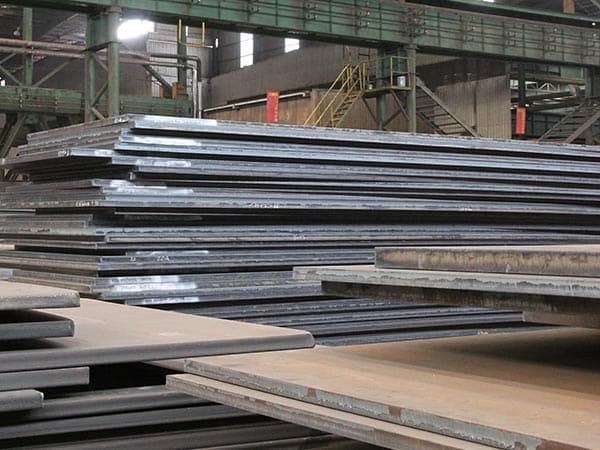
Current Dynamics of the BS700MC Market in China
The Chinese steel market is currently witnessing a significant adjustment in the pricing of high-strength structural steels, particularly the BS700MC grade. As a thermomechanically rolled steel designed for cold forming, BS700MC is a cornerstone material for the automotive industry, specifically for heavy-duty truck frames and chassis components. The recent decline in market stock prices is not merely a reflection of raw material fluctuations but is deeply tied to the supply-demand equilibrium within the domestic logistics and manufacturing sectors.
Inventory levels at major steel hubs such as Shanghai, Lecong, and Tianjin have shown a steady accumulation. This surplus, coupled with a cautious procurement approach from major OEMs (Original Equipment Manufacturers), has forced traders to lower their spot prices. However, for procurement departments, this price dip presents a strategic window to acquire high-performance materials that offer long-term value through vehicle lightweighting and enhanced structural integrity.
Technical Profile: What Makes BS700MC Exceptional?
BS700MC is defined by its high yield strength and excellent cold-forming capabilities. The "700" denotes a minimum yield strength of 700 MPa, while "MC" signifies its thermomechanically rolled, cold-formable nature. Unlike traditional hot-rolled steels, the microstructure of BS700MC is refined through controlled rolling and cooling processes, resulting in a fine-grained ferrite and pearlite (or sometimes bainite) matrix.
This microstructural refinement provides a unique combination of high strength and high toughness. In the context of automotive frames, this allows for the use of thinner gauges without compromising the load-bearing capacity or safety of the vehicle. The reduction in thickness directly translates to a decrease in the dead weight of the truck, which is a critical factor in modern logistics efficiency.
Mechanical Properties and Chemical Composition
To understand why BS700MC remains the preferred choice despite market volatility, one must examine its rigorous mechanical specifications. The following table outlines the typical properties found in standard BS700MC produced by leading Chinese mills like Baosteel or Shougang.
| Property | Requirement (Value) |
|---|---|
| Yield Strength (ReH) | Min 700 MPa |
| Tensile Strength (Rm) | 750 - 950 MPa |
| Elongation (A80mm) | Min 10% (depending on thickness) |
| Bending Radius (180°) | 0.5t to 1.5t (depending on orientation) |
The chemical composition is equally vital. By maintaining a low carbon equivalent (Ceq), BS700MC ensures that the material remains highly weldable. Elements like Niobium (Nb), Vanadium (V), and Titanium (Ti) are used as micro-alloying agents to achieve grain refinement and precipitation hardening, which are the primary mechanisms behind its 700 MPa yield strength.
Processing Performance: Bending and Welding
One of the primary advantages of BS700MC is its superior cold-forming performance. For auto frame manufacturers, the ability to bend steel into complex longitudinal and transverse beams without cracking is essential. BS700MC allows for tight bending radii, which provides engineers with greater design flexibility. When processing this material, it is crucial to consider the rolling direction; bending transverse to the rolling direction typically allows for a smaller radius than bending parallel to it.
Welding is another area where BS700MC excels. Due to its low carbon content and optimized alloying strategy, it can be welded using standard methods such as MAG (Metal Active Gas) or laser welding. The Heat Affected Zone (HAZ) remains stable, and the risk of cold cracking is significantly lower compared to traditional high-carbon steels. This reliability in the assembly line reduces rework costs and ensures the longevity of the vehicle frame under cyclic loading conditions.
Environmental Adaptability and Fatigue Resistance
Automotive frames are subjected to harsh environmental conditions, including road salts, moisture, and extreme temperature fluctuations. BS700MC exhibits commendable atmospheric corrosion resistance, though it is typically used with protective coatings. More importantly, its fatigue resistance is world-class. The fine-grained structure inhibits the initiation and propagation of micro-cracks, which is vital for vehicles that must endure millions of stress cycles over their operational lifespan.
From an environmental standpoint, the transition to BS700MC is a move toward sustainability. By reducing the weight of a truck frame by 20% to 30% compared to using 510L or 610L grades, fuel consumption is lowered, and CO2 emissions are reduced. This alignment with "Green Manufacturing" initiatives makes BS700MC a future-proof material in an increasingly regulated global market.
Industry Application: Beyond the Standard Frame
While the primary application of BS700MC is in the longitudinal beams of heavy-duty trucks, its utility extends to various other sectors requiring high strength-to-weight ratios:
- Crane Booms: The high yield strength allows for longer reach and higher lifting capacities in mobile cranes.
- Agricultural Machinery: Enhances the durability of plows and harvesters while keeping the equipment light enough to prevent soil compaction.
- Concrete Pump Trucks: Used in the structural components of the boom to ensure stability and safety during high-pressure operations.
- Container Chassis: Reduces the weight of the transport unit, allowing for higher legal payloads.
Strategic Procurement Amid Price Declines
The current price decline for BS700MC in the Chinese market should be viewed as a tactical opportunity for manufacturers. While the downward trend might suggest a cooling economy, the fundamental demand for high-efficiency transport remains strong. Companies that invest in BS700MC now can optimize their cost structures for the upcoming production cycles.
When sourcing BS700MC, it is imperative to verify the mill certificates and ensure the material meets the specific requirements of the application, particularly regarding impact toughness at low temperatures (e.g., -20°C or -40°C), which is often a secondary requirement for vehicles operating in northern climates. Working with reputable suppliers who maintain consistent stock levels and provide technical support is the best way to navigate the current market volatility.
The Future of High-Strength Steel in China
As the Chinese automotive industry shifts toward more sophisticated engineering and higher safety standards, the role of BS700MC will only expand. The current price fluctuations are a temporary phase in a larger trajectory of material evolution. Engineers are already looking toward 900MPa and 1100MPa grades, but BS700MC remains the "sweet spot" for cost-effectiveness, processability, and performance.
Understanding the nuances of BS700MC—from its thermomechanical origins to its fatigue-resistant properties—allows industry players to make informed decisions. Whether the market is bullish or bearish, the technical superiority of this grade ensures its place at the heart of modern vehicle construction.
Leave a message