
Do you know the s420mc steel equivalent thickness range
Detailed exploration of S420MC steel thickness ranges, mechanical properties, chemical composition, and global equivalent standards for automotive and structural engineering.
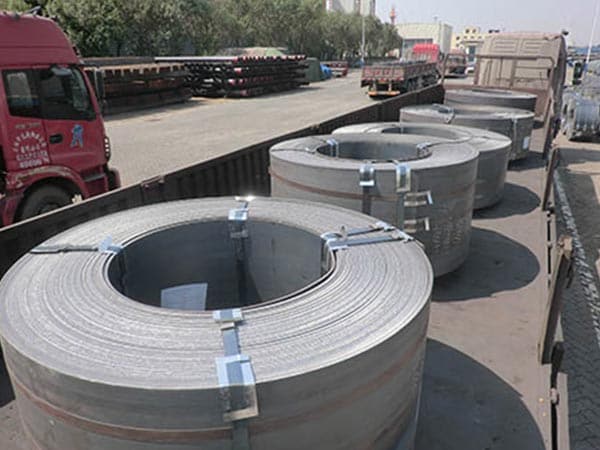
The Engineering Significance of S420MC Steel Thickness
S420MC represents a pinnacle in the evolution of high-strength low-alloy (HSLA) steels, governed by the EN 10149-2 standard. The 'S' denotes structural steel, '420' refers to the minimum yield strength of 420 MPa, and 'MC' indicates that the material is thermomechanically rolled (M) and intended for cold forming (C). Understanding the thickness range of S420MC is not merely a matter of checking a catalog; it is about understanding how the thermomechanical control process (TMCP) interacts with the cross-sectional area to provide uniform mechanical properties across the entire plate or coil. Typically, S420MC is available in a thickness range from 1.5 mm to 20 mm, though most high-precision applications focus on the 2.0 mm to 16 mm bracket. This range is critical because the cooling rates during the rolling process must be meticulously controlled to ensure a fine-grained microstructure, which becomes increasingly complex as the material thickness increases.
When engineers evaluate the thickness range, they are essentially looking at the material's ability to maintain its 420 MPa yield strength without sacrificing ductility. In thinner gauges (under 3 mm), S420MC offers exceptional weight reduction opportunities for automotive components. In thicker gauges (above 8 mm), it provides the structural integrity required for heavy machinery and crane booms. The consistency of the grain structure throughout these thicknesses ensures that the material responds predictably to stress, which is a primary reason for its widespread adoption in load-bearing environments.
Chemical Composition and Micro-Alloying Strategy
The performance of S420MC across its thickness range is a direct result of its sophisticated chemical composition. Unlike traditional carbon steels that rely on high carbon content for strength, S420MC utilizes micro-alloying elements such as Niobium (Nb), Vanadium (V), and Titanium (Ti). This approach allows for a lower carbon content, which significantly improves weldability and toughness.
| Element | Maximum Content (%) | Function in S420MC |
|---|---|---|
| Carbon (C) | 0.12 | Ensures strength while maintaining weldability |
| Manganese (Mn) | 1.60 | Increases hardenability and tensile strength |
| Silicon (Si) | 0.50 | Deoxidizer and solid solution strengthener |
| Phosphorus (P) | 0.025 | Kept low to prevent brittleness |
| Sulfur (S) | 0.015 | Kept low to improve lamellar tearing resistance |
| Aluminium (Al) | 0.015 (min) | Grain refinement and deoxidation |
| Nb + V + Ti | 0.22 (total) | Micro-alloying for grain refinement and precipitation hardening |
The low sulfur content is particularly important for the thicker end of the range. As thickness increases, the risk of inclusions and lamellar tearing during welding or heavy forming rises. By maintaining a sulfur level below 0.015%, S420MC ensures that the material remains isotropic, meaning its properties are consistent in both the longitudinal and transverse directions. This is vital for complex cold-formed parts where the stress distribution is multi-axial.
Mechanical Properties and Performance Across Gauges
The mechanical properties of S420MC are defined by its high yield-to-tensile ratio and excellent elongation. These properties are the reason why it can replace traditional S235 or S355 steels, allowing for thinner sections to carry the same load, thereby reducing the overall weight of the structure.
| Property | Value | Note |
|---|---|---|
| Yield Strength (ReH) | Min 420 MPa | Measured at the lower yield point |
| Tensile Strength (Rm) | 480 - 620 MPa | Consistent across thickness range |
| Elongation (A80mm) | Min 16% - 19% | Depends on thickness (t < 3mm vs t ≥ 3mm) |
| Bending Radius | 0.5t to 1.5t | Depends on thickness and bending angle |
One of the most impressive aspects of S420MC is its cold formability. For thicknesses less than 3 mm, the minimum recommended inside bend radius is often as low as 0.5 times the thickness. As the thickness increases to the 6 mm - 10 mm range, this radius typically increases to 1.0t or 1.5t. This predictability allows manufacturers to design tight bends in chassis frames and structural brackets without fearing cracks or springback issues. The thermomechanical rolling process ensures that the ferrite grains are extremely fine, which prevents the 'orange peel' effect often seen when lower-quality steels are subjected to severe deformation.
Global Equivalents and International Standards
Navigating the global market requires a clear understanding of how S420MC aligns with other international standards. While EN 10149-2 is the primary European reference, other regions have developed similar grades to meet the demand for high-strength cold-forming steels.
- China (GB/T): The closest equivalent is Q420MC. This grade follows similar chemical and mechanical requirements and is widely used in the Chinese automotive and heavy equipment industries.
- USA (ASTM): The equivalent is often cited as ASTM A1011 HSLAS Grade 60 or ASTM A709 Grade 60, though the chemical limits and processing requirements can differ slightly. Engineers must verify the specific elongation and impact requirements when substituting.
- Japan (JIS): JIS G3134 SPFH 590 is the functional equivalent. While the naming convention differs, the focus on high yield strength and cold formability remains the same.
- International (ISO): ISO 6930-2 PW420 provides a standardized global framework that aligns closely with the EN 10149-2 specifications.
When selecting an equivalent, it is crucial to look beyond just the yield strength. Factors such as the impact energy (measured in Joules at specific temperatures) and the specific thickness tolerances (often governed by EN 10051 for hot-rolled products) play a significant role in the final application's success. S420MC is typically tested for longitudinal impact strength, though transverse testing can be requested for specific high-stress applications.
Advanced Processing: Welding and Cutting
The low carbon equivalent (CEV) of S420MC makes it a dream for welding engineers. In the 1.5 mm to 20 mm thickness range, S420MC can generally be welded without preheating, provided the environment is dry and the cooling rates are controlled. This is a significant advantage over traditional high-strength steels, which often require expensive heat treatment cycles to prevent hydrogen-induced cracking in the heat-affected zone (HAZ).
Laser cutting is another area where S420MC excels. Due to its clean chemical composition and consistent thickness, it allows for high-speed cutting with minimal dross. This is particularly important for the 5 mm to 12 mm thickness range, where precision is required for interlocking structural components. The material's flatness, often improved through leveling processes after rolling, ensures that automated laser beds can operate at maximum efficiency without the risk of head crashes or focal point deviations.
Industrial Applications and Weight Optimization
The primary driver for using S420MC across its thickness range is weight optimization. In the automotive industry, truck chassis frames are a classic application. By switching from a 10 mm S355 steel to an 8 mm S420MC steel, manufacturers can achieve a 20% weight reduction in the frame while maintaining the same load-bearing capacity. This translates directly into higher payloads and better fuel efficiency.
- Heavy Lifting: Crane booms and telescopic arms utilize the upper end of the thickness range (12 mm - 20 mm) to provide the necessary stiffness and strength-to-weight ratio for long-reach operations.
- Agriculture: Plows, trailers, and harvester frames benefit from the material's impact resistance and ability to withstand the harsh, abrasive environments of modern farming.
- Construction: Cold-pressed profiles and structural sections for modular buildings use S420MC to ensure seismic resilience and ease of assembly.
The environmental adaptability of S420MC is also noteworthy. While it is not a 'weathering' steel like Corten, its fine-grained structure provides a slightly better resistance to atmospheric corrosion than standard carbon steels. When combined with modern coating technologies like galvanizing or KTL (e-coating), S420MC components can achieve service lives exceeding 20 years in demanding outdoor environments.
Selecting the Right Thickness for Your Project
Choosing the optimal thickness of S420MC requires a holistic view of the manufacturing process. It is not enough to simply meet the structural load requirements; one must also consider the capabilities of the press brakes, the welding equipment, and the fatigue life of the assembly. For instance, in dynamic applications like trailer suspensions, the fatigue strength of S420MC is superior to that of S355, but this advantage is only fully realized if the thickness is chosen to minimize peak stresses at the weld joints.
Furthermore, the thickness tolerance is a critical factor. S420MC produced to EN 10051 standards offers much tighter control over gauge variation than standard hot-rolled plates. This precision is vital for robotic welding cells, where even a 0.5 mm variation in thickness can lead to inconsistent weld penetration. By specifying S420MC, engineers are not just buying strength; they are buying the reliability and consistency needed for modern, automated manufacturing. The synergy between its micro-alloyed chemistry, thermomechanical processing, and broad thickness range makes S420MC an indispensable tool in the pursuit of efficient, high-performance engineering solutions.
Leave a message