
What is the S700MC cold forming autobobile steel sheet exporter price export to Russia
Comprehensive analysis of S700MC high-strength steel specifications, mechanical properties, and export pricing factors for the Russian automotive and machinery markets.
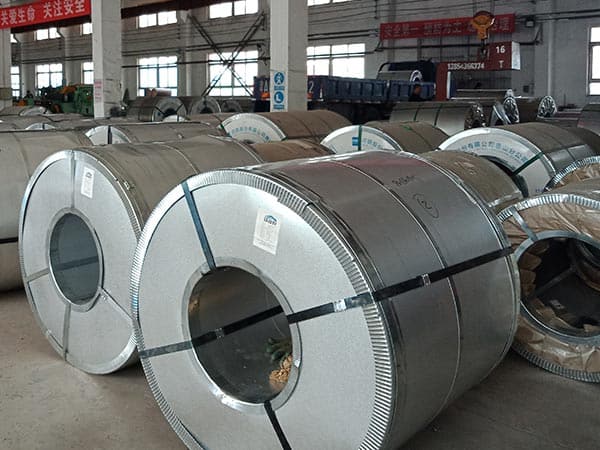
The Technical Core of S700MC High-Strength Steel
S700MC is a high-strength, thermomechanically rolled steel specifically designed for cold forming. Governed by the EN 10149-2 standard, this material represents the pinnacle of metallurgical engineering for the automotive and heavy machinery sectors. Its designation 'S' stands for structural steel, '700' denotes the minimum yield strength of 700 MPa, and 'MC' indicates it is produced through thermomechanical rolling for enhanced cold forming capabilities. For Russian manufacturers specializing in truck chassis, crane booms, and heavy-duty trailers, S700MC offers a unique combination of extreme strength and weight reduction potential.
Chemical Composition and the Role of Micro-alloying
The exceptional properties of S700MC are achieved through a precise balance of chemical elements. Unlike traditional carbon steels, S700MC utilizes micro-alloying elements such as Niobium (Nb), Titanium (Ti), and Vanadium (V). These elements refine the grain structure during the thermomechanical rolling process, which is crucial for maintaining toughness at high strength levels. The low carbon content ensures excellent weldability, a critical factor for the Russian automotive assembly lines.
| Element | C (max %) | Mn (max %) | Si (max %) | P (max %) | S (max %) | Al (min %) |
|---|---|---|---|---|---|---|
| S700MC Value | 0.12 | 2.10 | 0.60 | 0.025 | 0.015 | 0.015 |
By keeping the carbon equivalent low, S700MC minimizes the risk of cold cracking in the heat-affected zone (HAZ) during welding, making it highly reliable for structural components that must endure high stress.
Mechanical Performance and Weight Reduction Efficiency
The primary driver for the adoption of S700MC in the Russian market is the ability to reduce the dead weight of vehicles. By replacing standard s355jr steel with S700MC, engineers can reduce the thickness of structural components by up to 30-40% without compromising structural integrity. This leads to higher payloads and improved fuel efficiency, which are significant competitive advantages in the vast logistics network of the Russian Federation.
| Property | Yield Strength (MPa) | Tensile Strength (MPa) | Elongation A80 (%) | Min. Bending Radius (90°) |
|---|---|---|---|---|
| S700MC Specification | Min 700 | 750 - 950 | Min 10 - 12 | 1.5 x Thickness |
The high tensile strength allows for the design of thinner, lighter parts that still provide the necessary safety margins for heavy-duty operations in demanding environments.
Cold Forming and Fabrication Excellence
Despite its high strength, S700MC exhibits remarkable cold forming properties. It can be bent, flanged, and cold-folded with precision. However, fabricators must account for springback, which is more pronounced in S700MC than in lower-strength grades. Utilizing modern CNC press brakes with compensation systems is recommended to achieve the tight tolerances required for automotive components. The fine-grained structure prevents surface cracking during the bending process, provided the minimum bending radius guidelines are followed.
- Laser Cutting: S700MC is highly suitable for laser cutting, producing clean edges with minimal thermal distortion.
- Punching: Due to its hardness, high-quality tool steel is required for punching operations to ensure longevity.
- Machining: Standard high-speed steel or carbide tools can be used, though cutting speeds may need adjustment compared to mild steel.
Environmental Adaptability: Performance in Russian Climates
One of the most critical aspects for steel exported to Russia is its performance in sub-zero temperatures. S700MC is often required to meet specific impact energy requirements at -20°C or even -40°C. The thermomechanical rolling process ensures that the steel remains ductile even in extreme cold, preventing brittle fractures in truck frames or construction equipment operating in Siberian conditions. Exporters must provide Charpy V-notch impact test reports to verify that the material meets the 27J or 40J requirements at the specified low temperatures.
Exporter Pricing Dynamics for the Russian Market
The price of S700MC for export to Russia is influenced by several variables beyond the base cost of iron ore and energy. Currently, exporter prices fluctuate based on global supply chain stability and regional demand. For Russian buyers, the following factors are pivotal in determining the final landed cost:
- Logistics and Routes: Shipping via rail through the Eurasian land bridge or sea routes via Vladivostok or Novorossiysk significantly impacts the freight component of the price.
- Certification and Compliance: Compliance with GOST standards or specific manufacturer approvals (like those for KAMAZ or GAZ) can influence the premium charged by exporters.
- Surface Finish: S700MC is typically supplied in a Pickled and Oiled (P&O) condition to protect against corrosion during transit, which adds to the processing cost.
- Thickness and Width: Thinner gauges (under 3mm) often command a higher price per ton due to the increased rolling time and precision required.
Exporters often quote prices on a CFR (Cost and Freight) or DAP (Delivered at Place) basis, and current market trends suggest a price range that reflects the premium nature of this high-strength alloy compared to commodity hot-rolled coils.
Application Industries in the Russian Economy
The demand for S700MC in Russia is concentrated in high-growth sectors where durability and efficiency are paramount. The automotive industry remains the largest consumer, specifically for the production of longitudinal beams for heavy trucks. Additionally, the lifting and transport machinery sector utilizes S700MC for crane telescopic booms, where the high strength-to-weight ratio is essential for reaching greater heights with heavier loads.
In the agricultural machinery sector, S700MC is used for plow frames and harvester components that must withstand high abrasive wear and mechanical stress. The transition to high-strength steel allows Russian manufacturers to produce equipment that competes with top-tier international brands in terms of performance and longevity.
Strategic Sourcing and Quality Assurance
When sourcing S700MC for export to Russia, quality assurance is non-negotiable. Reliable exporters provide Mill Test Certificates (MTC) according to EN 10204 3.1, detailing the heat number, chemical analysis, and mechanical test results. For critical applications, ultrasonic testing (UT) may be performed to ensure the absence of internal defects. Buyers should also verify the flatness tolerances, as high-strength steel can sometimes exhibit residual stresses that affect automated welding processes.
The partnership between global steel exporters and Russian industrial players is built on the consistent delivery of high-performance materials like S700MC. By understanding the technical nuances and market pricing drivers, procurement professionals can optimize their supply chains for the next generation of high-strength machinery and vehicles.
Leave a message