
China s355mc vs s355j2 for auto frame prices continue to decline
Explore the technical differences between S355MC and S355J2 steel for automotive frames. This guide covers mechanical properties, fabrication, and the impact of declining prices in China.
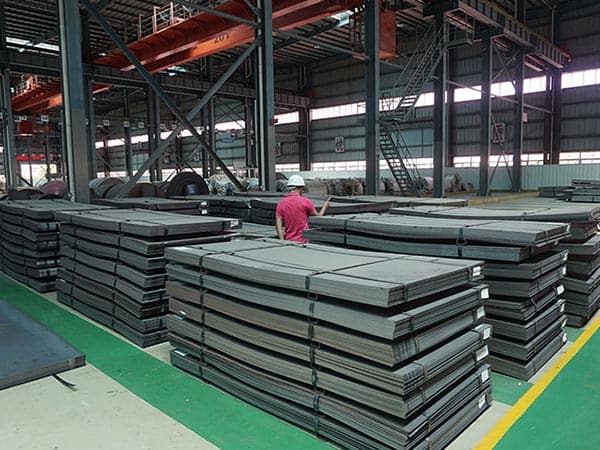
Technical Distinction: S355MC and S355J2 in Automotive Engineering
The automotive manufacturing industry relies heavily on high-strength steel grades to balance structural integrity with vehicle weight reduction. Among the most prominent grades sourced from China are S355MC and S355J2. While both share a nominal yield strength of 355 MPa, their metallurgical DNA and processing histories diverge significantly, making them suitable for different components of a vehicle's chassis and frame. As market prices for these materials continue to decline in the Chinese domestic and export markets, engineers and procurement specialists must understand the nuanced trade-offs between these two standards to optimize both performance and cost.
S355MC is a thermomechanically rolled steel specifically designed for cold forming, governed by the EN 10149-2 standard. The "M" denotes its thermomechanical rolling process, while the "C" signifies its suitability for cold forming. In contrast, S355J2 is a non-alloy structural steel falling under the EN 10025-2 standard. The "J2" suffix indicates that the material has undergone Charpy V-notch impact testing at -20°C, ensuring a minimum energy absorption of 27 Joules. This fundamental difference in certification focus—one on formability and the other on toughness—dictates their specific utility in auto frame construction.
Chemical Composition and Microstructural Evolution
The chemical makeup of these steels is the primary driver of their mechanical behavior. S355MC utilizes a micro-alloying strategy, incorporating small amounts of Niobium (Nb), Vanadium (V), and Titanium (Ti). These elements facilitate grain refinement during the thermomechanical rolling process, resulting in a fine-grained ferrite-pearlite microstructure that enhances both strength and ductility. This refined structure is what allows S355MC to achieve high strength without a significant increase in carbon content, which remains relatively low (typically below 0.12%).
S355J2 follows a more traditional alloying path. It has a higher carbon equivalent compared to S355MC, which aids in achieving the required strength in thicker sections but can slightly complicate high-speed welding processes if not managed correctly. The focus for S355J2 is on purity and grain size control to meet the stringent impact toughness requirements at sub-zero temperatures. Below is a comparison of typical chemical values:
| Element (Max %) | S355MC (EN 10149-2) | S355J2 (EN 10025-2) |
|---|---|---|
| Carbon (C) | 0.12 | 0.20 |
| Manganese (Mn) | 1.50 | 1.60 |
| Silicon (Si) | 0.50 | 0.55 |
| Phosphorus (P) | 0.025 | 0.025 |
| Sulfur (S) | 0.020 | 0.025 |
Mechanical Properties: Yield Strength vs. Impact Toughness
When designing an auto frame, the yield strength is the critical parameter for determining the load-bearing capacity before permanent deformation occurs. Both S355MC and S355J2 offer a minimum yield of 355 MPa, but their behavior under stress differs. S355MC is engineered for consistency across the coil, which is vital for automated stamping and bending lines. Its elongation properties are superior for complex geometries, making it the preferred choice for cross members, brackets, and longitudinal beams that require intricate shaping.
S355J2 excels in environments where the frame might be subjected to sudden shocks or extreme cold. For heavy-duty trucks or vehicles operating in northern climates, the J2 designation provides a safety margin against brittle fracture. While S355MC can handle moderate impacts, it is not explicitly tested for low-temperature toughness in the same way S355J2 is. Therefore, for heavy-duty structural sections where thickness exceeds 6mm, S355J2 is often the safer engineering choice.
- S355MC Elongation: Typically 19-23% depending on thickness, allowing for tight bend radii.
- S355J2 Toughness: Guaranteed 27J at -20°C, essential for safety-critical structural components.
- Tensile Strength: S355MC ranges from 430-550 MPa, while S355J2 ranges from 470-630 MPa.
Fabrication Performance: Bending and Welding
The processing performance is where S355MC truly shines in a high-volume automotive production environment. Due to its low carbon content and fine grain structure, it exhibits excellent weldability. It can be welded using all standard methods, including MAG, MIG, and laser welding, with minimal risk of cold cracking in the heat-affected zone (HAZ). Furthermore, its superior cold-forming properties mean that manufacturers can use smaller bending radii without fearing edge cracks, which is a common issue with standard structural steels.
S355J2, while weldable, requires more attention to heat input, especially in thicker plates. Because it is often supplied as hot-rolled plate rather than thin coil, it is more commonly used in the heavy-duty segment of the auto industry—such as trailer frames and heavy machinery chassis—where massive structural welds are the norm. For thin-walled, lightweight passenger car frames, the processing efficiency of S355MC offers a significant reduction in cycle times and scrap rates.
Environmental Adaptability and Longevity
Automotive frames are exposed to harsh environments, including road salt, moisture, and temperature fluctuations. While neither S355MC nor S355J2 are "weathering steels" like Corten, their surface quality plays a role in corrosion resistance. S355MC is often supplied in a pickled and oiled condition, providing a clean surface for subsequent coating or galvanizing. The smooth surface finish of thermomechanically rolled steel ensures better adhesion of E-coat (electrophoretic deposition) primers, which are standard in the automotive industry.
S355J2 is frequently used in heavier sections where a thicker oxide scale might be present from the hot-rolling process. For these components, shot blasting is usually required before painting or galvanizing. In terms of environmental stress cracking, the refined grain structure of S355MC provides a slight advantage in resisting fatigue-related issues caused by constant vibration during vehicle operation.
Market Dynamics: Why Prices in China are Declining
The current downward trend in China's steel prices for S355MC and S355J2 is driven by a combination of overcapacity in the domestic milling sector and a slowdown in the local real estate market, which has forced steel mills to pivot more aggressively toward the automotive and machinery sectors. High-output mills like Baosteel, Shougang, and HBIS have optimized their production lines for S355MC, leading to an abundant supply that outstrips current domestic demand.
Furthermore, the decline in raw material costs, specifically iron ore and coking coal, has allowed Chinese mills to maintain margins even while lowering the spot prices for hot-rolled coils and plates. For international buyers, this price decline presents a strategic window to secure high-quality material at a fraction of the cost of European or American counterparts, provided they navigate the logistics and quality certification requirements effectively.
Optimizing Selection for Auto Frame Components
Choosing between S355MC and S355J2 involves a multi-dimensional analysis of the vehicle's intended use. For a light commercial vehicle (LCV) where weight reduction is the primary goal to improve fuel efficiency or battery range (in the case of EVs), S355MC is the clear winner. Its ability to be formed into complex, high-strength shapes allows for thinner wall thicknesses without sacrificing the structural integrity of the frame.
For heavy-duty applications, such as the chassis of a mining dump truck or a long-haul trailer, S355J2 remains the industry standard. The predictability of its performance under heavy static and dynamic loads, combined with its resilience in cold weather, makes it indispensable. As prices decline, manufacturers have the opportunity to over-engineer certain components, perhaps moving from a lower grade like S235 to S355J2 to enhance the lifespan of the vehicle without a significant cost penalty.
Future Outlook and Strategic Procurement
The convergence of advanced metallurgy and competitive pricing in China is reshaping the global supply chain for automotive steel. As S355MC and S355J2 become more affordable, we expect to see an even broader adoption of these grades in emerging markets. Manufacturers should focus on establishing relationships with Tier 1 Chinese mills that offer consistent batch-to-batch quality and transparent mill test certificates (MTCs).
Monitoring the price spread between these two grades is also essential. Occasionally, the price of S355MC coil may drop below that of S355J2 plate due to production efficiencies in continuous rolling mills. In such scenarios, redesigning certain frame components to utilize coiled S355MC can lead to substantial cost savings. By staying informed on both the technical attributes and the shifting market landscape, automotive professionals can leverage the current price decline to build safer, lighter, and more cost-effective vehicles.
Leave a message