
What is the s355mc material group price export to Malaysia
Detailed analysis of S355MC material group properties, mechanical performance, and export pricing factors for the Malaysian market, including technical specifications and industrial applications.
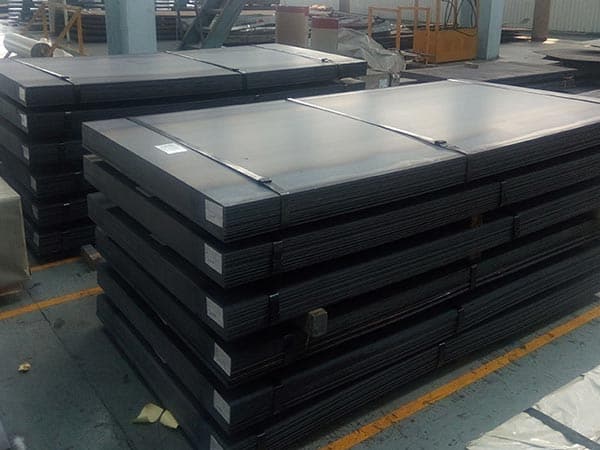
Understanding the S355MC Material Group: A High-Performance Alloy
S355MC is a high-strength, hot-rolled steel specifically designed for cold forming applications. Governed by the EN 10149-2 standard, this material is categorized as a thermomechanically rolled steel. The 'S' denotes structural steel, '355' indicates a minimum yield strength of 355 MPa, and 'MC' signifies its suitability for cold forming (C) and its thermomechanical rolling process (M). For industrial buyers in Malaysia, understanding the nuance of this material group is essential for optimizing structural integrity while managing costs. This steel grade offers a unique balance of high yield strength, excellent weldability, and superior toughness, making it a preferred choice over traditional carbon steels like s355jr in weight-sensitive applications.
Chemical Composition and Its Impact on Performance
The performance of S355MC is rooted in its precise chemical makeup. Unlike standard structural steels, S355MC utilizes micro-alloying elements such as niobium, vanadium, and titanium. These elements facilitate grain refinement during the thermomechanical rolling process, which enhances both strength and toughness without the need for excessive carbon content. Low carbon levels are critical for maintaining excellent weldability, a key requirement for Malaysian manufacturing sectors. Below is a breakdown of the typical chemical composition for S355MC:
| Element | Maximum Content (%) |
|---|---|
| Carbon (C) | 0.12 |
| Manganese (Mn) | 1.50 |
| Silicon (Si) | 0.50 |
| Phosphorus (P) | 0.025 |
| Sulfur (S) | 0.020 |
| Aluminum (Al) | 0.015 |
The controlled levels of sulfur and phosphorus ensure that the material remains ductile and resistant to cracking during intensive cold-forming processes. For Malaysian importers, verifying the mill test certificate (MTC) against these parameters is a standard quality assurance step to ensure the material meets the rigorous demands of tropical industrial environments.
Mechanical Properties: Strength Meets Ductility
The primary reason for the widespread adoption of S355MC in the Malaysian automotive and heavy machinery sectors is its mechanical profile. The material provides a high strength-to-weight ratio, allowing engineers to design lighter components without sacrificing safety. This is particularly relevant for the transport industry, where reducing vehicle weight directly translates to improved fuel efficiency and lower carbon emissions. The mechanical properties are tested longitudinally to the rolling direction, ensuring consistency across the plate or coil.
| Property | Value Range |
|---|---|
| Yield Strength (ReH) | min. 355 MPa |
| Tensile Strength (Rm) | 430 - 550 MPa |
| Elongation (A80mm) | min. 19% (thickness < 3mm) |
| Elongation (A5) | min. 23% (thickness ≥ 3mm) |
These values demonstrate that while the steel is robust, it retains enough ductility to undergo complex bending and folding. This dual-capability is what sets the 'MC' group apart from standard structural grades which might snap or deform unpredictably under high-stress cold forming.
Processing Performance: Bending, Welding, and Cutting
When considering the export of S355MC to Malaysia, processing performance is a major selling point. The material is optimized for modern manufacturing techniques. Cold Forming: S355MC excels in bending operations. Because of its fine-grained structure, it exhibits minimal spring-back, allowing for high precision in automated production lines. Welding: The low carbon equivalent (CEV) makes S355MC exceptionally easy to weld using standard methods such as MIG, TIG, or submerged arc welding. No pre-heating is typically required for standard thicknesses, which significantly reduces labor costs and production time. Laser Cutting: The clean surface finish and consistent thickness of S355MC coils and plates make them ideal for high-speed laser cutting, producing smooth edges that require minimal post-processing.
Factors Influencing S355MC Export Prices to Malaysia
Determining the price of S355MC for the Malaysian market involves several variables beyond the base cost of the steel. As of 2024, the global steel market remains volatile, and several regional factors play a role.
- Raw Material Costs: Fluctuations in iron ore and coking coal prices directly impact the production cost of thermomechanically rolled steels.
- Freight and Logistics: Shipping costs from major hubs like Shanghai or Tianjin to Port Klang, Penang, or Johor are subject to fuel surcharges and container availability. Bulk shipments are often more cost-effective for large infrastructure projects.
- Currency Exchange Rates: Since international steel trade is conducted in USD, the strength of the Malaysian Ringgit (MYR) against the dollar significantly affects the final landed cost for local buyers.
- Import Duties and Taxes: Malaysia has specific trade regulations and anti-dumping duties on certain steel products. It is vital to check current CIDB (Construction Industry Development Board) requirements and SIRIM certifications, which may influence the choice of supplier and final pricing.
- Volume and Specification: Orders for standard sizes (e.g., 3mm to 12mm thickness) usually command better pricing than niche dimensions or specialized surface treatments like pickling and oiling (S355MC+PO).
Environmental Adaptability in Southeast Asian Climates
Malaysia's tropical climate, characterized by high humidity and salt-laden air in coastal regions, poses a challenge for steel longevity. S355MC, while not a stainless grade, responds well to various protective coatings. Its surface chemistry is conducive to high-quality hot-dip galvanizing and industrial painting. For applications in the oil and gas or maritime sectors near Malacca or East Malaysia, S355MC is often specified with a pickled and oiled finish to prevent flash rusting during transit and storage. The material's inherent toughness also ensures it performs reliably under the thermal expansion cycles common in equatorial regions.
Expanding Applications: Where S355MC Dominates
The versatility of S355MC allows it to penetrate various high-growth industries in Malaysia.
- Automotive Manufacturing: Used extensively for truck chassis, side members, and cross members where high strength and weight reduction are paramount.
- Construction and Infrastructure: Applied in the fabrication of crane arms, telescopic booms, and structural sections for high-rise buildings and bridges.
- Agricultural Machinery: Ideal for plow blades, frames, and components that require resistance to mechanical wear and high impact.
- Energy Sector: Utilized in the support structures for solar panels and wind turbine components, where structural reliability is non-negotiable.
Sourcing Strategy for Malaysian Importers
To secure the best S355MC material group price, Malaysian enterprises should focus on long-term partnerships with reputable mills or Tier-1 exporters. Requesting comprehensive documentation, including heat numbers and chemical analysis reports, is mandatory. Furthermore, considering the lead time for thermomechanically rolled products is essential for project planning. Buyers should also evaluate the benefits of 'Pickled and Oiled' vs. 'Black' finishes based on their local processing capabilities. By focusing on total cost of ownership—including processing ease and material longevity—rather than just the initial per-ton price, Malaysian businesses can achieve greater competitive advantages in their respective markets.
Leave a message