
What is the s500 steel iron equivalent material grades surface test
A comprehensive guide to S500 high-strength steel, covering global equivalent grades, chemical composition, mechanical properties, and rigorous surface testing protocols for industrial applications.
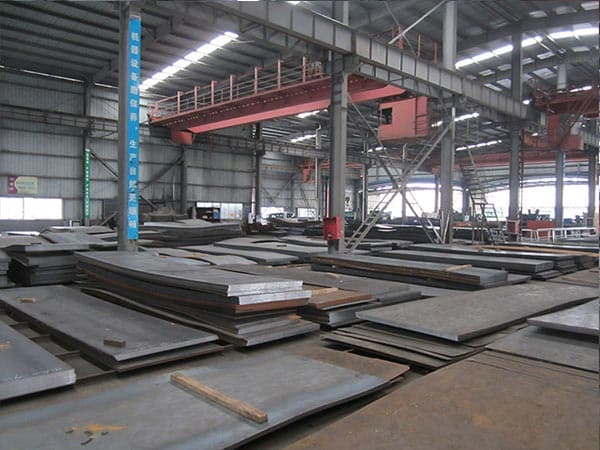
Defining S500 High-Strength Structural Steel
S500 is a high-strength structural steel grade primarily defined under European standards such as EN 10025-6 (for quenched and tempered conditions) and EN 10149-2 (for thermomechanically rolled conditions, often designated as S500MC). The numeric value '500' signifies a minimum yield strength of 500 MPa. This material is engineered to bridge the gap between standard structural steels like S355 and ultra-high-strength grades, offering an optimal balance of weight reduction, load-bearing capacity, and cost-efficiency.
In modern engineering, S500 is favored for its ability to reduce the dead weight of structures without compromising safety. This is particularly critical in mobile lifting equipment, heavy-duty truck chassis, and large-scale infrastructure projects. Understanding the nuances of its variants—such as S500Q (quenched), S500QL (quenched and tempered for low-temperature toughness), and S500MC (cold-forming optimized)—is essential for selecting the right material for specific environmental stressors.
Global Equivalent Material Grades for S500
When sourcing S500 steel internationally, engineers must identify equivalent grades across different standardizing bodies. While chemistry and processing methods vary, the core mechanical performance remains the primary metric for equivalence. Below is a comparison of S500 with other international standards:
| Standard | Equivalent Grade | Condition |
|---|---|---|
| EN 10025-6 | S500Q / S500QL | Quenched & Tempered |
| EN 10149-2 | S500MC | Thermomechanically Rolled |
| ASTM (USA) | ASTM A514 Grade B / A572 Gr 70 (Approx) | High Strength Low Alloy |
| GB/T (China) | Q500D / Q500E | High Strength Structural |
| JIS (Japan) | SHY 385 / SPFC 590 | High Tensile Steel |
It is important to note that S500MC and S500QL are not directly interchangeable. S500MC is designed for cold forming and bending, whereas S500QL is a pressure-vessel or heavy-plate grade optimized for toughness at temperatures as low as -40°C or -60°C. Selecting an equivalent requires a deep dive into the specific impact energy requirements of the project.
Surface Test Protocols for S500 Steel
Surface integrity is paramount for S500 steel because high-strength materials are more sensitive to surface defects, which can act as stress concentrators. A minor scratch or inclusion can lead to premature fatigue failure under cyclic loading. The surface test procedures for S500 typically include several methodologies:
- Visual Inspection (VT): The first line of defense, checking for scales, pits, or rolling laps that exceed the tolerances defined in EN 10163.
- Magnetic Particle Inspection (MPI): Used to detect surface and near-surface discontinuities. Since S500 is ferromagnetic, MPI is highly effective at identifying cracks that are invisible to the naked eye.
- Ultrasonic Testing (UT): While primarily for internal defects, high-frequency UT can detect laminations near the surface that might affect weldability or structural integrity.
- Roughness Testing (Ra): For S500MC used in automotive components, surface roughness must be controlled to ensure proper paint adhesion and coating durability.
- Eddy Current Testing: Often used in automated production lines for S500 tubes or bars to detect surface-breaking defects without contact.
The acceptance criteria for these tests are usually governed by Class A, B, or C of the EN 10163-2 standard, which specifies the allowable depth of imperfections based on the plate thickness.
Chemical Composition and Alloying Strategy
The high strength of S500 is achieved through a precise alloying strategy rather than simply increasing carbon content. Keeping carbon low (typically below 0.20%) is vital for maintaining excellent weldability. The strength is enhanced through micro-alloying elements:
- Manganese (Mn): Increases hardenability and tensile strength.
- Silicon (Si): Acts as a deoxidizer and contributes to solid solution strengthening.
- Niobium (Nb) and Vanadium (V): These elements refine the grain structure, which is the only mechanism that increases both strength and toughness simultaneously.
- Titanium (Ti): Prevents grain growth during welding, protecting the heat-affected zone (HAZ).
- Boron (B): In quenched grades (S500Q), small amounts of boron significantly improve hardenability.
This sophisticated chemistry ensures that the material remains ductile enough for fabrication while providing the necessary yield point to support massive loads.
Mechanical Performance and Structural Integrity
The mechanical properties of S500 are what define its utility in extreme engineering. Beyond the 500 MPa yield strength, the tensile strength typically ranges between 590 and 770 MPa. However, the Elongation and Impact Toughness are equally critical.
For S500QL, the Charpy V-notch impact test is a mandatory surface-related performance metric. The material must demonstrate a minimum energy absorption (usually 27J or 40J) at sub-zero temperatures. This ensures that the steel will not undergo brittle fracture in cold climates or high-stress environments like offshore oil rigs. For S500MC, the focus shifts to the minimum bending radius, ensuring the steel can be formed into complex shapes without surface cracking.
Processing Characteristics: Welding and Forming
Working with S500 requires specialized knowledge of its thermal cycle sensitivity. Because S500MC gains its strength from thermomechanical rolling, excessive heat input during welding can 'anneal' the material, leading to a localized drop in strength in the heat-affected zone (HAZ). Engineers must strictly follow Welding Procedure Specifications (WPS) that limit heat input and control interpass temperatures.
In terms of forming, S500MC offers superior cold-formability. Its fine-grained structure allows for tight bends, which is essential for manufacturing crane booms and chassis frames. However, designers must account for springback, which is more pronounced in S500 than in lower-strength grades like S235 or S355.
Environmental Adaptability and Corrosion Resistance
S500 steel is often used in harsh environments, from coastal construction to mining equipment. While it is not inherently 'stainless,' its fine-grained surface and tight oxide scale (in the case of hot-rolled versions) provide a decent baseline for protective coatings. In many applications, S500 is hot-dip galvanized or treated with high-performance epoxy primers.
The environmental adaptability is also reflected in its resistance to Hydrogen Induced Cracking (HIC) and Stress Corrosion Cracking (SCC), provided the chemical composition is tightly controlled and the surface remains free of deep notches or mechanical damage during the installation process.
Industrial Applications of S500 Steel
The versatility of S500 makes it a staple in several high-stakes industries:
- Transportation: Lightweighting of truck trailers and chassis to increase payload capacity and fuel efficiency.
- Lifting Equipment: Telescopic cranes and aerial platforms where high strength-to-weight ratios are non-negotiable.
- Construction: High-rise building columns and long-span bridges where reducing the cross-section of steel members saves space and material costs.
- Mining and Earthmoving: Buckets, liners, and structural frames for heavy excavators that require both strength and impact resistance.
- Energy: Support structures for wind turbines and components for offshore platforms.
By integrating S500 into these designs, manufacturers can achieve a more sustainable lifecycle for their products, using less raw material to achieve the same or superior structural performance.
Leave a message