
Is en 10149-2 automotive steel sheet s355mc pdf steel stainless?
Discover the technical reality of S355MC steel under EN 10149-2. This guide explains why it is an HSLA steel rather than stainless, detailing its mechanical properties and automotive uses.
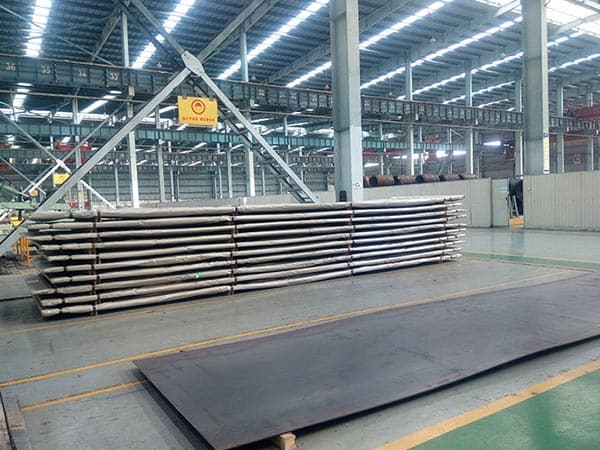
Clarifying the Identity: Is S355MC Stainless Steel?
The question of whether EN 10149-2 S355MC is a stainless steel is a common point of confusion for those transitioning from general structural engineering to specialized automotive manufacturing. To be technically precise, S355MC is not stainless steel. It belongs to the category of High-Strength Low-Alloy (HSLA) steels. While stainless steels are defined by a minimum chromium content of 10.5% to provide corrosion resistance through a passive oxide layer, S355MC relies on a sophisticated thermomechanical rolling process and micro-alloying elements to achieve high strength and exceptional formability without the high cost of chromium and nickel.
S355MC is specifically designed for cold forming, making it a staple in the automotive industry for structural components where weight reduction and high yield strength are paramount. The "S" denotes structural steel, "355" indicates a minimum yield strength of 355 MPa, "M" refers to its thermomechanically rolled delivery condition, and "C" signifies its suitability for cold forming. Understanding this distinction is crucial for engineers when selecting materials for environments where atmospheric corrosion or mechanical stress are the primary concerns.
The Technical Framework of EN 10149-2
The EN 10149-2 standard governs hot-rolled flat products made of high yield strength steels for cold forming. Unlike standard structural steels like s355jr (governed by EN 10025-2), S355MC undergoes Thermomechanical Control Process (TMCP). This process involves precise temperature control during the rolling stages, which refines the grain structure of the steel to a degree that conventional normalizing cannot achieve.
The grain refinement achieved through TMCP is the primary reason S355MC exhibits such a high strength-to-weight ratio. By creating a fine-grained ferritic-pearlitic microstructure, the steel gains toughness and strength simultaneously. This is particularly beneficial for automotive designers who need to reduce vehicle mass to meet emission standards without compromising passenger safety or structural integrity.
Chemical Composition and the Role of Micro-Alloying
The chemical makeup of S355MC is engineered to ensure excellent weldability and formability. By keeping the carbon content extremely low, the steel avoids the formation of brittle martensite in the heat-affected zone (HAZ) during welding. Instead of high carbon, it utilizes micro-alloying elements like Niobium (Nb), Vanadium (V), and Titanium (Ti).
| Element | Maximum Percentage (%) |
|---|---|
| Carbon (C) | 0.12 |
| Manganese (Mn) | 1.50 | Silicon (Si) | 0.50 |
| Phosphorus (P) | 0.025 |
| Sulphur (S) | 0.020 |
| Aluminium (Al) | 0.015 (min) |
| Niobium (Nb) | 0.09 |
| Titanium (Ti) | 0.15 |
These micro-alloying elements act as grain refiners and precipitation hardeners. Niobium, in particular, raises the recrystallization temperature, allowing the grain structure to remain fine during the rolling process. Titanium helps in stabilizing nitrogen and preventing grain growth in the HAZ during welding, ensuring that the structural integrity of a welded chassis remains intact.
Mechanical Performance: Yield Strength and Ductility
The mechanical properties of S355MC are what make it a preferred choice for heavy-duty automotive applications. While its yield strength is high, it retains enough elongation to allow for complex bending and pressing operations. This balance is difficult to achieve in standard carbon steels.
| Property | Value (Thickness < 3mm) | Value (Thickness ≥ 3mm) |
|---|---|---|
| Min. Yield Strength (MPa) | 355 | 355 |
| Tensile Strength (MPa) | 430 - 550 | 430 - 550 |
| Min. Elongation (A80mm %) | 19 | - |
| Min. Elongation (A5 %) | - | 23 |
The high yield-to-tensile ratio of S355MC allows for predictable deformation during the stamping process. In automotive engineering, this predictability is essential for maintaining tight tolerances in components like longitudinal beams and cross members. Furthermore, the steel’s impact strength at low temperatures (often tested at -20°C or -40°C upon request) ensures that vehicles remain safe in arctic climates.
Superior Cold Forming and Processing Performance
One of the standout features of S355MC automotive steel sheet is its bendability. For a steel with a yield strength of 355 MPa, it allows for remarkably tight bending radii without cracking. This is a direct result of the inclusion control and the ultra-fine grain structure. During the steelmaking process, vacuum degassing and calcium treatment are often used to ensure that sulfides are spherical rather than elongated, which prevents "lamellar tearing" during heavy forming.
- Bending: S355MC can typically be bent 180 degrees with a radius as small as 0.5 to 1.5 times the thickness, depending on the orientation relative to the rolling direction.
- Welding: Due to its low carbon equivalent (CEV), S355MC is compatible with all standard welding methods, including MAG, MIG, and laser welding. It does not require preheating in most thickness ranges.
- Laser Cutting: The clean surface and consistent microstructure make it ideal for high-speed laser cutting, resulting in smooth edges that require minimal post-processing.
Automotive Industry Applications and Weight Reduction
In the pursuit of fuel efficiency and increased payload capacity, the automotive industry has turned to HSLA steels like S355MC to replace thicker, heavier mild steels. By using a higher strength material, engineers can reduce the gauge of the steel sheet while maintaining the same load-bearing capacity. This is known as "down-gauging."
Typical applications include truck chassis frames, where the constant vibration and heavy loads demand high fatigue resistance. S355MC is also used in the manufacturing of wheels, cold-pressed structural parts, and brackets. In the trailer industry, it is the standard for side guards and floor supports. Its ability to absorb energy during a collision also makes it suitable for safety-critical components like bumper reinforcements.
Environmental Adaptability and Surface Protection
Since S355MC is not stainless steel, it does not possess inherent resistance to rust. When exposed to moisture and oxygen, it will oxidize. However, in automotive applications, this is managed through advanced surface treatments. Most S355MC sheets are delivered in a Pickled and Oiled (P&O) condition. Pickling removes the dark mill scale, leaving a clean, grey surface that is ideal for subsequent coating.
For long-term environmental adaptability, S355MC components are usually E-coated (electrophoretic deposition), powder-coated, or hot-dip galvanized. The low silicon content in certain S355MC variants is specifically controlled to ensure a high-quality finish during galvanizing, preventing the "Sandelin effect" which can cause brittle, thick zinc coatings. This combination of high-strength steel and modern coating technology provides a service life that rivals stainless steel in many structural applications at a fraction of the cost.
Conclusion: Why S355MC Wins Over Stainless in Structural Roles
While the search for "S355MC PDF" might lead one to compare it with stainless grades, the two serve very different purposes. Stainless steel is chosen for aesthetics and extreme corrosion resistance, whereas S355MC is chosen for its mechanical efficiency, ease of fabrication, and cost-effectiveness in structural engineering. For automotive manufacturers, S355MC offers the perfect intersection of high yield strength, excellent weldability, and superior cold-forming properties, making it an indispensable material in modern vehicle architecture.
Leave a message