
What are the operation principles to be followed in the s355mc high strength steel auto plate en 10149-2 cutting process
Detailed guide on the operational principles and technical requirements for cutting S355MC high-strength steel plates (EN 10149-2) for automotive applications.
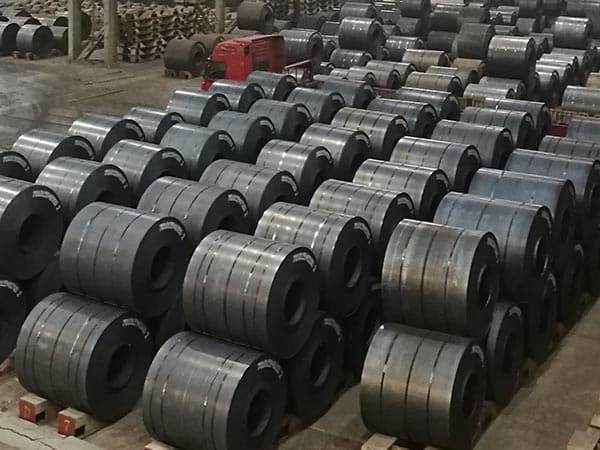
Understanding S355MC High Strength Steel Characteristics
S355MC is a thermomechanically rolled steel specifically designed for cold forming, governed by the EN 10149-2 standard. This material is widely utilized in the automotive industry for structural components, chassis parts, and cross members due to its exceptional yield strength and ductility. The 'MC' designation indicates its suitability for cold forming and its production through a controlled rolling process that refines the grain structure. When approaching the cutting process, it is vital to recognize that S355MC relies on its fine-grained microstructure for its mechanical properties. Excessive heat input during cutting can lead to localized softening or grain growth, which may compromise the structural integrity of the automotive component. Therefore, the operation principles must prioritize maintaining the material's inherent strength while achieving high precision.
Chemical Composition and Its Influence on Cutability
The chemical composition of S355MC is strictly controlled to ensure weldability and formability. Lower carbon content compared to traditional structural steels reduces the risk of hardening at the cut edges. The addition of micro-alloying elements like Niobium (Nb), Vanadium (V), and Titanium (Ti) contributes to grain refinement. Understanding these elements helps operators predict how the steel will react to thermal cutting methods.
| Element | C (max %) | Mn (max %) | Si (max %) | P (max %) | S (max %) | Al (min %) |
|---|---|---|---|---|---|---|
| S355MC | 0.12 | 1.50 | 0.50 | 0.025 | 0.020 | 0.015 |
The low carbon equivalent (CEV) of S355MC makes it less susceptible to cold cracking after thermal cutting. However, the presence of Silicon and Manganese requires precise adjustment of oxygen pressure during laser or flame cutting to avoid excessive slag formation or a wide kerf.
Mechanical Properties and Cutting Resistance
The mechanical performance of EN 10149-2 S355MC dictates the force required for mechanical shearing and the stability needed during thermal processes. High yield strength means the material resists deformation, which is beneficial for maintaining flatness during the cutting of large auto plates.
| Grade | Yield Strength (MPa) | Tensile Strength (MPa) | Elongation (%) |
|---|---|---|---|
| S355MC | min 355 | 430 - 550 | min 19 |
High-strength steel plates often harbor residual stresses from the thermomechanical rolling process. When cutting, these stresses are released, which can cause the plate to bow or 'spring.' Operation principles must include strategies to mitigate this movement, such as optimized nesting and securing the workpiece effectively.
Core Operation Principles for Laser Cutting
Laser cutting is the preferred method for S355MC in automotive manufacturing due to its high precision and narrow Heat Affected Zone (HAZ). To achieve optimal results, several principles must be followed:
- Beam Focus Calibration: For S355MC, the focal point should generally be positioned slightly below the surface for oxygen cutting to ensure a clean melt expulsion. For nitrogen cutting (often used for thinner gauges to prevent oxidation), the focus is typically deeper within the material.
- Assist Gas Selection: Oxygen is commonly used for S355MC to utilize the exothermic reaction, increasing cutting speed. However, for parts requiring subsequent painting or coating without edge grinding, Nitrogen is used to produce an oxide-free edge.
- Nozzle Centering and Condition: Any misalignment in the nozzle can lead to asymmetrical gas flow, resulting in dross on one side of the cut. Regular inspection of the nozzle tip is mandatory when processing high-strength grades.
- Piercing Strategies: To prevent 'blowouts' on S355MC, multi-stage piercing or 'soft piercing' techniques should be employed. This involves gradually increasing the laser power and gas pressure to create a clean entry hole before the contour cutting begins.
Plasma Cutting Principles for Thicker S355MC Sections
When S355MC plates exceed the economical thickness for laser cutting, high-definition plasma cutting is employed. The principles here focus on arc stability and gas dynamics:
- Torch Height Control (THC): Maintaining a consistent distance between the torch and the S355MC plate is critical. Even minor fluctuations can change the arc voltage, leading to a beveled edge.
- Cutting Speed Optimization: Cutting too slowly increases the heat input, widening the HAZ and potentially softening the S355MC edge. Conversely, cutting too fast results in 'trailing dross' that is difficult to remove.
- Swirl Gas Selection: Using an O2/Air or N2/H2 gas mix can significantly improve the edge quality and reduce the nitriding effect on the cut surface, which is essential for maintaining the weldability of the S355MC component.
Thermal Management and Heat Affected Zone (HAZ) Control
One of the most critical principles in cutting S355MC is the management of thermal energy. Because S355MC derives its strength from its specific grain structure, excessive heat can create a localized area where the yield strength is lower than the base metal. To control the HAZ:
1. Path Planning: Avoid concentrated cutting in one area. Jump between different sections of the plate to allow for heat dissipation. This is particularly important for complex automotive brackets with intricate geometries.
2. Cooling Intervals: In some cases, programmed pauses allow the material temperature to remain below the critical transformation threshold.
3. Underwater Cutting: If using plasma, cutting under a water curtain or submerged can drastically reduce the HAZ and prevent plate distortion.
Mechanical Shearing and Edge Integrity
While thermal cutting is dominant, mechanical shearing is still used for straight-line blanks. The operation principles for S355MC involve accounting for its high strength:
- Blade Gap Adjustment: The gap between the upper and lower blades must be set precisely based on the thickness of the S355MC plate. A gap that is too tight causes double shearing, while a gap that is too wide leads to excessive burrs and edge deformation.
- Shear Angle: A lower shear angle reduces the distortion of the cut strip but requires higher force. Given S355MC's yield strength, the machine capacity must be verified before processing.
- Edge Hardening: Shearing induces cold work hardening at the edge. If the part is to undergo severe bending later, the sheared edge might require dressing to prevent cracking.
Quality Control and Post-Cutting Inspection
Adhering to operation principles is only effective if the results are verified. For S355MC auto plates, inspection should focus on:
Dimensional Accuracy: Using CNC verification to ensure the parts meet the tight tolerances required for automated automotive assembly.
Surface Roughness: The Rz value of the cut edge should be monitored. Rough edges act as stress concentrators, which can lead to fatigue failure in dynamic automotive environments.
Hardness Mapping: Periodic testing of the edge hardness ensures that the cutting process hasn't created a brittle martensitic layer or a significantly softened zone.
Flatness Check: Since S355MC is often used in large-scale frames, ensuring the plate hasn't warped during the thermal cutting process is essential for subsequent welding and assembly stages.
Environmental and Safety Considerations
The cutting of S355MC, especially via thermal methods, generates fine dust and fumes containing Manganese and other alloying elements. Operation principles must include the use of high-efficiency dust extraction systems and filtration. Furthermore, the handling of high-strength steel plates requires specialized lifting equipment to prevent surface damage, as scratches can serve as initiation points for cracks during the cold forming stages that typically follow the cutting process.
By strictly following these operational principles, manufacturers can leverage the full potential of S355MC high-strength steel. This ensures that the resulting automotive components are not only lightweight and cost-effective but also possess the structural reliability demanded by modern vehicle safety standards. The synergy between material science and precise processing technology remains the cornerstone of high-quality steel fabrication in the transport sector.
Leave a message