
What is the s460 steel equivalent astm price export to India
Comprehensive guide on S460 steel equivalents in ASTM standards, technical properties, and pricing analysis for exporting high-strength steel to the Indian market.
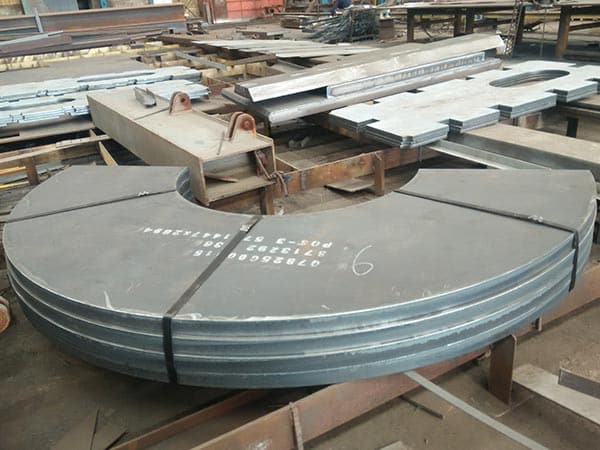
Defining S460 steel and Its Global Importance
S460 steel represents a category of high-strength structural steels defined under the European standard EN 10025-3 and EN 10025-4. The 'S' denotes structural steel, while '460' signifies its minimum yield strength of 460 MPa for thickness up to 16mm. This material is engineered for heavy-load applications where weight reduction is critical without compromising structural integrity. As global infrastructure projects demand more efficient materials, S460 has become a cornerstone for modern engineering, particularly in bridges, skyscrapers, and offshore platforms.
For procurement managers and engineers looking to source this material internationally, understanding the S460 steel equivalent ASTM standards is vital. Since the American Society for Testing and Materials (ASTM) uses different grading systems, identifying the correct substitute ensures that the structural calculations remain valid across different regulatory environments.
Identifying the S460 Steel Equivalent ASTM Standard
When searching for an ASTM equivalent to S460, the most common match is ASTM A572 Grade 65. However, the choice depends heavily on the specific sub-grade of S460 being used, such as S460N (normalized), S460M (thermomechanically rolled), or S460QL (quenched and tempered).
- ASTM A572 Grade 65: This is the primary equivalent for general structural applications. It offers a yield strength of approximately 450 MPa (65 ksi), which is very close to the 460 MPa of the EN standard.
- ASTM A656 Grade 70/80: For applications requiring better formability and weldability in high-strength low-alloy (HSLA) plates, A656 is often considered, especially in the automotive and heavy machinery sectors.
- ASTM A514: If the S460 requirement falls under the quenched and tempered category (S460QL), ASTM A514 (specifically Grade B or E) might be utilized, though A514 typically has a much higher yield strength (around 690 MPa).
Technical Comparison: Chemical and Mechanical Properties
To understand why these equivalents are chosen, we must look at the chemical composition and mechanical performance. S460 is characterized by its fine-grain structure and low carbon equivalent (CEV), which enhances its weldability. Below is a comparison table of the primary properties:
| Property | S460 (EN 10025-3) | ASTM A572 Grade 65 |
|---|---|---|
| Yield Strength (min) | 460 MPa | 450 MPa (65 ksi) |
| Tensile Strength | 540 - 720 MPa | 550 MPa (80 ksi) min |
| Elongation (min) | 17% | 15% - 17% |
| Carbon (max) | 0.20% | 0.23% - 0.26% |
| Manganese (max) | 1.70% | 1.35% - 1.65% |
The mechanical integrity of S460 is superior in terms of impact toughness at low temperatures. For instance, S460NL is tested for impact energy at -50°C, a feature that ASTM A572 does not always guarantee unless specific Charpy V-notch (CVN) tests are requested as supplementary requirements.
Weldability and Fabrication Performance
One of the standout features of S460 steel is its excellent weldability. Despite its high strength, the low carbon content and controlled addition of alloying elements like niobium, vanadium, and titanium prevent the formation of brittle martensite in the heat-affected zone (HAZ). This makes it highly suitable for large-scale welded structures.
When fabricating ASTM A572 Grade 65 as an equivalent, welders must be aware that the carbon equivalent might be slightly higher than S460M. Therefore, preheating requirements might differ. For S460M (thermomechanically rolled), preheating is often unnecessary for standard thicknesses, which significantly reduces labor costs and increases production speed in workshops.
Environmental Adaptability and Corrosion Resistance
S460 steel is often used in harsh environments. While it is not "weathering steel" like S355J0WP, its dense grain structure provides a slightly better resistance to atmospheric corrosion than standard mild steel. For offshore or coastal applications in India, S460 is frequently supplied with specialized coatings or in galvanized forms.
The low-temperature toughness of S460 grades (especially the 'L' variants) makes them ideal for cryogenic storage tank supports or structures in northern climates. In the context of the Indian market, this is particularly relevant for high-altitude infrastructure in the Himalayan regions or for Liquefied Natural Gas (LNG) terminal components.
S460 Steel Price Analysis for Export to India
The S460 steel price export to India is influenced by several volatile factors. As of the current market cycle, high-strength steel prices fluctuate based on global iron ore costs, energy prices in the manufacturing country (China, Europe, or South Korea), and freight rates.
- Raw Material Costs: Iron ore and coking coal prices are the primary drivers. Any disruption in Australian or Brazilian supply chains immediately impacts the FOB price of S460.
- Logistics and Freight: Shipping costs to major Indian ports like Mumbai (Nhava Sheva), Chennai, or Mundra add a significant margin. Container rates vs. bulk shipping can change the landed cost by 5-10%.
- Import Duties and Taxes: India often imposes anti-dumping duties on certain steel products from specific countries to protect local manufacturers. Additionally, the Basic Customs Duty (BCD) and Social Welfare Surcharge must be factored into the final price.
- Currency Exchange: Since international steel trade is conducted in USD, the volatility of the Indian Rupee (INR) against the Dollar plays a crucial role in the affordability for Indian buyers.
Typically, S460 plates are priced at a premium of 15% to 25% over standard S355 or Grade 50 steels due to the advanced rolling processes and alloying elements required.
Navigating BIS Certification for the Indian Market
Exporting steel to India is not merely about price and quality; it is about compliance. The Bureau of Indian Standards (BIS) mandates that most structural steel products must carry the ISI mark. For S460 equivalents, the Indian standard is IS 2062.
Specifically, IS 2062 E450 is the closest Indian equivalent to S460. Foreign manufacturers must obtain a BIS license to export these grades to India. If a project requires S460 specifically and a local equivalent is not accepted, the importer must seek a special clarification or ensure the foreign mill is BIS-certified for that specific grade. This regulatory hurdle is a major factor in the lead time and final cost of S460 steel in India.
Expanding Applications in Indian Infrastructure
The demand for S460 and its ASTM equivalents in India is surging due to the nation's focus on rapid urbanization and heavy industrialization. High-rise buildings in Mumbai and Delhi are increasingly moving away from traditional concrete to steel frames using S460 to reduce column sizes and maximize floor space.
In the renewable energy sector, particularly wind turbine towers, S460 provides the necessary strength-to-weight ratio to support larger turbines at greater heights. Similarly, the Indian Railways and highway authorities are adopting high-strength steel for long-span bridges to ensure durability and reduce maintenance cycles. The heavy machinery industry, including earth-moving equipment and cranes manufactured in India for global export, also relies heavily on S460/A572 Gr 65 for chassis and boom construction.
Conclusion for Procurement Strategy
When sourcing S460 steel or its ASTM equivalents for the Indian market, stakeholders must balance technical specifications with regulatory compliance. While ASTM A572 Grade 65 serves as a functional equivalent, the nuances in impact testing and chemical limits must be cross-referenced with project requirements. Monitoring the price trends in the LME (London Metal Exchange) and staying updated on BIS notifications are essential steps for a successful procurement strategy. By choosing S460, engineers are not just buying steel; they are investing in the longevity and safety of modern infrastructure.
Leave a message