
What is the en 10149-2 cold forming autobobile steel grade s420mc hot rolling
A comprehensive guide to S420MC steel under EN 10149-2, detailing its chemical composition, mechanical properties, cold forming capabilities, and its critical role in automotive and heavy machinery manufacturing.
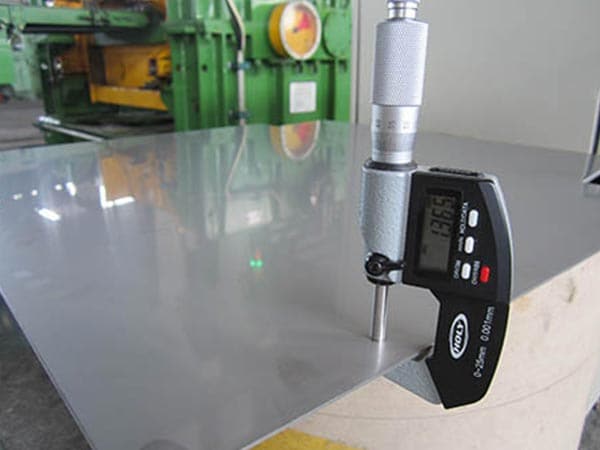
Understanding S420MC: The Backbone of Modern Automotive Structural Design
The designation S420MC refers to a high-yield strength, thermomechanically rolled steel specifically designed for cold forming. Governed by the EN 10149-2 standard, this material represents a sophisticated balance between weight reduction and structural integrity. The "S" denotes structural steel, "420" signifies a minimum yield strength of 420 MPa, "M" indicates its thermomechanical rolling process, and "C" highlights its suitability for cold forming operations. Unlike traditional hot-rolled steels, S420MC is engineered to provide exceptional ductility despite its high strength, making it a preferred choice for complex geometries in vehicle chassis and structural components.
The Metallurgy Behind Thermomechanical Rolling (TMCP)
The performance of S420MC is fundamentally rooted in its production process. Thermomechanical rolling involves precise control over the temperature and the deformation during the rolling process. This technique allows for the creation of a fine-grained microstructure that cannot be achieved through conventional heat treatment. By controlling the cooling rate and rolling temperatures, manufacturers can refine the grain size, which simultaneously increases both the strength and the toughness of the steel. This fine-grained structure is essential for preventing crack propagation during intensive cold forming processes such as deep drawing or tight-radius bending.
Chemical Composition and Micro-Alloying Strategy
The chemical makeup of S420MC is characterized by low carbon content and the strategic use of micro-alloying elements like Niobium (Nb), Vanadium (V), and Titanium (Ti). Low carbon levels ensure excellent weldability and prevent the formation of brittle phases in the heat-affected zone (HAZ). The micro-alloying elements serve as grain refiners and precipitation hardeners. Below is a breakdown of the typical chemical requirements according to EN 10149-2:
| Element | Max Content (%) |
|---|---|
| Carbon (C) | 0.12 |
| Manganese (Mn) | 1.60 |
| Silicon (Si) | 0.50 |
| Phosphorus (P) | 0.025 |
| Sulfur (S) | 0.015 |
| Aluminium (Al) | 0.015 |
| Nb + V + Ti | 0.22 |
The inclusion of Aluminium acts as a deoxidizer, while the combined total of Niobium, Vanadium, and Titanium is strictly controlled to ensure that the grain refinement is optimized without compromising the material's ability to be cold-formed.
Mechanical Properties: Strength Meets Ductility
Engineers select S420MC because it offers a significant weight-saving advantage over standard structural steels like S355. By utilizing a higher strength material, designers can reduce the thickness of components without sacrificing load-bearing capacity. This is critical for meeting modern fuel efficiency and emission standards in the automotive sector. The mechanical properties of S420MC are tested longitudinal to the rolling direction:
| Property | Value |
|---|---|
| Minimum Yield Strength (ReH) | 420 MPa |
| Tensile Strength (Rm) | 480 - 620 MPa |
| Min. Elongation (A80mm, t < 3mm) | 16% |
| Min. Elongation (A5, t ≥ 3mm) | 19% |
These values demonstrate that while the steel is rigid enough to support heavy loads, it retains sufficient elasticity to undergo significant deformation during manufacturing without fracturing.
Cold Forming and Bending Performance
One of the standout features of EN 10149-2 S420MC is its predictable behavior during cold forming. For manufacturers, the minimum recommended bending radius is a vital metric. For S420MC, the bending radius is typically expressed as a factor of the material thickness (t). For a 90-degree bend, the recommended internal radius is generally 0.5t for thicknesses under 3mm and up to 1.0t for thicker sections. This tight bending capability allows for the production of compact, complex brackets and structural reinforcements that are common in modern vehicle architectures.
Welding and Processing Versatility
S420MC is highly compatible with all standard welding methods, including Metal Active Gas (MAG) welding, Laser beam welding, and Resistance welding. Due to its low carbon equivalent (CEV), the risk of cold cracking is minimal, and preheating is generally not required for standard thicknesses. However, it is important to manage the heat input during welding to avoid excessive grain growth in the heat-affected zone, which could locally reduce the yield strength. In addition to welding, S420MC exhibits excellent laser cutting performance, providing clean edges with minimal dross, which is essential for automated assembly lines.
Environmental Adaptability and Fatigue Resistance
In the context of environmental exposure, S420MC performs similarly to other carbon steels. While it is not inherently corrosion-resistant like stainless steel, it serves as an excellent substrate for various protective coatings. Most S420MC components are either galvanized, E-coated, or powder-coated. The fine-grained structure also contributes to superior fatigue resistance. In automotive applications where components are subjected to cyclic loading—such as cross members and longitudinal beams—the ability of S420MC to resist fatigue-induced cracking significantly extends the service life of the vehicle.
Diversified Industry Applications
While the automotive sector is the primary consumer of S420MC, its utility extends far beyond passenger cars. The material is increasingly utilized in the following areas:
- Heavy Truck Manufacturing: Chassis frames, side rails, and cross members where weight reduction directly translates to increased payload capacity.
- Construction Machinery: Crane booms, telescopic arms, and excavator components that require high strength-to-weight ratios.
- Agricultural Equipment: Plow frames and harvester structures that must withstand high stress in rugged environments.
- Storage Systems: High-load racking systems and cold-formed sections for industrial warehouses.
- Pipe and Tube Production: High-strength welded tubes for structural applications.
Comparative Analysis: S420MC vs. Conventional Steels
When compared to traditional s355jr hot-rolled steel, S420MC offers roughly an 18% increase in yield strength. This allows for a thickness reduction of approximately 10-15% in many structural designs while maintaining the same safety factor. Furthermore, the "MC" series steels provide much tighter tolerances on thickness and flatness compared to commodity grades, which is vital for high-speed robotic stamping and automated welding processes. The consistency of the material properties from coil to coil reduces setup times and scrap rates in high-volume production environments.
Technical Considerations for Procurement
When sourcing S420MC according to EN 10149-2, it is essential to specify the surface finish and any additional requirements such as pickling and oiling (P&O). Pickled surfaces are often preferred for automotive applications as they remove the mill scale, providing a superior surface for subsequent painting or welding. Furthermore, understanding the orientation of the grain is crucial for parts requiring extreme bending; although S420MC is designed for multi-directional forming, performing bends transverse to the rolling direction typically yields the best results for the tightest radii.
Leave a message