
What is the s460mc mechanical properties shapes
Explore S460MC steel mechanical properties, chemical composition, and available shapes. Learn why this high-strength low-alloy steel is essential for automotive and heavy machinery.
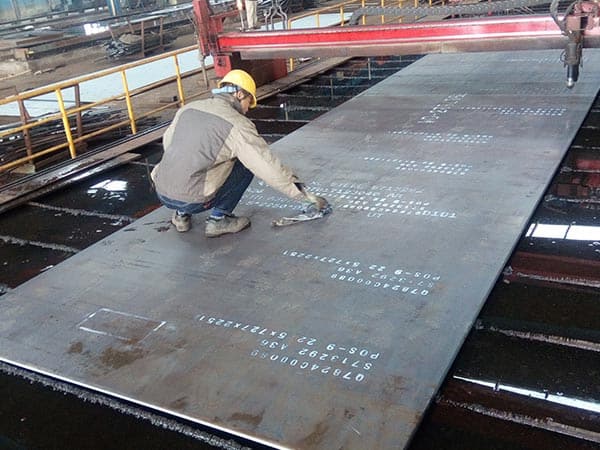
Defining S460MC: The High-Strength Low-Alloy Powerhouse
S460MC is a high-strength, thermomechanically rolled steel specifically designed for cold forming. Governed by the EN 10149-2 European standard, this material represents a significant leap in metallurgy, offering a unique balance between high yield strength and exceptional ductility. The "S" denotes structural steel, "460" indicates a minimum yield strength of 460 MPa, and "MC" signifies that the material is thermomechanically rolled (M) and intended for cold forming (C). This steel grade is frequently utilized in environments where weight reduction is critical without compromising the structural integrity of the final component.
Engineers favor S460MC because it allows for thinner wall thicknesses compared to traditional structural steels like S355. By reducing the thickness, manufacturers can achieve significant weight savings, which directly translates to lower fuel consumption in vehicles and reduced material costs in large-scale infrastructure. The thermomechanical rolling process is the secret behind its performance, as it refines the grain structure of the steel, enhancing both strength and toughness simultaneously.
Detailed Mechanical Properties of S460MC
The mechanical performance of S460MC is its most defining characteristic. Unlike standard hot-rolled steels, S460MC maintains its integrity even under extreme stress. The following table outlines the core mechanical requirements according to EN 10149-2:
| Property | Value (Thickness ≤ 16mm) |
|---|---|
| Minimum Yield Strength (ReH MPa) | 460 |
| Tensile Strength (Rm MPa) | 520 - 670 |
| Minimum Elongation (A80mm %) | 14 (for t < 3mm) |
| Minimum Elongation (A5 %) | 17 (for t ≥ 3mm) |
Yield Strength: At 460 MPa, this steel provides a robust foundation for load-bearing structures. It ensures that the material can withstand significant force before undergoing permanent deformation.
Tensile Strength: Ranging between 520 and 670 MPa, the tensile strength indicates the maximum stress the material can handle while being stretched or pulled before breaking. This range is ideal for dynamic loading conditions found in transport machinery.
Elongation: Despite its high strength, S460MC offers impressive elongation percentages. This ductility is vital for cold forming processes such as bending, flanging, and pressing, where the steel must change shape without cracking.
Chemical Composition and Its Influence on Performance
The superior properties of S460MC are achieved through a carefully controlled chemical composition. By keeping carbon levels low and adding micro-alloying elements like Niobium (Nb), Vanadium (V), and Titanium (Ti), the steel achieves a fine-grained structure.
| Element | Maximum Content (%) |
|---|---|
| Carbon (C) | 0.12 |
| Manganese (Mn) | 1.60 | 0.50 |
| Phosphorus (P) | 0.025 |
| Sulphur (S) | 0.015 |
| Aluminium (Al) | 0.015 |
| Nb + V + Ti | 0.22 |
The low carbon content is particularly beneficial for weldability. Standard welding techniques such as MAG (Metal Active Gas) and TIG (Tungsten Inert Gas) can be applied to S460MC without the risk of cold cracking, provided that the correct filler materials are used. The addition of Manganese improves the hardness and strength, while the micro-alloys prevent grain growth during the cooling process after rolling.
Common Shapes and Availability of S460MC
S460MC is primarily produced as flat products. However, these flat products serve as the raw material for a wide variety of secondary shapes and profiles. Understanding the available formats helps designers optimize material usage.
- Hot Rolled Coils: This is the most common form of S460MC. Coils are available in various widths and thicknesses, usually ranging from 2mm to 20mm.
- Slit Strips: Coils can be slit into narrow strips for use in automated stamping and roll-forming lines.
- Cut-to-Length Sheets: For structural fabrication, coils are flattened and cut into precise rectangular sheets.
- Cold Formed Profiles: S460MC is frequently processed into C-sections, U-channels, and Z-profiles. These shapes are common in the construction of truck chassis and solar mounting systems.
- Laser-Cut Parts: Due to its consistent surface quality and internal stress relief, S460MC is an excellent candidate for precision laser cutting, resulting in complex flat shapes ready for assembly.
Processing Performance: Bending and Welding
One of the primary reasons for selecting S460MC is its exceptional cold formability. Unlike standard structural steels which might snap or develop micro-fractures when bent at sharp angles, S460MC is designed to flow. The minimum recommended bending radius for S460MC is typically 1.0 to 1.5 times the thickness of the material, depending on the bending axis relative to the rolling direction.
In terms of welding, S460MC behaves predictably. Because it is a low-carbon steel, it does not require pre-heating in most standard thicknesses. This speeds up production cycles in manufacturing plants. However, it is essential to manage the heat input to avoid softening the Heat Affected Zone (HAZ), which could slightly reduce the local yield strength. Using high-quality consumables that match the strength of the base metal ensures the integrity of the welded joint.
Environmental Adaptability and Durability
S460MC exhibits good resistance to atmospheric conditions, although it is not a "weathering steel" like Corten. In outdoor applications, it is typically protected by galvanizing, painting, or powder coating. The fine-grained structure provides better resistance to fatigue compared to coarser steels, making it suitable for components subjected to cyclic loading, such as crane arms and trailer frames.
Furthermore, S460MC performs well in low-temperature environments. Many variants of this grade are tested for impact toughness at -20°C or -40°C, ensuring that the material does not become brittle in cold climates. This makes it a reliable choice for heavy machinery operating in northern latitudes or high-altitude mining sites.
Expanding Applications Across Modern Industries
The versatility of S460MC has led to its adoption across various demanding sectors. Its high strength-to-weight ratio is a game-changer for equipment manufacturers.
Automotive and Transportation: Within the truck and trailer industry, S460MC is the standard for longitudinal beams, cross members, and chassis frames. By using S460MC, manufacturers can increase the payload capacity of the vehicle while keeping the gross weight within legal limits.
Lifting and Handling Equipment: Crane booms, forklift masts, and telescopic handlers rely on S460MC to provide the necessary stiffness and strength. The material's ability to be formed into complex shapes allows for streamlined, aerodynamic designs in mobile cranes.
Agricultural Machinery: Modern farming equipment, such as plows, harvesters, and seeders, requires materials that can withstand high stress and abrasive environments. S460MC provides the durability needed for these heavy-duty applications while allowing for intricate component designs.
Renewable Energy: In the solar energy sector, S460MC is used for the structural supports and tracking systems of large-scale solar farms. Its strength ensures stability against wind loads, while its formability allows for the creation of efficient, easy-to-install mounting profiles.
Technical Comparison: S460MC vs. S355MC
When deciding between S355MC and S460MC, the primary consideration is the required load capacity versus weight. S460MC offers approximately a 30% increase in yield strength over S355MC. This means that for a given load, an engineer can potentially reduce the thickness of the component by nearly 20-25%, leading to significant cost savings in high-volume production. While S460MC is slightly more expensive per ton, the reduction in total material weight often results in a lower overall project cost.
The choice of S460MC also impacts the manufacturing process. While it requires slightly higher bending forces than S355MC, its consistent springback characteristics make it easier to maintain tight tolerances in automated production environments. This predictability is a key factor for companies implementing Industry 4.0 practices and robotic assembly lines.
Summary of Strategic Advantages
Choosing S460MC is a strategic decision for manufacturers looking to modernize their product offerings. The combination of high yield strength, excellent cold forming capabilities, and superior weldability makes it one of the most versatile high-strength low-alloy (HSLA) steels on the market. Whether it is used in the skeletal structure of a heavy-duty truck or the precision components of a solar tracker, S460MC delivers performance that meets the rigorous demands of 21st-century engineering.
By understanding the mechanical properties and the various shapes available, designers can push the boundaries of what is possible, creating structures that are lighter, stronger, and more sustainable. As global industries continue to prioritize efficiency and carbon footprint reduction, materials like S460MC will remain at the forefront of metallurgical innovation.
Leave a message