
What are the precautions during the cutting of s460mc cold forming autobobile steel grade
Expert guide on cutting S460MC high-strength steel for automotive applications. Learn about thermal and mechanical cutting precautions, metallurgical impacts, and quality control.
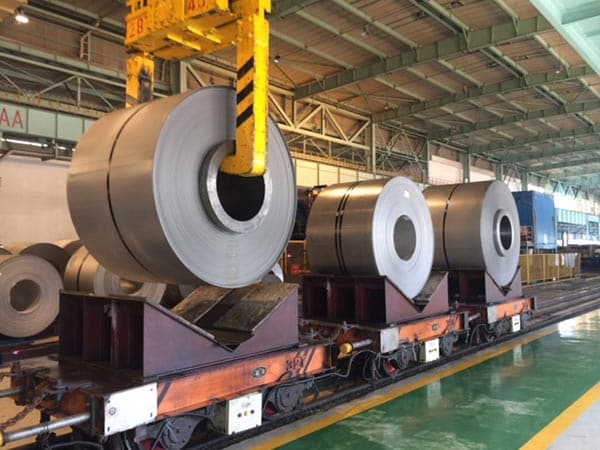
Understanding the Metallurgical Foundation of S460MC Steel
S460MC is a high-yield-strength steel specifically designed for cold forming, governed by the EN 10149-2 standard. Its unique properties are derived from thermomechanical rolling (TMCP), a process that creates a fine-grained microstructure through controlled deformation and cooling. Unlike traditional hot-rolled steels, S460MC relies on micro-alloying elements such as Niobium (Nb), Vanadium (V), and Titanium (Ti) to achieve its 460 MPa minimum yield strength while maintaining exceptional ductility. This delicate metallurgical balance makes the cutting process a critical stage in fabrication. Improper cutting techniques can compromise the edge integrity, alter the grain structure, or introduce residual stresses that lead to cracking during subsequent bending or welding operations.
Thermal Cutting Precautions: Laser and Plasma Methods
Thermal cutting is the most common method for S460MC due to its precision and speed. However, the application of concentrated heat introduces a Heat-Affected Zone (HAZ). In S460MC, excessive heat input can cause local grain growth or the formation of brittle martensitic structures at the cut edge. When using Laser Cutting, it is highly recommended to use Nitrogen as the assist gas rather than Oxygen for high-precision components. Nitrogen prevents the formation of an oxide layer, which is essential if the parts are to be painted or welded later. If Oxygen is used, the resulting oxide scale must be mechanically removed to ensure coating adhesion.
For Plasma Cutting, the primary precaution involves managing the dross and the taper of the cut. High-definition plasma systems are preferred to minimize the width of the HAZ. Operators must ensure that the cutting speed is optimized; moving too slowly increases the heat soak into the material, potentially softening the edges and reducing the load-bearing capacity of the structural component. Conversely, moving too fast can result in excessive dross and a rough surface finish that acts as a stress concentrator.
Mechanical Shearing and Punching: Tooling and Clearance
Mechanical cutting methods like shearing and punching are efficient but place significant physical stress on the material. Because S460MC has a high yield strength, the force required to shear it is substantially higher than that for standard S235 or S355 grades. Tool wear is a major concern; blades and punches must be made from high-quality tool steel and regularly inspected for dullness. A dull blade will not cut the material cleanly but will instead 'tear' it, leading to work-hardening at the edge.
The cutting clearance is the most vital parameter in mechanical shearing. For S460MC, a clearance of 12% to 15% of the material thickness is generally recommended. If the clearance is too tight, the energy required increases and the tool life decreases. If it is too loose, the burr height increases significantly. Large burrs are detrimental to the cold-forming process, as they can initiate cracks when the steel is bent. Always ensure the 'burr side' is placed on the inside of the bend radius during subsequent forming to mitigate crack propagation.
Managing Residual Stresses and Material Distortion
S460MC plates often contain internal residual stresses from the thermomechanical rolling process. When the material is cut—especially when long, narrow strips are produced—these stresses are released, leading to bowing or twisting (often called 'banana effect'). To minimize this, nesting strategies should be carefully planned. Avoid long continuous cuts in a single direction. Instead, use a 'staggered' or 'bridge' cutting sequence to allow the heat to dissipate and the stresses to redistribute more evenly across the sheet.
Furthermore, the surface condition of S460MC is usually pickled and oiled or as-rolled. During cutting, protect the surface from scratches and slag splash. Scratches on high-strength steel are not just aesthetic issues; they are potential failure points under fatigue loading, which is a critical consideration in automotive chassis and suspension components.
Technical Specifications and Mechanical Properties
To better understand the requirements for cutting, refer to the mechanical properties of S460MC in the table below:
| Property | Value (Metric) | Significance for Cutting |
|---|---|---|
| Minimum Yield Strength | 460 MPa | Determines the force required for shearing/punching. |
| Tensile Strength | 520 - 670 MPa | Influences the resistance to fracture during cutting. |
| Minimum Elongation (A80) | 14% (t < 3mm) | Indicates the material's ability to deform before cracking. |
| Carbon Equivalent (CEV) | Approx. 0.22 - 0.25 | Low CEV ensures good weldability and low risk of edge hardening. |
Edge Quality and Post-Cutting Treatment
The quality of the cut edge directly impacts the fatigue life of the final automotive part. For S460MC, a 'clean' cut is defined by a smooth surface with minimal striations. If the cut edge is intended for a safety-critical structural part, mechanical grinding of the thermal cut edge is often necessary. This process removes the thin layer of re-hardened material and any micro-cracks that may have formed during the cooling phase of a laser or plasma cut.
- Deburring: Always remove sharp burrs immediately after cutting to prevent injury and improve fit-up.
- Inspection: Use dye penetrant testing on critical cut edges if there is a suspicion of thermal cracking.
- Cleaning: If using waterjet cutting, ensure the material is dried quickly to prevent flash rusting, although S460MC has decent atmospheric resistance.
Environmental and Operational Considerations
S460MC is often used in environments where it is exposed to vibration and cyclic loading. Therefore, the cutting process must not introduce any defects that could lead to hydrogen embrittlement or stress corrosion cracking. While S460MC has excellent environmental adaptability, the cutting environment should be kept dry. In laser cutting, the purity of the assist gas is paramount; moisture or oil in the gas line can lead to porosity in the cut edge, which might migrate into the weld pool during assembly.
From an operational standpoint, the high strength of S460MC means that machines will operate closer to their maximum rated capacity compared to mild steel. Regular maintenance of hydraulic systems in shears and the alignment of laser optics is essential to maintain the tight tolerances required by the automotive industry. By adhering to these precautions, manufacturers can fully leverage the weight-saving potential of S460MC without compromising the structural safety of the vehicle.
Leave a message