
How to distinguish authenticity of domex 700 cold forming autobobile steel sheet
Expert guide on identifying genuine Domex 700 cold forming steel. Learn to verify authenticity through chemical composition, mechanical properties, surface quality, and mill test certificates to ensure structural integrity in automotive applications.
The Critical Importance of Material Authenticity in High-Strength Steel
Domex 700, a high-strength cold-forming steel developed by SSAB, has become a benchmark in the automotive and heavy transport industries. Its reputation for exceptional yield strength combined with superior formability makes it a prime target for imitation. For engineers and procurement specialists, distinguishing between genuine Domex 700 and inferior S700MC grades is not merely a matter of cost—it is a fundamental safety requirement. Authentic Domex 700 provides predictable springback, uniform thickness, and consistent welding behavior, which are often lacking in generic alternatives. Understanding the metallurgical and physical markers of this specific steel grade is essential for maintaining the structural integrity of chassis, crane booms, and trailer frames.
Chemical Composition: The Metallurgical DNA of Domex 700
The first step in verifying the authenticity of Domex 700 involves a deep dive into its chemical profile. Unlike standard structural steels, Domex 700 is a thermomechanically rolled micro-alloyed steel. Its high strength is not achieved through high carbon content, which would impair weldability, but through precise micro-alloying with elements like Niobium (Nb), Titanium (Ti), and Vanadium (V). Genuine Domex 700 maintains an extremely low carbon level, typically below 0.12%, which ensures excellent cold-forming properties and weldability. If a laboratory analysis shows carbon levels exceeding this threshold or significant impurities like high Sulfur (S) or Phosphorus (P), the material is likely a counterfeit or a lower-grade substitute.
| Element | Max Content (%) in Genuine Domex 700 | Impact on Performance |
|---|---|---|
| Carbon (C) | 0.12 | Ensures weldability and prevents brittleness. |
| Manganese (Mn) | 2.10 | Increases hardness and tensile strength. |
| Silicon (Si) | 0.10 | Deoxidizes the steel; kept low for surface quality. |
| Phosphorus (P) | 0.025 | Kept low to prevent cold shortness. |
| Sulfur (S) | 0.010 | Extremely low to improve ductility and impact toughness. |
| Aluminium (Al) | 0.015 (min) | Acts as a grain refiner. |
The low Silicon content is particularly noteworthy. SSAB produces Domex 700 with a specific focus on surface finish and suitability for galvanizing. If the Silicon levels fluctuate significantly or are intentionally high to compensate for strength, the steel will not exhibit the same consistency during the cold-forming process.
Mechanical Properties and Yield Strength Verification
The "700" in Domex 700 refers to its minimum yield strength of 700 MPa. Authenticity can be verified through rigorous tensile testing. Genuine material will show a very narrow range of yield and tensile strength, reflecting the precision of the thermomechanical rolling process. Counterfeit materials often show high variability across a single sheet or between different batches. When testing, the yield strength must be at least 700 MPa, while the tensile strength typically falls between 750 and 950 MPa. If the tensile strength is too high relative to the yield strength, the material may be prone to cracking during bending operations.
- Yield Strength (ReH): Minimum 700 MPa.
- Tensile Strength (Rm): 750–950 MPa.
- Elongation (A5): Typically 12% to 14% depending on thickness.
- Impact Toughness: Often tested at -20°C or -40°C to ensure performance in cold climates.
Ductility is the hallmark of genuine Domex 700. While many steels can reach 700 MPa yield strength, few can do so while maintaining the elongation required for complex cold-forming. If a sample snaps or shows localized necking prematurely during a tensile test, it fails the authenticity check for Domex standards.
Cold Forming and Bending Radius Indicators
One of the most practical ways to distinguish authentic Domex 700 is through its behavior during cold forming. SSAB guarantees specific minimum bending radii that are significantly tighter than those of generic S700MC steels. For example, for a sheet thickness (t) of less than 3mm, the minimum inner bending radius for Domex 700 is often as low as 0.8 to 1.0 times the thickness. Generic high-strength steels often require 1.5t or 2.0t to avoid cracking. If the material exhibits edge cracking or "orange peel" surface texture when bent at the manufacturer's recommended radius, it is a clear indicator of inferior grain structure and likely non-authentic material.
Furthermore, the springback characteristics of Domex 700 are remarkably consistent. In automated production lines, this consistency allows for high-precision manufacturing without constant machine recalibration. If a batch of steel requires frequent adjustment of the bending tools due to varying springback angles, the material's homogeneity—a key feature of the SSAB Domex process—is absent.
Surface Quality and Visual Identification
Genuine Domex 700 is known for its clean, greyish surface finish, which is the result of optimized descaling and rolling temperatures. The surface should be free from deep pits, heavy scale, or laminations. SSAB employs advanced thickness control systems (often marketed as AccuRoll), ensuring that the thickness tolerance is much tighter than standard EN 10051 requirements. Procurement teams should use high-precision micrometers to check thickness across the width of the sheet; genuine Domex 700 will show minimal deviation.
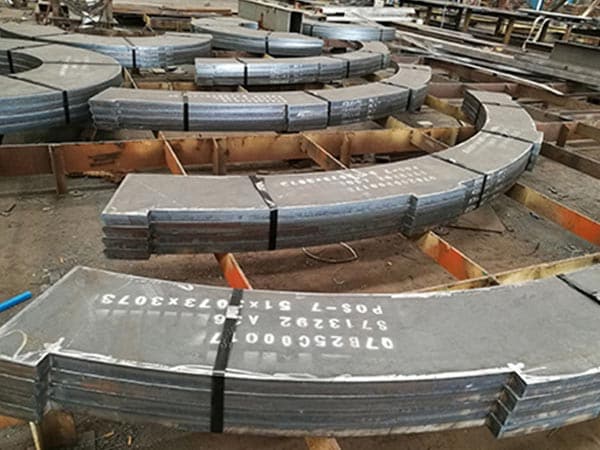
Visual markings are another primary defense against fraud. Authentic sheets are typically inkjet-marked with the brand name (Domex or Strenx), the heat number, the thickness, and the dimensions. These markings should be clear and difficult to rub off. Cross-referencing the heat number on the steel with the Mill Test Certificate (MTC) is mandatory. If the markings look hand-stenciled, uneven, or contain spelling errors, the material's origin is highly suspect.
Documentation and Traceability: The Mill Test Certificate (MTC)
The MTC is the birth certificate of the steel. A genuine Domex 700 MTC will be issued by SSAB and will comply with EN 10204 Type 3.1. Key elements to verify on the MTC include the manufacturer's logo, the specific grade designation, the heat number, and the mechanical and chemical test results. In the digital age, many manufacturers provide QR codes or online verification portals. Scanning these should lead directly to the manufacturer's database. If a supplier provides a photocopied MTC where the heat number appears altered or blurred, or if they refuse to provide a 3.1 certificate, the risk of counterfeit material is extreme.
| Feature | Genuine Domex 700 (SSAB) | Generic/Counterfeit S700MC |
|---|---|---|
| Thickness Tolerance | Exceeds EN 10051 (Very tight) | Standard EN 10051 (Loose) |
| Bending Radius | 0.8t - 1.2t (Typical) | 1.5t - 2.5t |
| Surface Finish | Uniform, low scale, smooth | Variable, possible pitting |
| Weldability | Excellent (Low CEV) | Variable (Higher Carbon risk) |
| Traceability | Full digital 3.1 Certification | Often 2.2 or incomplete 3.1 |
Weldability and Heat Affected Zone (HAZ) Performance
In automotive manufacturing, welding is unavoidable. Domex 700 is designed to maintain its strength even after welding, provided the correct heat input is used. This is due to its low Carbon Equivalent Value (CEV). When welding genuine Domex 700, the Heat Affected Zone (HAZ) remains relatively narrow and retains a high percentage of the base metal's strength. Counterfeit materials, which may rely on different alloying strategies to achieve 700 MPa, often suffer from significant softening in the HAZ or, conversely, the formation of brittle martensite if the carbon content is too high. A simple hardness traverse test across a weld joint can reveal the true nature of the steel; a massive drop in hardness in the HAZ is a red flag for non-authentic material.
Environmental Adaptation and Fatigue Resistance
Domex 700 is frequently used in environments subject to dynamic loading and vibration, such as truck chassis. Authentic material undergoes specific processing to ensure high fatigue resistance. This is achieved through inclusions shape control (specifically sulfide shape control). In genuine Domex, inclusions are small and spherical, whereas in lower-quality steels, they may be elongated (stringers). Elongated inclusions act as stress concentrators, leading to premature fatigue cracking. For critical applications, performing a microscopic inclusion analysis can definitively prove whether the steel meets the cleanliness standards of the Domex brand.
Practical Steps for Procurement and Quality Control
To safeguard production lines, companies should implement a multi-stage verification process. This begins with sourcing only from authorized SSAB distributors. Upon arrival, the material should undergo visual inspection for markings and surface quality. Samples from new or unknown suppliers should be sent for independent chemical and mechanical testing. While this adds a small upfront cost, it pales in comparison to the potential liability and recall costs associated with structural failure caused by counterfeit steel. Authentic Domex 700 is an investment in engineering excellence and long-term reliability.
Leave a message