
What is the s420 steel mechanical properties price export to Pakistan
Comprehensive guide on S420 high-strength steel mechanical properties, chemical composition, processing advantages, and current price trends for the Pakistan market.
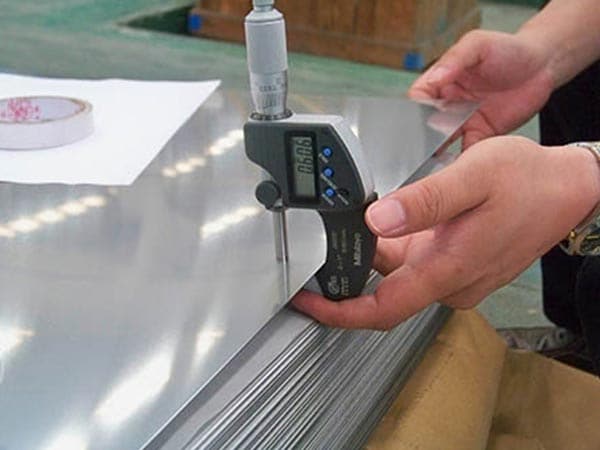
Technical Foundation of S420 High-Strength Structural Steel
S420 steel represents a pinnacle of high-strength low-alloy (HSLA) structural steel engineering, primarily governed by the European standard EN 10025. This grade is specifically designed for weight reduction in heavy-duty structures without compromising safety or integrity. When we discuss S420 steel mechanical properties, we are looking at a material that bridges the gap between standard structural steels like S355 and ultra-high-strength grades. The '420' designation signifies its minimum yield strength of 420 MPa for thicknesses ≤ 16mm, making it an ideal candidate for load-bearing components in bridge engineering, offshore platforms, and heavy machinery.
For the Pakistan market, where infrastructure projects under the CPEC (China-Pakistan Economic Corridor) are booming, S420 has become a sought-after material. Its high strength-to-weight ratio allows engineers to design leaner structures, which directly translates to lower transportation costs and reduced foundation loads—a critical factor in regions with diverse geological conditions ranging from the mountainous north to the coastal south.
Mechanical Properties and Material Performance
The mechanical excellence of S420 is defined by its ability to withstand extreme stress while maintaining ductility. Depending on the delivery condition—whether it is Normalized (N), Normalized Rolled (NR), or Thermomechanically Rolled (M)—the performance nuances vary. Below is a detailed breakdown of the core mechanical parameters that define this grade.
| Property | S420N / S420NL | S420M / S420ML |
|---|---|---|
| Yield Strength (min MPa) | 420 | 420 |
| Tensile Strength (MPa) | 520 - 680 | 500 - 660 |
| Elongation (min %) | 19 | 19 |
| Impact Energy (-20°C / -50°C) | 40J / 27J | 40J / 27J |
Yield Strength: The 420 MPa threshold ensures that structures can support significantly higher loads compared to traditional S235 or S355 grades. This allows for a reduction in plate thickness, which is a primary driver for cost efficiency in large-scale Pakistani construction projects.
Impact Toughness: For projects in northern Pakistan (Gilgit-Baltistan), where temperatures can drop significantly, the 'L' variants (S420NL or S420ML) are essential. These grades are tested for impact energy at temperatures as low as -50°C, ensuring the steel does not undergo brittle fracture in sub-zero environments.
Chemical Composition and Weldability Advantages
The superior performance of S420 is not just about strength; it is about the chemistry that enables that strength. By utilizing micro-alloying elements such as Niobium (Nb), Vanadium (V), and Titanium (Ti), manufacturers can achieve high strength with a relatively low carbon equivalent (CEV). This is a game-changer for the export to Pakistan market, where onsite welding is often required under varying environmental conditions.
- Low Carbon Content: Typically kept below 0.20%, ensuring excellent weldability without the need for extensive preheating.
- Fine Grain Structure: The micro-alloying elements promote a fine-grained microstructure, which improves both strength and toughness simultaneously.
- Sulfur and Phosphorus Control: Strict limits on impurities (P ≤ 0.025%, S ≤ 0.020%) prevent hot cracking and improve the overall cleanliness of the steel.
The low CEV of S420ML (Thermomechanically rolled) makes it particularly attractive for rapid assembly in industrial zones like Faisalabad or Karachi. It reduces the risk of cold cracking in the heat-affected zone (HAZ), allowing for faster welding cycles and lower labor costs.
Processing and Fabrication Performance
Fabricators in Pakistan value S420 for its predictable behavior during processing. Whether it is CNC plasma cutting, cold forming, or drilling, S420 maintains its dimensional stability. S420 steel mechanical properties remain consistent even after moderate cold forming, provided the bend radii are kept within standard limits.
For cold forming, S420 is superior to many high-carbon alternatives. It can be bent to tighter radii without surface cracking, which is vital for manufacturing complex crane booms or chassis components. When it comes to cutting, the steel's uniform hardness ensures that tool wear is minimized, extending the life of consumables in the workshop.
Environmental Adaptability in the Pakistani Climate
Pakistan presents a unique set of environmental challenges, from the high humidity and salinity of the Arabian Sea coast to the arid, high-temperature plains of Punjab and Sindh. S420 steel, particularly when supplied with proper surface treatments or as part of a weather-resistant specification, performs exceptionally well.
In coastal infrastructure near Gwadar Port, S420 is often used in conjunction with advanced coating systems. Its smooth surface finish, resulting from high-quality rolling processes, provides an excellent substrate for epoxy primers and anti-corrosion paints. Furthermore, the thermal stability of S420 ensures that it maintains its structural integrity even during the intense summer heat, where surface temperatures of steel structures can exceed 70°C.
S420 Steel Price Trends for Export to Pakistan
The S420 steel price is influenced by several global and local factors. Unlike commodity grades, S420 carries a premium due to its specialized alloying and controlled rolling processes. For Pakistani importers, the price is generally quoted on a CFR (Cost and Freight) Karachi or FOB (Free on Board) basis.
- Raw Material Costs: Fluctuations in iron ore and coking coal prices are the primary drivers.
- Alloy Surcharges: Since S420 relies on Niobium and Vanadium, the market price of these ferro-alloys impacts the final plate cost.
- Shipping and Logistics: Freight rates from major hubs like Shanghai or Tianjin to Karachi Port play a significant role in the landed cost.
- Currency Exchange: The PKR to USD exchange rate is a critical variable for local contractors managing project budgets.
Current market trends suggest that while S420 is more expensive per ton than S355, the total project cost is often lower. By using S420, a project might require 20% less steel by weight, leading to savings in procurement, shipping, and fabrication labor that outweigh the higher unit price.
Logistics and Export Considerations for Pakistan
Exporting high-grade steel like S420 to Pakistan requires meticulous documentation and quality assurance. Buyers must ensure that the material comes with a 3.1 or 3.2 Material Test Certificate (MTC) according to EN 10204, detailing the chemical analysis and mechanical test results.
Shipping to Karachi (PICT, KICT, or SAPT) is the most common route. For heavy plates, break-bulk shipping is often more economical than containerization, though containers provide better protection against sea-salt corrosion during transit. Proper seaworthy packaging, including moisture-proof wrapping and steel strapping, is mandatory to ensure the S420 steel mechanical properties are not compromised by surface pitting or oxidation during the voyage.
Industry Applications in Pakistan
The versatility of S420 makes it indispensable across multiple sectors in the Pakistani economy. In the energy sector, it is used for wind turbine towers and transmission line pylons where high wind loads are a concern. In the transport sector, it is the material of choice for heavy-duty trailers and bridge girders for the motorway networks.
Furthermore, the industrial expansion in Special Economic Zones (SEZs) has increased demand for S420 in factory frameworks and warehouse structures. The ability to span longer distances with fewer columns—thanks to the high yield strength—maximizes usable floor space, providing a direct economic benefit to industrial developers.
Critical Factors for Procurement
When sourcing S420 for Pakistani projects, it is vital to specify the exact sub-grade (N, NL, M, or ML) based on the design requirements. S420M/ML is generally preferred for its superior weldability and cost-effectiveness in thicknesses up to 120mm, while S420N/NL is favored for applications requiring post-weld heat treatment (PWHT).
Working with established exporters who understand the Pakistani regulatory landscape, including PSI (Pre-Shipment Inspection) requirements and LC (Letter of Credit) terms, is essential for a smooth transaction. This ensures that the high-performance S420 steel delivered to the site meets every engineering specification and contributes to the longevity and safety of the nation's infrastructure.
Leave a message