
How to distinguish the normal floating rust and rusting of EN10149-2 S700MC hot rolled pickled t700 steel
Comprehensive guide on identifying floating rust versus structural corrosion on EN10149-2 S700MC (T700) steel, including chemical analysis and maintenance tips.
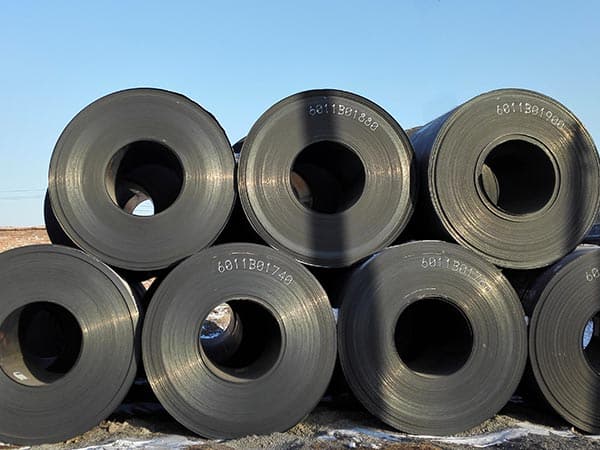
Understanding the Surface Dynamics of EN10149-2 S700MC Steel
EN10149-2 S700MC, often referred to as T700 in various industrial contexts, is a high-strength low-alloy (HSLA) steel produced through thermomechanical rolling. This material is prized for its exceptional yield strength of at least 700 MPa and its superior cold-forming capabilities. However, when S700MC undergoes the pickling process—a chemical treatment to remove hot-rolled scale—the resulting bare metal surface becomes highly reactive to atmospheric conditions. Distinguishing between harmless floating rust and detrimental structural rusting is critical for quality control in heavy-duty manufacturing.
Pickled and oiled (P&O) S700MC surfaces are designed to provide a clean slate for laser cutting, welding, and painting. Yet, during transport or storage, moisture and oxygen can interact with the surface. Understanding the metallurgical properties of this grade helps engineers determine whether a reddish hue on the plate is a cosmetic issue or a sign of material degradation.
Defining Floating Rust on Pickled S700MC
Floating rust, frequently termed "flash rust" or "yellowing," is a superficial oxidation layer that occurs when the protective oil film on the pickled steel is thin or disturbed. Because S700MC contains micro-alloying elements like Titanium (Ti) and Niobium (Nb), the surface chemistry reacts quickly to humidity.
- Visual Appearance: Floating rust usually appears as a light yellow or bright orange powdery substance. It is uniform and does not show distinct pitting.
- Tactile Test: When wiped with a clean cloth or a finger, floating rust typically transfers easily, leaving the underlying metallic luster of the S700MC plate visible.
- Depth: It does not penetrate the metal substrate. The thickness of this layer is measured in microns and does not impact the mechanical integrity of the 700MPa yield strength.
For most structural applications, such as crane booms or truck chassis, floating rust is considered acceptable if it can be removed by simple solvent cleaning or light abrasive brushing before the final coating process.
Identifying Destructive Rusting and Pitting
Actual rusting, or deep corrosion, is a far more serious condition. This occurs when the S700MC steel is exposed to corrosive environments (like salt spray or acid rain) for extended periods, or when water is trapped between stacked sheets (capillary action).
- Texture and Depth: Unlike the powder of floating rust, real rusting creates a rough, scaly texture. If you feel "craters" or unevenness on the surface, the iron base is being consumed.
- Coloration: The color is usually dark brown or deep red, indicating a more stable and thicker oxide layer (Fe3O4 or Fe2O3) that has bonded with the base metal.
- The Pitting Factor: Pitting is the most dangerous form of corrosion for high-strength steels. These small holes act as stress concentrators, which can lead to premature fatigue failure in dynamic load-bearing components.
Chemical Composition and Its Influence on Corrosion
The chemical makeup of EN10149-2 S700MC is engineered for strength and weldability rather than extreme atmospheric corrosion resistance (unlike weathering steel). The balance of elements influences how the rust forms.
| Element | Max Content (%) | Role in Surface Interaction |
|---|---|---|
| Carbon (C) | 0.12 | Low carbon ensures weldability but offers little protection against oxidation. |
| Manganese (Mn) | 2.10 | Enhances strength; can influence the color of the oxide layer. |
| Silicon (Si) | 0.60 | Assists in deoxidation; high levels can affect the pickling quality. |
| Titanium (Ti) | 0.22 | Refines grain structure; can form stable nitrides on the surface. |
| Aluminum (Al) | 0.015 | Acts as a grain refiner and deoxidizer. |
The micro-alloying elements (Ti, Nb, V) are essential for achieving the 700MPa yield strength without excessive carbon, but they do not provide a "passivation" layer. Therefore, the pickling oil is the only barrier protecting the S700MC surface from the environment during the supply chain.
Mechanical Performance Impacts of Surface Corrosion
The primary concern with rusting on S700MC is the potential reduction in mechanical properties. High-strength steels are more sensitive to surface defects than mild steels.
| Property | Requirement (S700MC) | Impact of Deep Rusting |
|---|---|---|
| Yield Strength | Min 700 MPa | Negligible unless cross-sectional area is significantly reduced. |
| Tensile Strength | 750 - 950 MPa | Generally stable, but surface pits can initiate cracks. |
| Elongation (A80) | Min 10% (t < 3mm) | Significantly reduced; rust acts as a site for crack propagation during bending. |
| Impact Energy | 40J at -20°C (optional) | Surface pitting can lower the notch toughness of the material. |
When S700MC is used for cold-formed profiles, even minor pitting can lead to cracking along the bend radius. This is why distinguishing floating rust (which doesn't affect ductility) from pitting (which does) is a mandatory step in material inspection.
Practical Methods to Distinguish the Two
To accurately assess the state of an S700MC shipment, quality inspectors should follow a systematic approach:
- The Wipe Test: Use a white lint-free cloth moistened with a light solvent. If the rust comes off easily and the metal underneath is smooth and grey, it is floating rust.
- Magnification: Use a 10x or 20x jeweler’s loupe. Floating rust looks like loose dust sitting on top of the metal. Actual rusting looks like the metal surface is "eating away" or has a crystalline, jagged structure.
- Surface Roughness Measurement: Using a profilometer can quantify the damage. If the Ra (arithmetic average roughness) significantly exceeds the original pickled specification, structural corrosion is present.
- Ultrasonic Thickness Testing: For heavy plates, this determines if there has been any loss in the base material thickness, though this is rarely needed for initial surface rust assessments.
Processing Considerations: Welding and Coating
The presence of oxidation significantly alters the processing parameters for S700MC. If floating rust is present, it must be removed before welding. Iron oxide has a much higher melting point than the base steel, which can lead to oxide inclusions in the weld pool, causing porosity and reduced joint strength.
For laser cutting, floating rust can interfere with the beam's absorption, leading to inconsistent cut edges. In contrast, if the steel has deep rusting, the material might be rejected entirely for high-precision components because the pitting prevents the uniform application of powder coatings or automotive-grade paints, leading to premature coating failure in the future.
Environmental Factors and Storage Best Practices
The transition from floating rust to structural rusting is accelerated by specific environmental conditions. S700MC is particularly vulnerable in high-humidity zones or coastal areas with high chloride content. To maintain the integrity of pickled S700MC:
- Control Humidity: Maintain warehouse humidity below 60%.
- Avoid Temperature Fluctuations: Rapid cooling can cause condensation (sweating) on the steel surface, which trapped under plastic wrap, leads to rapid corrosion.
- First-In, First-Out (FIFO): Minimize storage time for pickled products. S700MC is a high-performance material meant for rapid consumption in production lines.
- Re-oiling: If the original oil film is removed during inspection, a light coat of rust-preventative oil should be reapplied immediately.
Manufacturers in the heavy lifting and transportation sectors rely on the consistency of S700MC. By mastering the distinction between cosmetic floating rust and structural rusting, they can avoid unnecessary material rejections while ensuring the long-term safety and durability of their engineered products.
Leave a message