
grade 460 steel equivalent for engineering and machine structural use
Comprehensive guide to Grade 460 steel equivalents, exploring mechanical properties, chemical composition, and global standards for engineering and structural applications.
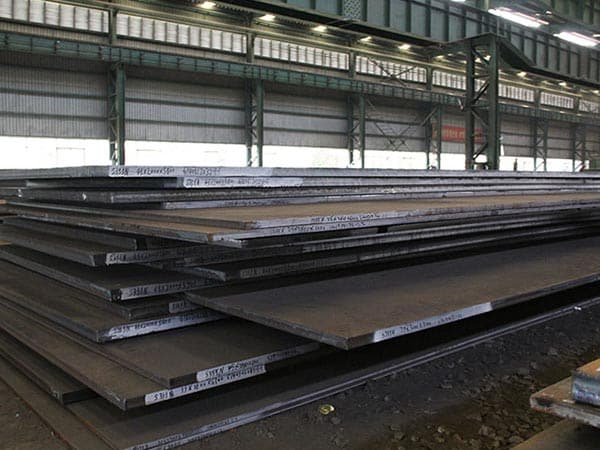
Defining the Grade 460 Steel Landscape
In the realm of modern engineering, the demand for materials that balance weight reduction with high load-bearing capacity has led to the widespread adoption of Grade 460 steel. This category primarily refers to structural steels with a minimum yield strength of 460 MPa. Unlike standard mild steels like S235 or S355, Grade 460 offers a significant jump in performance, allowing designers to specify thinner sections for the same structural integrity, which is vital for heavy machinery, high-rise buildings, and bridge construction.
Global Equivalents for Grade 460 Steel
Navigating international projects requires a deep understanding of how different standards categorize 460 MPa yield steel. While the chemical compositions and manufacturing processes vary slightly, the following grades are generally considered functional equivalents in engineering contexts:
| Standard | Equivalent Grade | Condition |
|---|---|---|
| European (EN 10025-3/4/6) | S460N, S460M, S460QL | Normalized, TMCP, or Quenched & Tempered |
| Chinese (GB/T 1591) | Q460 (B, C, D, E) | High-strength low-alloy (HSLA) |
| American (ASTM) | ASTM A572 Grade 65 / A656 Grade 70 | Note: A572 Gr 65 is ~450MPa; A656 is often used for higher yield |
| Japanese (JIS G3106) | SM570 | High tensile strength structural steel |
| International (ISO 630) | S460 | Structural steel standard |
Metallurgical Composition and Micro-Alloying
The superior strength of Grade 460 is not merely a result of higher carbon content; in fact, excessive carbon would compromise weldability. Instead, these steels utilize micro-alloying elements such as Niobium (Nb), Vanadium (V), and Titanium (Ti). These elements promote grain refinement during the cooling process, which simultaneously increases strength and toughness.
- Carbon Equivalent (CEV): To ensure excellent weldability, the CEV is typically kept below 0.47%. This allows for welding with standard procedures, provided preheating is managed correctly.
- Sulfur and Phosphorus Control: High-quality Grade 460 equivalents (like S460QL or Q460E) have extremely low levels of impurities to prevent lamellar tearing and improve impact resistance at sub-zero temperatures.
- Nitrogen Content: Carefully controlled to prevent aging embrittlement, often stabilized by Aluminum or Titanium.
Mechanical Performance Breakdown
When evaluating an equivalent, engineers must look beyond the yield strength. The delivery condition (Normalized vs. TMCP vs. Q&T) dictates the steel's behavior under stress.
Yield Strength (ReH): Minimum 460 MPa for thicknesses up to 16mm. As thickness increases, the yield strength may slightly decrease depending on the specific standard.
Tensile Strength (Rm): Generally ranges between 520 MPa and 720 MPa. This range provides a safe buffer between the point of permanent deformation and actual material failure.
Elongation: Despite its high strength, Grade 460 maintains a minimum elongation of 14% to 17%, ensuring the material can undergo plastic deformation before fracturing, a critical safety feature in seismic zones.
Processing Properties: Welding and Machining
Working with Grade 460 requires a more sophisticated approach than standard structural steel. Because of the refined grain structure, thermal input management is paramount. Excessive heat during welding can enlarge the grains in the Heat Affected Zone (HAZ), leading to a localized loss of strength.
- Weldability: S460M (Thermo-Mechanically Controlled Processed) offers the best weldability due to its lower alloy content compared to S460N. Low-hydrogen electrodes or gas-shielded arc welding are recommended to prevent hydrogen-induced cracking.
- Cold Forming: While Grade 460 can be cold-formed, the minimum bend radii are larger than those for S355. Springback is also more pronounced, requiring precision in tooling and press-brake operations.
- Machinability: The higher hardness compared to S355 means tool wear is slightly faster. Using carbide-tipped tools and optimized cutting speeds is necessary for high-volume machine structural components.
Environmental Adaptability and Durability
Grade 460 steel is often deployed in harsh environments, from offshore platforms to arctic mining equipment. The impact toughness is the defining metric here. For instance, Q460E and S460QL are tested for impact energy at -40°C or even -60°C, ensuring they remain ductile even in extreme cold.
In terms of corrosion, while Grade 460 is not inherently stainless, its dense surface structure when properly primed provides a stable base for high-performance coatings. For atmospheric corrosion resistance, some variations include small amounts of Copper or Chromium, similar to weathering steels, though this is grade-specific.
Strategic Engineering Applications
The transition to Grade 460 is driven by the need for structural efficiency. By using a 460 MPa yield steel instead of 355 MPa, engineers can achieve weight savings of approximately 20-30% in tension-governed members.
Heavy Lifting Equipment: Crane booms and telescopic arms rely on the high strength-to-weight ratio of S460QL to extend reach without increasing the dead weight of the machine.
High-Rise Construction: In the lower columns of skyscrapers, using Grade 460 reduces the physical footprint of the steel sections, increasing the usable floor space for developers.
Bridge Engineering: For long-span bridges, reducing the weight of the superstructure through high-strength steel significantly lowers the load on the foundations and piers, leading to massive cost savings in civil works.
Selection Guide for Structural Engineers
Choosing the right Grade 460 equivalent involves more than matching a datasheet. You must consider the direction of loading and the risk of brittle fracture. If the project involves thick plates (over 50mm) subject to Z-axis (through-thickness) stress, specifying a grade with improved deformation properties (Z-quality) is essential to avoid lamellar tearing.
Furthermore, if the structure is subject to fatigue—such as a bridge or a moving machine part—the surface finish and the quality of the weld transitions become more critical than the base material's yield strength itself. Grade 460 provides the raw power, but the engineering detail ensures the longevity of the application.
Leave a message